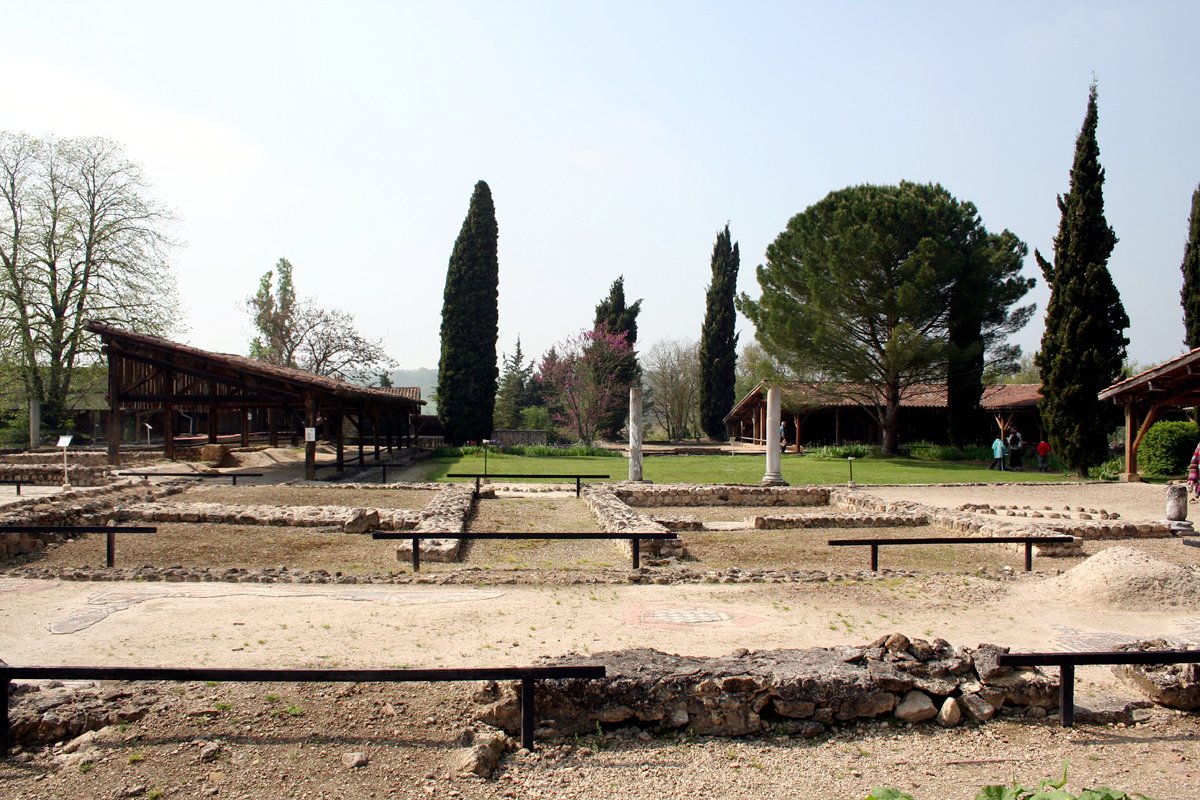

For centuries, the former villa of Séviac remained buried beneath the modern town of Montréal-du-Gers in southern France. Its rediscovery by archaeologist Paulette Aragon-Launet in the late 19th century revealed a labyrinth of mosaics, created between the last third of the 4th century and the first half of the 5th century, and carefully hidden by those who came after. The mosaics decorated the spaces of reception and circulation, with polychrome geometric mosaics laid first, followed by vegetable ones. After cleaning and restoration in the 1990s, the villa of Séviac continues to captivate visitors with its glimpse into a time long past.
Sources: Wikipedia, OpenStreetMap, Wikidata, Wikimedia Commons
Written by Nicolo Ciampini
Discuss this with the author and others
No comments yet. Be the first to start the conversation.