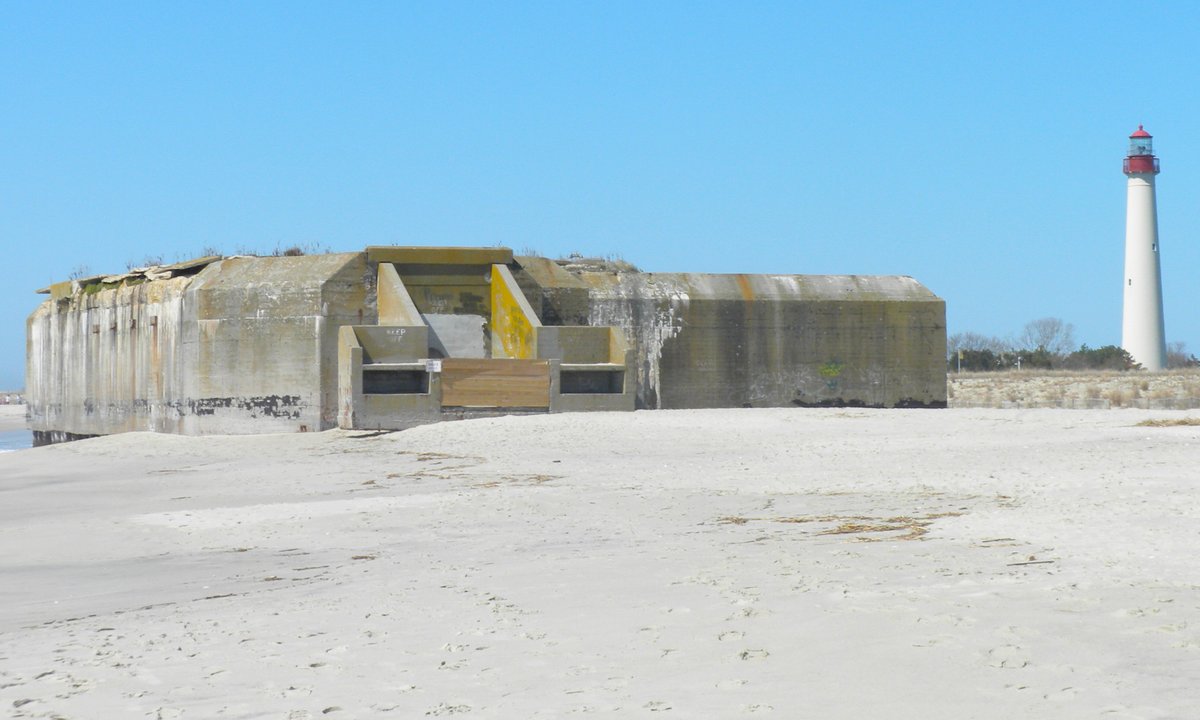
Battery 223 was built as part of the 1940 Modernization of the Coastal Defense program to address advances in offensive and defensive technology. This T-shaped block of reinforced concrete was designed to house 6-inch guns with a nine-mile range. The engineers designed the structure to survive a direct hit from battleships and aircraft using six-foot thick reinforced concrete walls and a thick blast-proof roof.
To protect the structure, the military originally covered the building with earth. The interior contains 20 rooms, including a plotting room, shell storage rooms, and an airlock for protection against chemical attacks. The facility also featured three diesel generators with a gallery of exhaust pipes and mufflers to provide power while the plotting room received coordinates from two towers to triangulate targets.
As warfare technology advanced, fixed coastal defenses became obsolete and the Modernization program was never completed. The guns of Battery 223 were never fired at an enemy, though live fire tests occurred. The army decommissioned the battery in 1944 and scrapped the guns by 1948. The Navy used the site for radio communications after 1958 before it became part of the Cape May Point State Park in 1962.
Today, the battery is no longer covered with earth and is in full view. The exterior consists of windowless blocks of formed concrete. Supported by wood pilings, the structure remains a preserved part of the coastal landscape in Lower Township, Cape May County, New Jersey.
Sources: Wikipedia, OpenStreetMap, Wikidata, Wikimedia Commons

Written by Kyle McLonely
Discuss this with the author and others
No comments yet. Be the first to start the conversation.