
Lidval. Income House, the Beginning of Northern Art Nouveau in Petersburg
Kamennoostrovsky Ave., 1-3, Saint Petersburg, Russia, 197046
Great Architects: Fyodor Ivanovich Lidval Jermaine
 För bläddring
Baron Fyodor Ivanovich Lidval (Johan Fredrik Lidvall, Swedish: Johan Fredrik Lidvall; May 20 (June 1), 1870 — March 14, 1945) was a Russian-Swedish architect of Swedish citizenship and origin, an academician of the Imperial Academy of Arts. F. I. Lidval was born in Saint Petersburg. In 1882, he graduated from the primary school at the Evangelical Swedish Church of Saint Catherine, and then from the Second Petersburg Real School (in 1888). He studied for two years at the Baron Stieglitz School of Technical Drawing. During vacations, Fyodor Lidval, like his brothers, twice served in the Royal Life Guards Regiment in Stockholm. From 1890 to 1896, Fyodor Lidval was a student in the architectural department of the Higher Art School at the Imperial Academy of Arts, where from 1894 to 1896 he studied in the workshop of architect L. N. Benois. He graduated from the Higher Art School with the title of artist-architect. The most productive period of Lidval’s creativity is associated with Saint Petersburg. Since 1899, he became a member of the Petersburg Society of Architects. In 1907, a special commission for awarding prizes for the best facades awarded Lidval a silver medal for the facade of N. A. Meltzer’s house (corner of Bolshaya Konyushennaya Street and Volynsky Lane) and an honorary diploma for the facade of A. F. Zimmerman’s income house (corner of Kamennoostrovsky Prospect and Vologodskaya Street). More than 30 buildings and structures were built in Saint Petersburg according to his designs. Lidval’s works began to play a significant role in the architecture of Saint Petersburg in the 1900s. In the first stage of his creativity (1897–1907), he was a bright representative of the "Northern Modern" style; his pursuits during these years were close to the aspirations of Scandinavian and Finnish architects. In 1918, ruined by the revolution, F. I. Lidval left for Stockholm, where he had sent his family a year earlier. After moving to Sweden, F. I. Lidval worked at the company of the famous architect Albin Stark and designed 16 signature houses in Stockholm, as well as participated in the development of projects for another 7 buildings (mainly as an interior designer). His first independent project was two residential buildings on Tysta Gatan (No. 3 and No. 5, 1922), whose appearance combines motifs characteristic of Lidval’s Petersburg period and Swedish architecture in the Swedish Grace style, distinguished by modesty and restraint. Among other projects he realized in Stockholm are the Shell oil company building on Birger Jarlsgatan and a house at the corner of Torsgatan and Saint Eriksgatan. Also, in the early 1930s, F. I. Lidval designed several residential buildings in Stockholm in the functionalism style. He died in 1945 as a result of a cerebral hemorrhage. He is buried in Stockholm at the Djursholm Cemetery.
Jermaine Kamennoostrovsky Ave., 1-3, Saint Petersburg, Russia, 197046
Great Architects: Fyodor Ivanovich Lidval Jermaine 
Bolshaya Morskaya St., 3-5, 6th floor, office 3, Saint Petersburg, Russia, 191186
Great Architects: Fyodor Ivanovich Lidval Jermaine 
Kamennoostrovsky Ave., 1-3, Saint Petersburg, Russia, 197046
Great Architects: Fyodor Ivanovich Lidval Jermaine 
Fontanka River Embankment, 54, Saint Petersburg, Russia, 191002
Great Architects: Fyodor Ivanovich Lidval Jermaine 
4 Tuchkov Lane Saint Petersburg Saint Petersburg Region, Russia, 199034
Great Architects: Fyodor Ivanovich Lidval Jermaine 
Krasnogvardeyskiy Lane, 15, Saint Petersburg, Russia, 194100
Great Architects: Fyodor Ivanovich Lidval Jermaine 
Malaya Posadskaya St., 15, Saint Petersburg, Russia, 197046
Great Architects: Fyodor Ivanovich Lidval Jermaine 
Apraksin Lane, 6, Saint Petersburg, Russia, 191023
Great Architects: Fyodor Ivanovich Lidval Jermaine 
Malaya Posadskaya St., 19, Saint Petersburg, Russia, 197046
Great Architects: Fyodor Ivanovich Lidval Jermaine 
Malaya Konyushennaya St., 3, Saint Petersburg, Russia, 191186
Great Architects: Fyodor Ivanovich Lidval Jermaine 
Malaya Konyushennaya St., 1-3, Saint Petersburg, Russia, 191186
Great Architects: Fyodor Ivanovich Lidval Jermaine 
Bolshaya Konyushennaya St., 19, Saint Petersburg, Russia, 191186
Great Architects: Fyodor Ivanovich Lidval Jermaine 
Bolshoy Prospekt of Vasilievsky Island, 92, Saint Petersburg, Russia, 197136
Great Architects: Fyodor Ivanovich Lidval Jermaine 
Bolshaya Morskaya St., 27, Saint Petersburg, Russia, 190000
Great Architects: Fyodor Ivanovich Lidval Jermaine 
Mokhovaya St., 14, Saint Petersburg, Russia, 191187
Great Architects: Fyodor Ivanovich Lidval Jermaine 
Kamennoostrovsky Ave., 61, Saint Petersburg, Russia, 197022
Great Architects: Fyodor Ivanovich Lidval Jermaine 
Sadovaya St., 34, Saint Petersburg, Russia, 194361
Great Architects: Fyodor Ivanovich Lidval Jermaine 
Nevsky Ave., 36, Saint Petersburg, Russia, 191186
Great Architects: Fyodor Ivanovich Lidval Jermaine 
Malaya Posadskaya St., 17-1, Saint Petersburg, Russia, 197046
Great Architects: Fyodor Ivanovich Lidval Jermaine 
Griboedov Canal Embankment, 2 lit. A, Saint Petersburg, Russia, 191186
Great Architects: Fyodor Ivanovich Lidval Jermaine 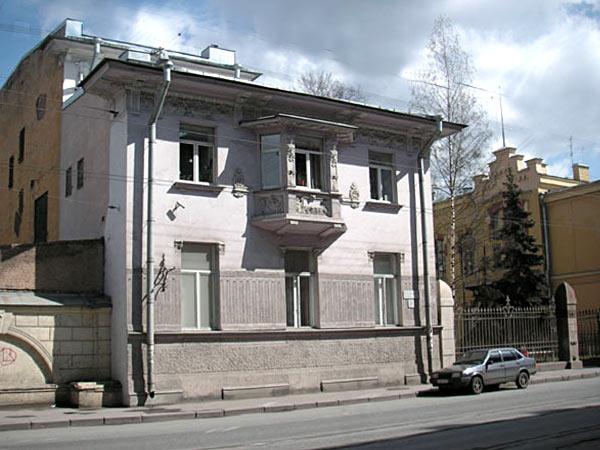
Lesnoy Ave., 21-1, Saint Petersburg, Russia, 194044
Great Architects: Fyodor Ivanovich Lidval Jermaine 
Bolshoy Sampsoniyevsky Ave., 27, Saint Petersburg, Russia, 194044
Great Architects: Fyodor Ivanovich Lidval Jermaine 
Bolshaya Morskaya St., 39, Saint Petersburg, Russia, 190000
Great Architects: Fyodor Ivanovich Lidval Jermaine 
4a Rentgen Street, Saint Petersburg, Russia, 197101
Great Architects: Fyodor Ivanovich Lidval Jermaine 
Bolshoy Prospekt P.S., 39, apt. 8, Saint Petersburg, Russia, 197198
Great Architects: Fyodor Ivanovich Lidval Jermaine 
9 Rentgen Street, Saint Petersburg, Russia, 197101
Great Architects: Fyodor Ivanovich Lidval Jermaine 
Professora Popova St., 41/5, Saint Petersburg, Russia, 197376
Great Architects: Fyodor Ivanovich Lidval Jermaine 
Professora Popova St., 41/5, Saint Petersburg, Russia, 197376
Great Architects: Fyodor Ivanovich Lidval Jermaine 
Nikolskaya St., 3, Astrakhan, Astrakhan Oblast, Russia, 414038
Great Architects: Fyodor Ivanovich Lidval Jermaine 
43 Maksima Gorkogo St., Saratov, Saratov Oblast, Russia, 410003
Great Architects: Fyodor Ivanovich Lidval Jermaine 

Constitution Square, 12, Kharkiv, Kharkiv Oblast, Ukraine, 61000
Great Architects: Fyodor Ivanovich Lidval Jermaine 
Karl Marx Ave., 35, Omsk, Omsk Region, Russia, 644042
Great Architects: Fyodor Ivanovich Lidval Jermaine 
Sovetskaya St., 17, Lysva, Perm Krai, Russia, 618900
Great Architects: Fyodor Ivanovich Lidval Jermaine 
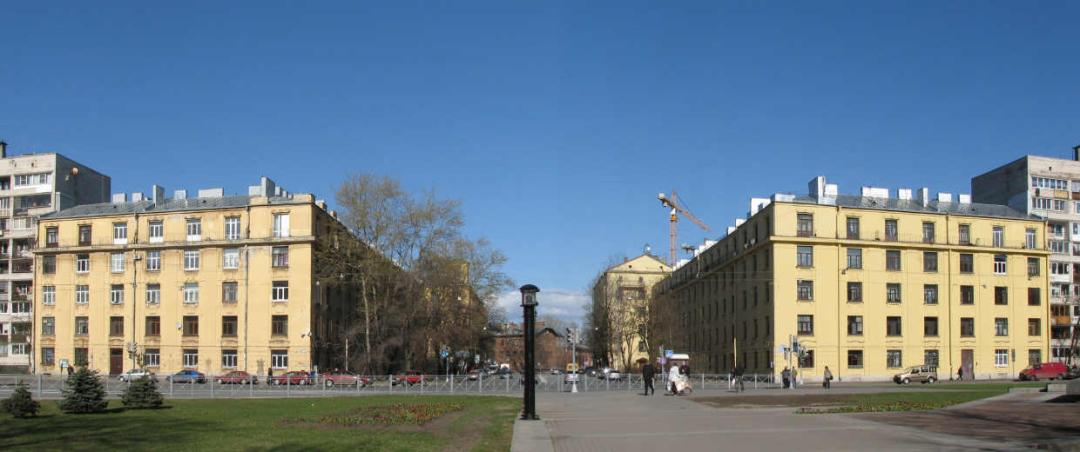
Zheleznovodskaya St., 19, Saint Petersburg, Russia, 199155
Great Architects: Fyodor Ivanovich Lidval Jermaine