
Church of Saint Catherine
Malaya Konyushennaya Street 1/3, lit. A, Malaya Konyushennaya St., Saint Petersburg, Russia, 191186
Petersburg and Ingria: Swedish Influence and Legacy Jermaine
 För bläddring
Saint Petersburg and its suburbs did not arise out of nowhere. At least since the mid-15th century and for centuries, there were about 1,000 settlements constantly located on the territory corresponding to modern St. Petersburg. The layout of modern Saint Petersburg and its suburban area is largely based on a stable system of settlements and roads that existed for centuries. Many pre-Petersburg roads became city streets, and ancient settlements were the original foundation for the creation of urban suburbs, quarters, and estates. Saint Petersburg was created based on the preceding system of settlement, which existed steadily during Swedish and even pre-Swedish times. In the immediate vicinity of Nien (Nyen) at the end of the 17th century, hundreds of settlements were located. For example, in the delta of the Neva alone, there were more than 120 settlements of various sizes. Swedish cartographic materials allow us to reconstruct a branched network of roads, a dense system of settlements, and even the exact outlines of developed lands. The majority of settlements were located along the banks of the Neva, its channels and tributaries, along state highways and local roads, as well as in groups (or "nests") on elevated places, creating a branched network. From Noteborg to Nien, settlements formed a continuous chain along both banks of the Neva, especially frequently located from the mouth of the Izhora River to the alignment of the spit of Vasilyevsky Island. The settlement and land development zones marked on Swedish maps correspond well with the mosaic and local nature of the placement of "islands" of fertile land among swamps and taiga. Saint Petersburg, one of the few largest cities in the world, has an exact founding date. Yet at the same time, Saint Petersburg absorbed the historical genetic memory of more than a millennium of continuous development of the Prinevye territories. Careful study of archival materials made it clear that Saint Petersburg was not a city created on an uninhabited, deserted place. And Sweden played a very significant role both in the prehistory and directly in the history of Saint Petersburg, both as a direct competitor for the right to own these territories and as a people. According to the 2010 census, only 50 Swedes were registered in Petersburg. It is hard to call them a diaspora, and even harder to find them in a city of five million. However, it is necessary to tell about the Petersburg Swedes, since they are the indigenous inhabitants of the Northern capital, and their talented representatives made a considerable contribution to Petersburg culture. In the 17th century, Swedes in Russia were called Svea Germans, or Sveas. But gradually the Russians adopted the German variant of the name of the people — Swedes. In the mid-19th century, almost 5% of the foreigners living in our city were Swedes (5.3 thousand out of 117 thousand). History has preserved the names of Swedish prisoners of war who performed important and complex work during the initial period of Saint Petersburg’s construction. Yagan Starkin treated the craftsmen of the Construction Office. Lars Lin, with 13 compatriots and 10 Russian carpenters, built the spire of the Peter and Paul Cathedral in 1717 (the construction supervisors noted the skill and courage of the Swedes when lifting large beams onto the dome and the spire of the bell tower of the Church of Peter and Paul). "Password" Karl Vridrik in 1716 worked "with letters and drawings." Chamber Junker Bergholtz, who lived in the city from 1721 to 1725, wrote in his diary: “We entered a long and wide alley paved with stone and justly called a prospect (Nevsky Prospect – editor’s note), because its end is almost not visible. It was laid out only a few years ago and exclusively by the hands of Swedish prisoners... It is extraordinarily beautiful in its enormous length and the cleanliness in which the Swedish prisoners keep it.†Since then, Swedes have built houses, churches, and made a significant contribution to the culture and science of our city. They were members of the Academy of Sciences of the Russian Empire. Thanks to the Swedish-Petersburg astronomer Lexell, for example, the planet Uranus was discovered (he mathematically proved that it was not a comet but a planet). Another of his compatriots, Oskar Backlund, for a long time headed the imperial observatory in Pulkovo and observed Encke’s comet — for his discoveries in astronomy, this comet was named Encke-Backlund. A large part of the life of the famous Swedish inventor, manufacturer, and creator of dynamite Albert Nobel also passed in our city. In 1991, an unusual monument to Nobel was opened on the Petrograd Embankment — in the form of a fantastic iron tree, whose twisted branches symbolize a peaceful explosion (after all, the invention of dynamite was originally intended for peaceful purposes — for mining, blasting, and earthworks). The son of a fashionable Swedish tailor, Fyodor Lidval, became a famous Russian architect. He built about thirty houses in Petersburg in the style of Northern Modernism (the Astoria Hotel, the Tolstoy House on the Fontanka, the Azov-Don Bank building on Bolshaya Morskaya Street, and others). And much more inseparably connects Saint Petersburg, Ingria, and Sweden.
Jermaine Malaya Konyushennaya Street 1/3, lit. A, Malaya Konyushennaya St., Saint Petersburg, Russia, 191186
Petersburg and Ingria: Swedish Influence and Legacy Jermaine 
WCV4+84 Krasnogvardeysky District, Saint Petersburg, Russia
Petersburg and Ingria: Swedish Influence and Legacy Jermaine 
Samson Fountain, Razvodnaya St., 2, Saint Petersburg, Russia, 198516
Petersburg and Ingria: Swedish Influence and Legacy Jermaine 
Kamennoostrovsky Ave., 1-3, Saint Petersburg, Russia, 197046
Petersburg and Ingria: Swedish Influence and Legacy Jermaine 
3 Severnny Val St., Vyborg, Leningrad Region, Russia, 188800
Petersburg and Ingria: Swedish Influence and Legacy Jermaine 
Krasnoarmeyskaya St., 17, Vyborg, Leningrad Region, Russia, 188800
Petersburg and Ingria: Swedish Influence and Legacy Jermaine 
Krasnoarmeyskaya St., 17, Vyborg, Leningrad Region, Russia, 188800
Petersburg and Ingria: Swedish Influence and Legacy Jermaine 
Krepostnaya St., 2, Vyborg, Leningrad Region, Russia, 188800
Petersburg and Ingria: Swedish Influence and Legacy Jermaine 
3 Severnny Val St., Vyborg, Leningrad Region, Russia, 188800
Petersburg and Ingria: Swedish Influence and Legacy Jermaine 
3 Severnny Val St., Vyborg, Leningrad Region, Russia, 188800
Petersburg and Ingria: Swedish Influence and Legacy Jermaine 
Summer Garden, Embankment of Lebyazhya Kanavka, Saint Petersburg, Russia, 191186
Petersburg and Ingria: Swedish Influence and Legacy Jermaine 
Krepostnaya St., 2, Vyborg, Leningrad Region, Russia, 188800
Petersburg and Ingria: Swedish Influence and Legacy Jermaine 
Powder Magazine, P.F. Ladanova St., 3, Vyborg, Leningrad Region, Russia, 188800
Petersburg and Ingria: Swedish Influence and Legacy Jermaine 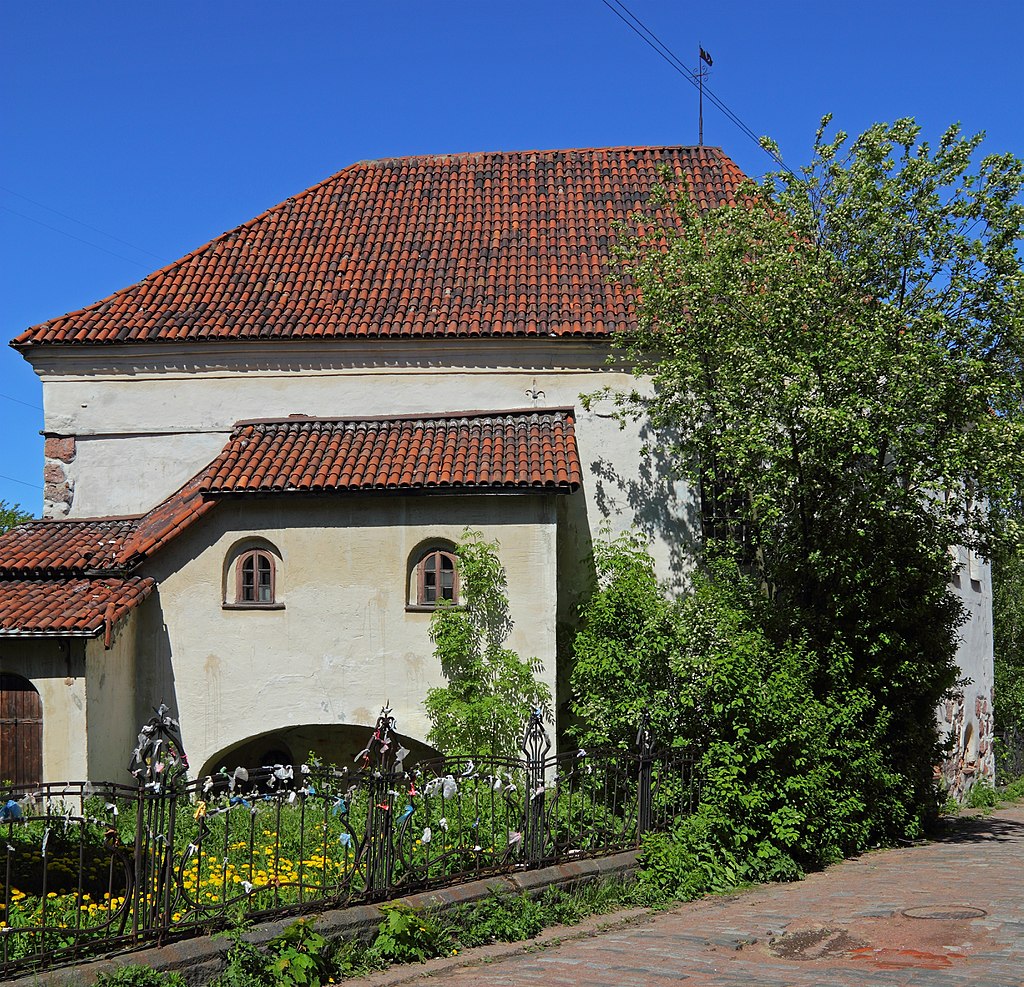
4 Vodnoy Zastavy St., Vyborg, Leningrad Region, Russia, 188800
Petersburg and Ingria: Swedish Influence and Legacy Jermaine 
7X3J+XC Pebbles, Leningrad Oblast, Russia
Petersburg and Ingria: Swedish Influence and Legacy Jermaine 
Nevsky Ave., 22 building 2, Saint Petersburg, Russia, 191186
Petersburg and Ingria: Swedish Influence and Legacy Jermaine 
MM2P+8W Tarulinna, Republic of Karelia, Russia
Petersburg and Ingria: Swedish Influence and Legacy Jermaine 
Golitsynskaya St., 1x, Saint Petersburg, Russia, 194362
Petersburg and Ingria: Swedish Influence and Legacy Jermaine 
ter. Kremlin, 15, Veliky Novgorod, Novgorod Region, Russia, 173012
Petersburg and Ingria: Swedish Influence and Legacy Jermaine 
VRV3+PC Stolbovo, Leningrad Oblast, Russia
Petersburg and Ingria: Swedish Influence and Legacy Jermaine 
93HQ+8X Glass, Leningrad Oblast, Russia
Petersburg and Ingria: Swedish Influence and Legacy Jermaine 
Kamennoostrovsky Ave., 1-3, Saint Petersburg, Russia, 197046
Petersburg and Ingria: Swedish Influence and Legacy Jermaine 
Griboedov Canal Embankment, 2 lit. A, Saint Petersburg, Russia, 191186
Petersburg and Ingria: Swedish Influence and Legacy Jermaine 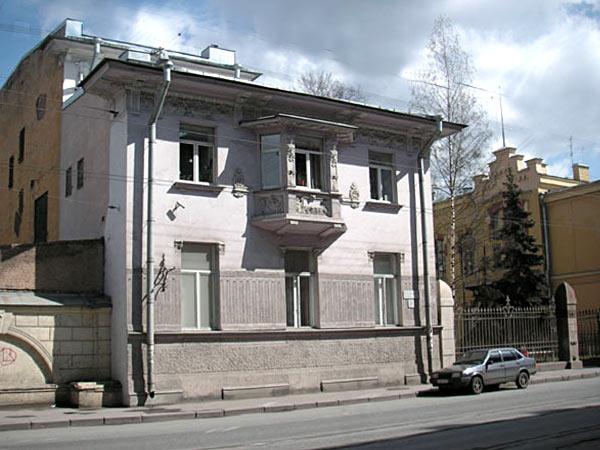
Lesnoy Ave., 21-1, Saint Petersburg, Russia, 194044
Petersburg and Ingria: Swedish Influence and Legacy Jermaine 
Bolshoy Sampsoniyevsky Ave., 27, Saint Petersburg, Russia, 194044
Petersburg and Ingria: Swedish Influence and Legacy Jermaine 
Professora Popova St., 41/5, Saint Petersburg, Russia, 197376
Petersburg and Ingria: Swedish Influence and Legacy Jermaine 
Malaya Konyushennaya St., 1-3, Saint Petersburg, Russia, 191186
Petersburg and Ingria: Swedish Influence and Legacy Jermaine 
GM5X+6R Landyshevka, Leningrad Oblast, Russia
Petersburg and Ingria: Swedish Influence and Legacy Jermaine 
Pirogovskaya Embankment, 19, Saint Petersburg, Russia, 194044
Petersburg and Ingria: Swedish Influence and Legacy Jermaine 
4 Dekabristov Lane, Saint Petersburg, Russia, 199178
Petersburg and Ingria: Swedish Influence and Legacy Jermaine 
First Engineering Bridge, Pestelya Street, Saint Petersburg, Russia, 191023
Petersburg and Ingria: Swedish Influence and Legacy Jermaine 
Zaube, Zaube Parish, LV-4113, Zaube, Zaube Parish, Cēsis Municipality, LV-4113, Latvia
Petersburg and Ingria: Swedish Influence and Legacy Jermaine 