
Imperial Parks: Pavlovsk
För bläddring
Pavlovsk Park is a unique monument of landscape art from the late 18th to early 19th century. Together with the Pavlovsk Palace, it forms a unified artistic palace and park ensemble. Its history begins with the founding of Pavlovsk in 1777. Initially, it was forest land used for royal hunts. With the appearance of the first modest wooden palaces, Paullust and Mariental, small gardens began to be created around them on the hilly banks of the Slavyanka River. Gazebos, bridges, ruins, and flower beds were typical features of a Russian estate. The transformation of the forest into a park began with the arrival of Charles Cameron, who created a project for a new landscape park on the banks of the Slavyanka River, which serves as the park’s connecting artery. It was in the second half of the 18th century that the fashion for landscape parks appeared in Europe. It first took hold in England, which is why such parks are called English parks. Using Pavlovsk as an example, Cameron was the first to develop the ideas and principles of the new landscape architecture. Since the future park was a forested area, work began with clearing glades. Under Cameron, almost all the main park compositions emerged — the Palace District, the Great Star, the Slavyanka River Valley, the Menagerie, and the White Birch. A large, wide clearing, which was designed as the Triple Linden Alley, became the defining feature of the Palace District adjacent to the palace. Here, Cameron employed the technique of formal planning, a vivid example of which is the Private Garden and the Aviary Section. Later, architects V. Brenna, A.N. Voronikhin, and K.I. Rossi, without changing Cameron’s plan for these districts, made their own additions and enriched their overall character. https://pavlovskmuseum.ru/about/park/
 Jermaine
 Karta

Deer Bridge

Colonnade of Apollo

Dairy
Centaur Bridge

New Silvia

Monument to Beloved Parents

Pink Pavilion
Runic Cascade

Old Silvia

The Benefactor Husband or The Mausoleum of Paul I

Pavilion Temple of Friendship

Cast Iron (Nikolaevsky) Gates

The Grand Palace in Pavlovsk

Palace Church of the Apostles Peter and Paul

Pavilion of the Three Graces

Bolshoy Kamenniy Bridge over the Slavyanka River
Bolshoy Kamenniy Bridge, Prosveshcheniya St., Saint Petersburg, Russia, 196621
Imperial Parks: Pavlovsk Jermaine 
Monument to Emperor Paul I
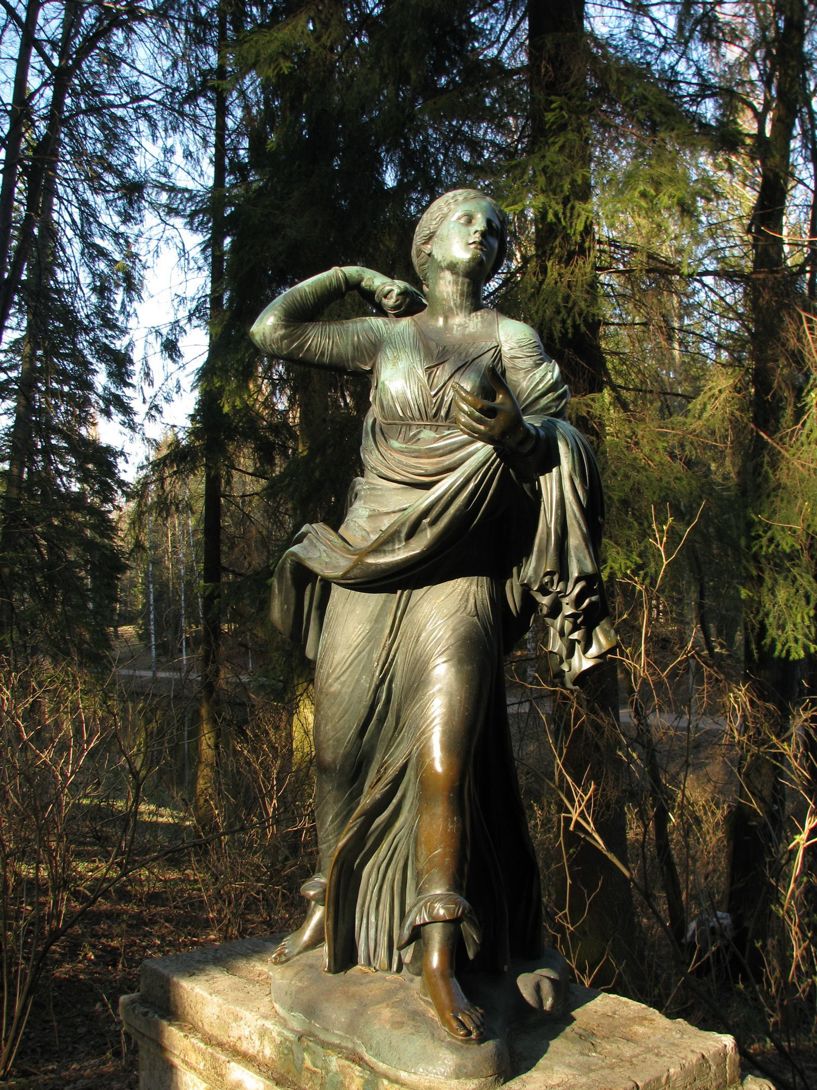
Niobides

Saw Tower
Saw tower

Large stone staircase

Pavilion "Aviary"

Rossi Pavilion — a monument to Empress Maria Feodorovna

Triple Linden Alley

Black Bridge - Dam

Hunchback Bridge

Family Grove – a special memorial place in Pavlovsky Park

Musical Station of the Tsarskoye Selo Railway

Round Hall ("Musical Pavilion")
Kruhzolzalnye Ponds, Upper Kruhzolzal Pond, St. Petersburg, Russia, 196625
Imperial Parks: Pavlovsk Jermaine 
Elizabethan Pavilion (Krasnodoliny)

Red Valley
Novo-Sadovaya St., 50, Saint Petersburg, Leningrad Region, Russia, 196625
Imperial Parks: Pavlovsk Jermaine 
Ruins at the Elizabethan (Krasnodolny) Pavilion
Novosilviy Bridge over the Slavyanka River, Okruzhnaya Avenue, Saint Petersburg, Russia, 196625
Imperial Parks: Pavlovsk Jermaine 
Novosilviy Bridge
Novosilviy Bridge over the Slavyanka River, Okruzhnaya Avenue, Saint Petersburg, Russia, 196625
Imperial Parks: Pavlovsk Jermaine 
Circle of White Birches
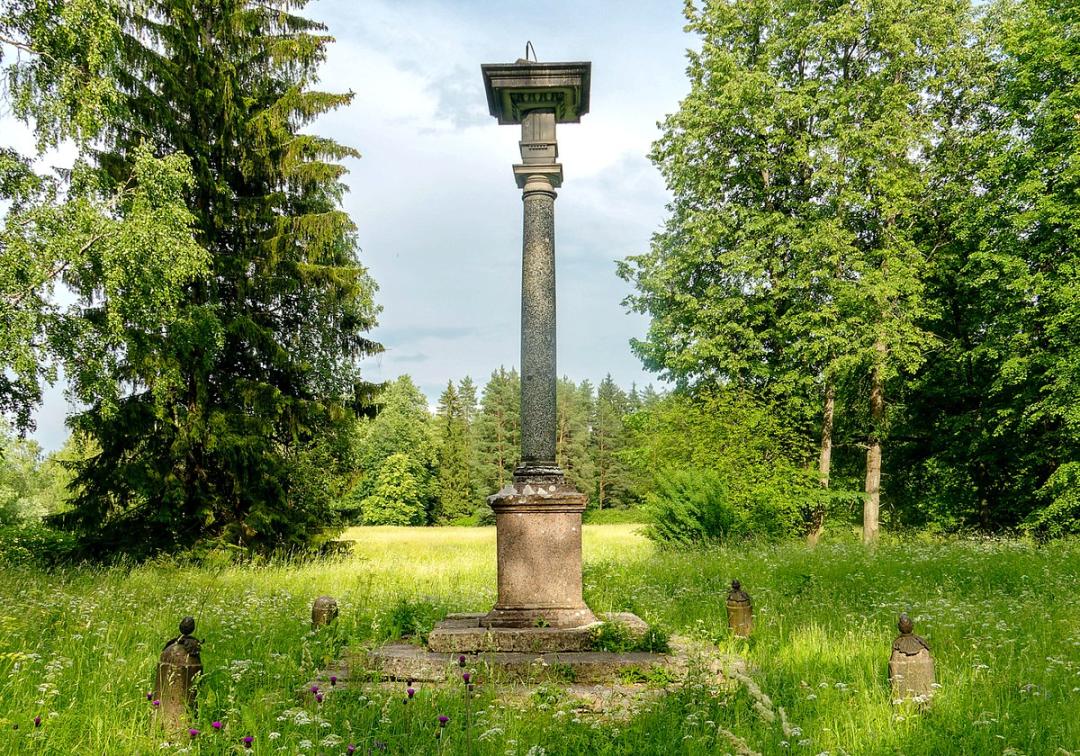
Column of Princess Lieven

The Parade Field and Princess Lieven Island

Column "End of the World"
