

The city of Pushkin (formerly Tsarskoye Selo) is one of the closest suburbs of Leningrad. Almost the same age as the northern capital, it originated as a royal country residence. Regiments, including Jewish soldiers, were stationed in Tsarskoye Selo. One of the oldest Jewish communities in the vicinity of St. Petersburg arose in the city. At the beginning of the 20th century, the Tsarskoye Selo Jewish community even acquired a building for a prayer house. In September 1941, fascist troops approached Leningrad. The authorities urgently ordered the evacuation of museum valuables, but not people. Moreover, since both Pushkin and Leningrad became frontline cities, it was possible to travel from Pushkin to Leningrad only with special passes. Those who worked in Leningrad had such passes; others did not.
On the night of September 17 to 18, 1941, the fascists entered Pushkin. Those who left for work in Leningrad on the morning of September 17 could no longer return home. Very few residents of Pushkin managed to leave the city before the arrival of the Germans. The fascists decided to clear the frontline city of its civilian population. During the first week of occupation, all men aged 15 to 55 (about 10,000 people) were taken from Pushkin to Gatchina, and then further. The Jewish "action" was carried out quickly. Registration of Jews was announced at the end of September. There was a bomb shelter in the basement of the Lyceum. Many residents of Pushkin hid there after the Germans arrived. One night at the end of September, the fascists burst into the basement, lined up everyone inside, and began sorting. All Jews were taken out of the line. Neighbors agreed to save small children from Jewish families, but even infants held by Russian women were taken by the Germans if they suspected the child was Jewish.

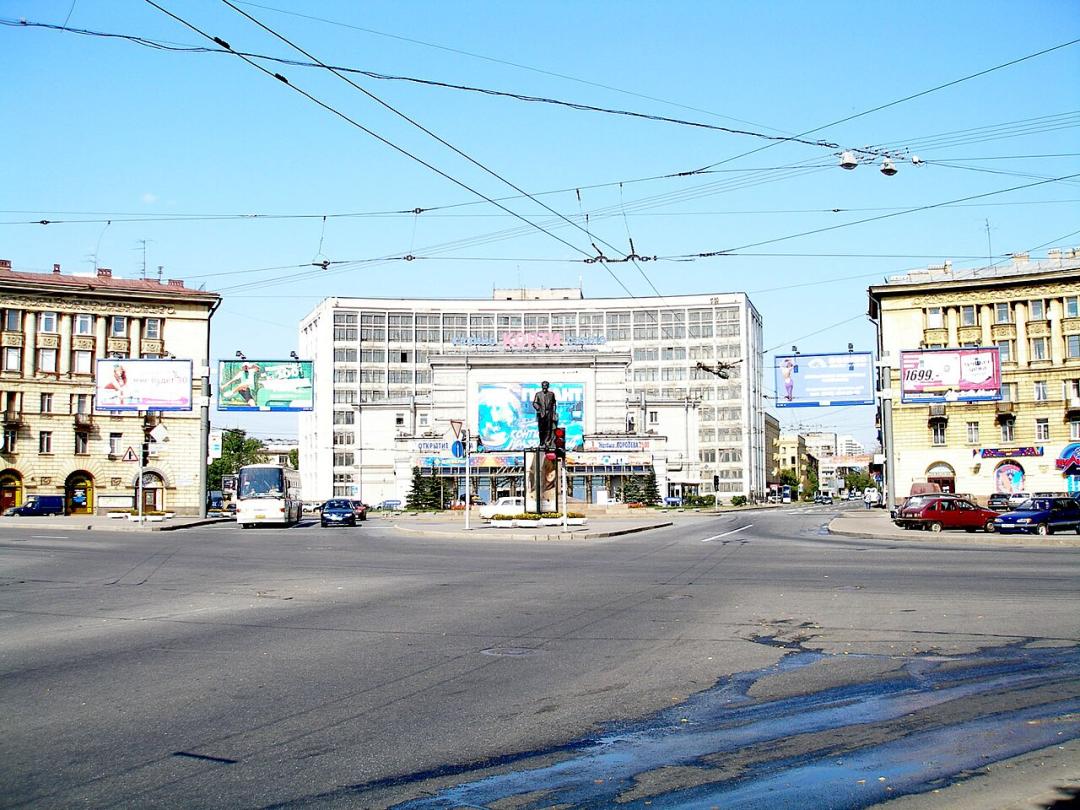
The Jews were gathered in the city center, near the "Avangard" cinema, lined up in a column, and led toward the Alexander Palace. A resident of Pushkin, Ivanova, recalled seeing a column of Jews that included elderly people, women, and children — about 800 people in total. Eyewitnesses reported that when the Jews were led to the execution, they sang a sad song. The children sang too, unaware that with every step they were approaching death. According to some accounts, the execution took place in Alexander Park opposite the southern wing of the Alexander Palace; according to others, near the Black Ponds of Babolovsky Park. Neither the exact location of the "action," nor the number of those executed, nor the exact date of the execution can be established now. The Germans concealed the execution site and did not allow anyone near it. By the end of the war, local residents no longer remembered the dates of the execution — the burden of heavy experiences was too great for everyone.

Surviving residents of Pushkin who were children at the time recall that the morning after the execution, the Germans announced a distribution of belongings. Many people gathered, either to identify the belongings of acquaintances or to receive them. The names of those executed are almost unknown. It was possible to establish the names only of those whose relatives were informed about the fate of their families by neighbors and eyewitnesses after the war.
For almost 45 years, Soviet propaganda suppressed the tragedy of the Jewish people. In hundreds of towns and shtetls, Jewish initiatives to commemorate the victims faced persistent resistance from the authorities. Where monuments were erected on Jewish mass graves (with funds from relatives and close ones), six-pointed stars and inscriptions in Yiddish and Hebrew were often removed. To establish a monument in Pushkin, Jewish activists also had to overcome many obstacles. The memorial is located in a square at the intersection of Dvortsovaya and Moskovskaya streets, near the Alexander Palace, where mass executions took place. In total, about 3,600 Jews were killed by the Nazis in the occupied territory of the Leningrad region, of whom approximately 250–300 were in Pushkin. During the Soviet era, the topic of the Holocaust was silenced by the authorities. Only in the 1980s did a group of Jewish activists begin researching the history of the genocide of Jews near Leningrad. On October 13, 1991, at their initiative, a monument to the Jews — victims of Nazism — was unveiled. The central part of the memorial is the sculpture "Formula of Sorrow" by Soviet artist Vadim Sidur. The architectural design of the monument was created by Boris Beyder. On the memorial plaque, designed as a projection of the Star of David, there is a quote from the Psalms in Hebrew and Russian, as well as an inscription dedicated to the murdered Jews.
Sources:


Written by Jermaine
Discuss this with the author and others
No comments yet. Be the first to start the conversation.