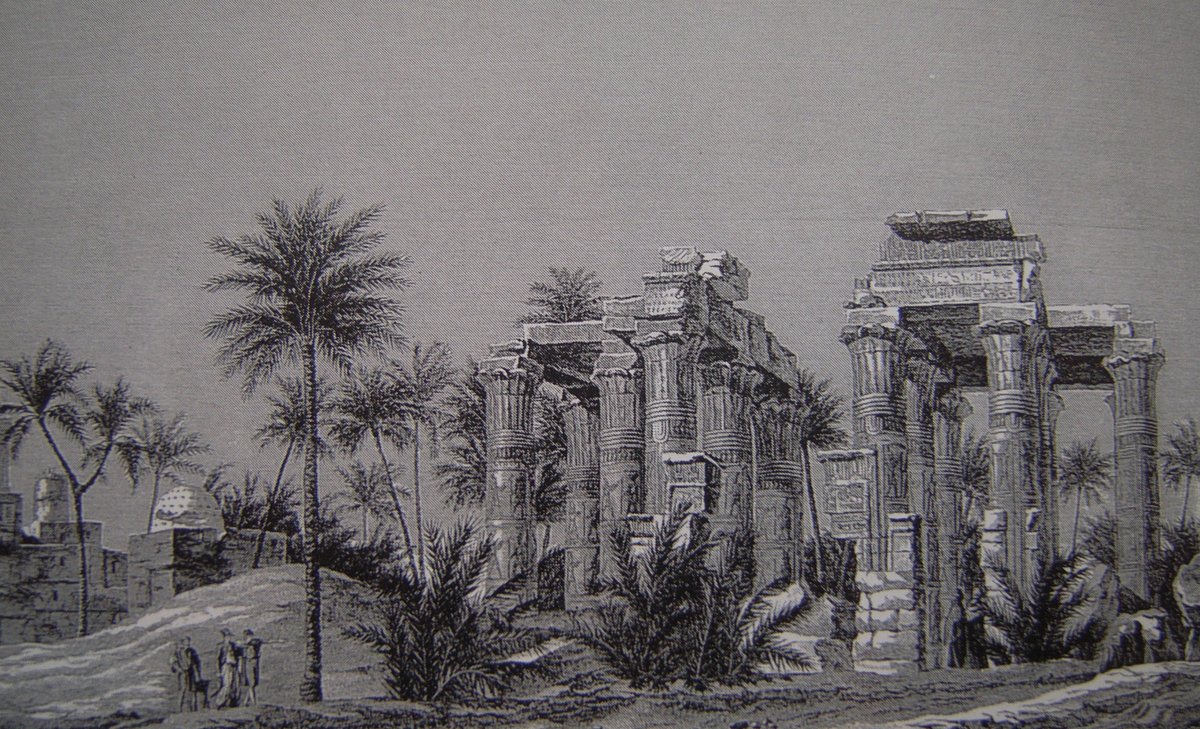

Qaw el-Kebir, also known as El Etmannyieh, is a village in the Asyut Governorate of Egypt. An old settlement, it was known in Ancient Egypt as Tjebu or Tkow, names which mean 'high mountain'. During the Greek and Roman periods, the site was called Antaeopolis, named after its tutelary deity - the war god Antaeus, who represented a fusion of Seth and Horus.
The site holds significant history from the Middle Kingdom. Several large terraced funerary complexes built by officials of the 10th nome during the Twelfth and Thirteenth dynasties represent a peak of non-royal funerary architecture. The tomb of a local governor named May dates to the New Kingdom, and a Prophet of Nephthys is also attested for the area.
A Ptolemaic temple of Ptolemy IV Philopator was once located in the village, later enlarged and restored under Ptolemy VI Philometor and Marcus Aurelius. This large edifice featured an 18-column pronaos and a twelve-column hypostyle hall before the inner sanctum. The temple was destroyed in the early nineteenth century.
The edifice was dedicated primarily to Antaeus, whose name is written with an obscure hieroglyph. Nephthys was the primary goddess who received worship in this temple, or perhaps in an adjunct shrine, as the female power of Nemtiwey. Today, visitors can see notable reliefs of both Antaeus and Nephthys in cliffside quarries not far from the ancient site.
Sources: Wikipedia, OpenStreetMap, Wikidata, Wikimedia Commons
Written by Mutabor
Discuss this with the author and others
No comments yet. Be the first to start the conversation.