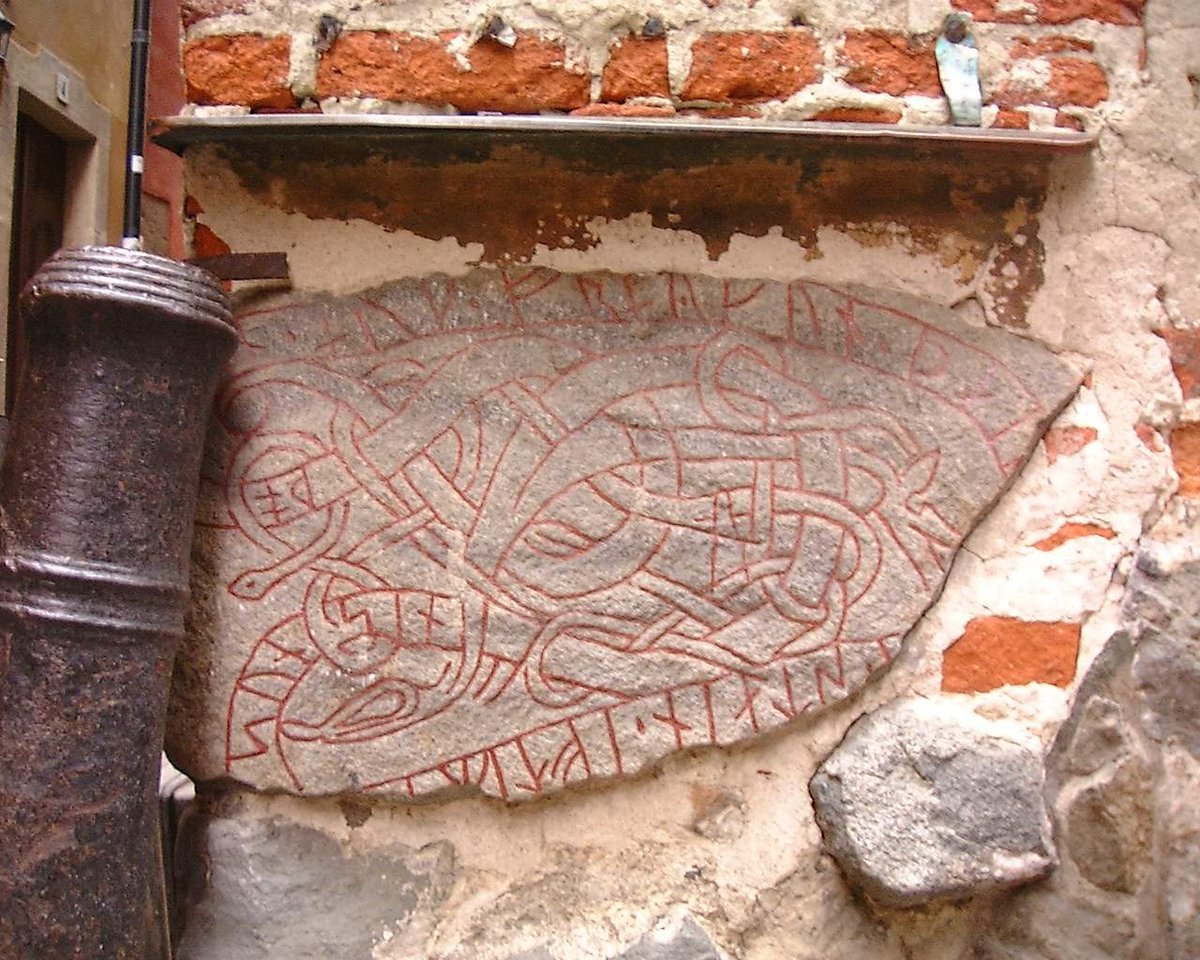

Located at the meeting of Prästgatan and Kåkbrinken, a modest stone is set into a wall. Though it stands only half a metre tall, it speaks with the voice of the 11th century. The Urnes style defines its surface, where a winding arabesque of loops creates a dragon. These carvings reveal that Torsten and Frögunn raised the monument for their son, though his name remains a mystery to history.
Since these heavy stones were rarely moved, this piece likely belonged to a nearby Iron Age settlement that existed long before Stockholm grew into a city. It captures a cultural shift toward Christianity, marked by a cross on the right side. Data from laser scans in 2000 indicates this cross was likely a later addition because the tool marks differ from the primary dragon design.
Evidence suggests a master carver executed the main details while an apprentice might have cut the shallower lines. Now, the stone maintains its permanent place in Gamla stan. It continues to offer its story to thousands of people who pass by every day, inviting us to look closer at its history.
Sources: Wikipedia, OpenStreetMap, Wikidata, Wikimedia Commons



Written by Nik Frost
Discuss this with the author and others
No comments yet. Be the first to start the conversation.