Peter and Paul Fortress, Saint Petersburg, Russia, 191186
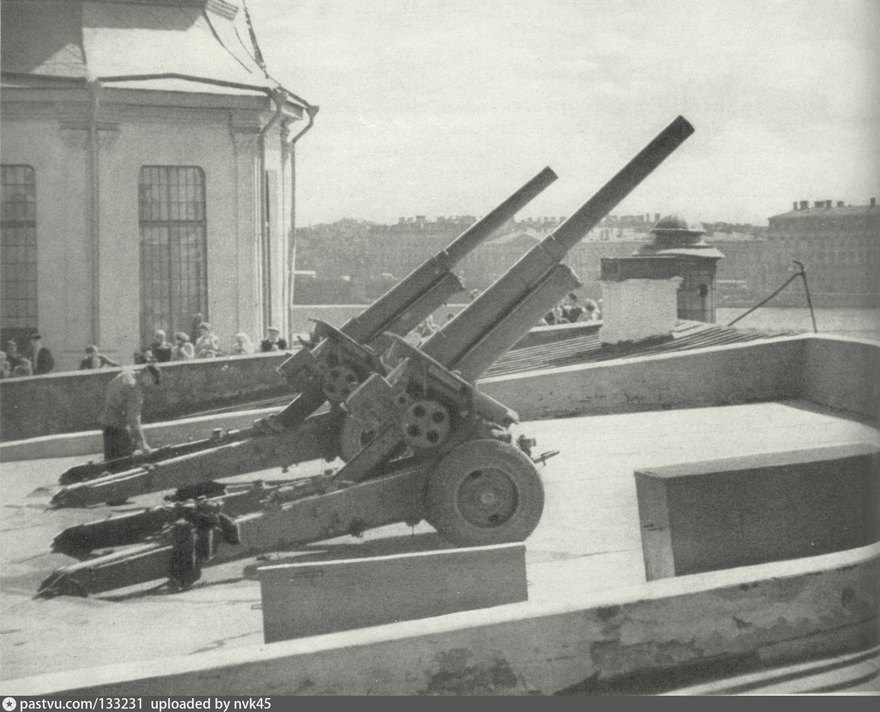
Since the summer of 1703, the cannon on the Sovereign's Bastion of the Peter and Paul Fortress announced the beginning and end of work. Already in 1704, on the Sovereign's Bastion, flags were raised and lowered to the sound of cannon fire, which were flown "from the breaking of dawn until evening."
The tradition of the blank shot from the Sovereign's Bastion was introduced by Peter I himself. At that time, flags were raised and lowered with the shot — signaling the start and end of work.
The initiator of the noon shot ceremony was the French astronomer, academician of the Russian Academy of Sciences Joseph Nicolas Delisle. In 1735, he proposed firing a shot at noon from the Admiralty upon a signal from the observatory on the Kunstkamera tower.
After the flood of 1777, Catherine the Great ordered frequent shots from the fortress walls to alert the city’s residents about flooding. The number of shots fired indicated how many feet the water had risen above the ordinary level.
Under Paul I, the tradition of firing was canceled, but if an heir to the throne was born, the cannon fired 101 times; if a Grand Duchess — the emperor’s daughter — was born, there were 52 shots. When Paul had his 10th child, Mikhail, the cannon fired 202 times.
However, the first cannon shot announcing noon in Saint Petersburg was fired only on February 6 (18), 1865, from the central courtyard of the Admiralty. A 60-pound naval cannon was used for the shot, connected to special clocks of the central telegraph station, which in turn were linked to the clocks of the Pulkovo Observatory.
Notably, to ensure precise timing, the 60-meter naval “mortar” was connected to the clocks of the central telegraph station.
In 1872, the Naval Ministry ordered the signal cannon to be moved to the Peter and Paul Fortress. By the highest decree of April 9, 1873, a new firing regulation was developed and a gun crew formed. On August 18, 1873, a similar 60-pound cannon weighing 400 poods on an iron 100-pood carriage was delivered from the Kronverk warehouse. The location of the cannon was determined by the commandant of the Peter and Paul Fortress. It was installed on the rampart of the right face of the Naryshkin Bastion next to the Flagstaff Tower. On September 24, 1873, the noon shot was fired for the first time from the Naryshkin Bastion of the Peter and Paul Fortress. The fortress cannon was connected to the clocks of the central telegraph station by a special cable. This system was unreliable due to the long distance. The clocks of the Central Telegraph Station were connected to the clocks in the commandant’s office, which in turn were connected to the cannon by an electric circuit. The maintenance and firing of the cannon were entrusted to a separate company of fortress artillery, part of the Peter and Paul Fortress garrison and quartered on its territory. Every day, a detail of one officer and three soldiers was assigned to fire the noon shot. The cannon was loaded with black powder. Daily shots shook the Flagstaff Tower. For this reason, in 1874, the 60-pound cannon was replaced by a 24-pound cast-iron cannon loaded from the muzzle. Since 1898, the shot was fired from a new 24-pound short cast-iron cannon loaded from the breech. This cannon served for 10 years and was replaced at the end of 1907 by a 24-pound bronze cannon due to the breech of the old cannon breaking. On October 25, 1917, the cannon shot from the Naryshkin Bastion signaled the firing of the cruiser Aurora, announcing the start of the October armed uprising. After the events related to the 1917 revolution, mentions of the noon shot disappeared, but the Peter and Paul Fortress cannon continued to be used to signal the start of parades and mourning ceremonies and to warn of floods.
Mentions of the noon shot reappear in 1926. For the noon shot, a 3-inch cannon model 1902 was installed in January 1926. Preparation for the signal shots was completed by March 8, 1927. The shot was fired on a telephone call from the “time service” laboratory of the Main Chamber of Weights and Measures. In 1927, the old cannon was replaced by two 6-inch guns that produced a louder shot. In 1934, by order of S. M. Kirov, the noon shots were canceled as an anachronism. But in connection with the celebration of the city’s 250th anniversary, the noon shot was resumed from June 23, 1957. Until June 23, 2009, the shot was fired from a 152-mm howitzer-gun model 1937 (ML-20).
Currently, on the Naryshkin Bastion, two D-30 howitzers of 122 mm caliber from 1975 and 1979 are installed for signal shots. They are operated by two people. For a long time, the signal guns were manned by servicemen of the Leningrad Military District. Now the guns are under the jurisdiction of ROSTO, and their crew includes employees of the State Museum of the History of Saint Petersburg and retired military personnel. They wear naval uniforms. One gun fires the shot, the other is a reserve. In exceptional cases, shots are fired simultaneously from both guns.
In 1987, the signal guns fired 21 salvos one after another, saluting the cruiser Aurora as it moved from the docks after repairs to its mooring place. In March 1988, an additional shot thundered at 14:20, announcing the birth of the city’s 5-millionth resident. The cannon also made unscheduled shots in 1998 on the day the remains of the royal family were delivered to the Peter and Paul Fortress and then on the day of their burial. At midnight, Saint Petersburg greeted the year 2001 (the beginning of the 21st century and the 3rd millennium) with a simultaneous shot from both guns.
The right to fire the noon shot is occasionally granted to honorary citizens of Saint Petersburg and distinguished guests of the city.
Sources:
https://ru.wikipedia.org/wiki/Noon_Shot
https://www.spbmuseum.ru/publication/831/2637/
https://kuda-spb.ru/event/poludennyj-vystrel-v-petropavlovskoj-kreposti/

