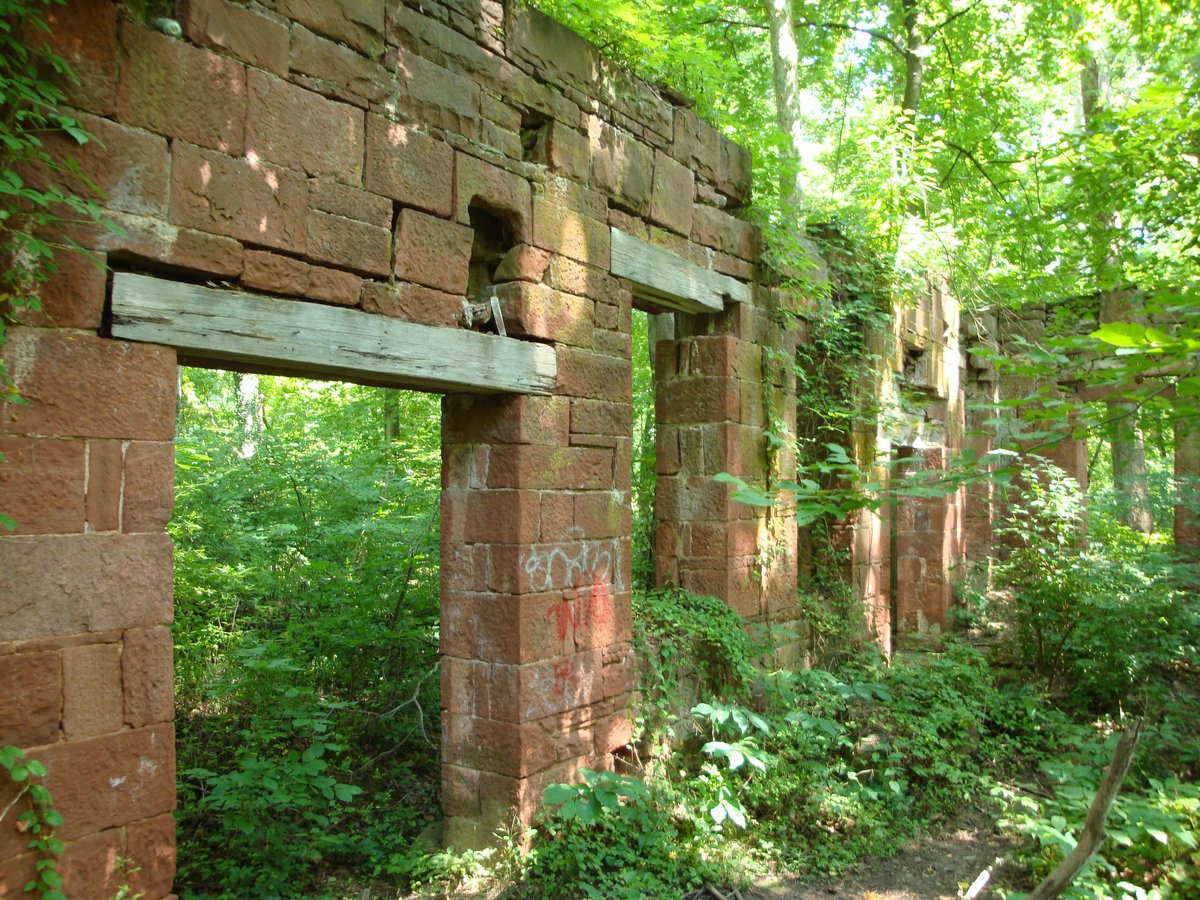

Located at Seneca in Montgomery County, Maryland, the Seneca Quarry is a historic site along the Chesapeake and Ohio Canal on the north bank of the Potomac River. This quarry was the source of stone for two Potomac River canals, including the C&O Canal. The red sandstone, also known as redstone, was prized for its durability, ease of cutting, and bright color. Iron oxide gives the stone its distinctive rust color.
The quarry provided stone for hundreds of buildings around Washington, D.C, such as houses in the Dupont Circle and Adams Morgan areas, and the Smithsonian Castle. The Peter family owned the quarry from 1781 until 1866. John P.C. Peter made the quarry a commercial success by utilizing the C&O Canal to transport the heavy sandstone to the D.C. market. He also built a stonecutting mill that drew power from the adjacent canal turning basin.
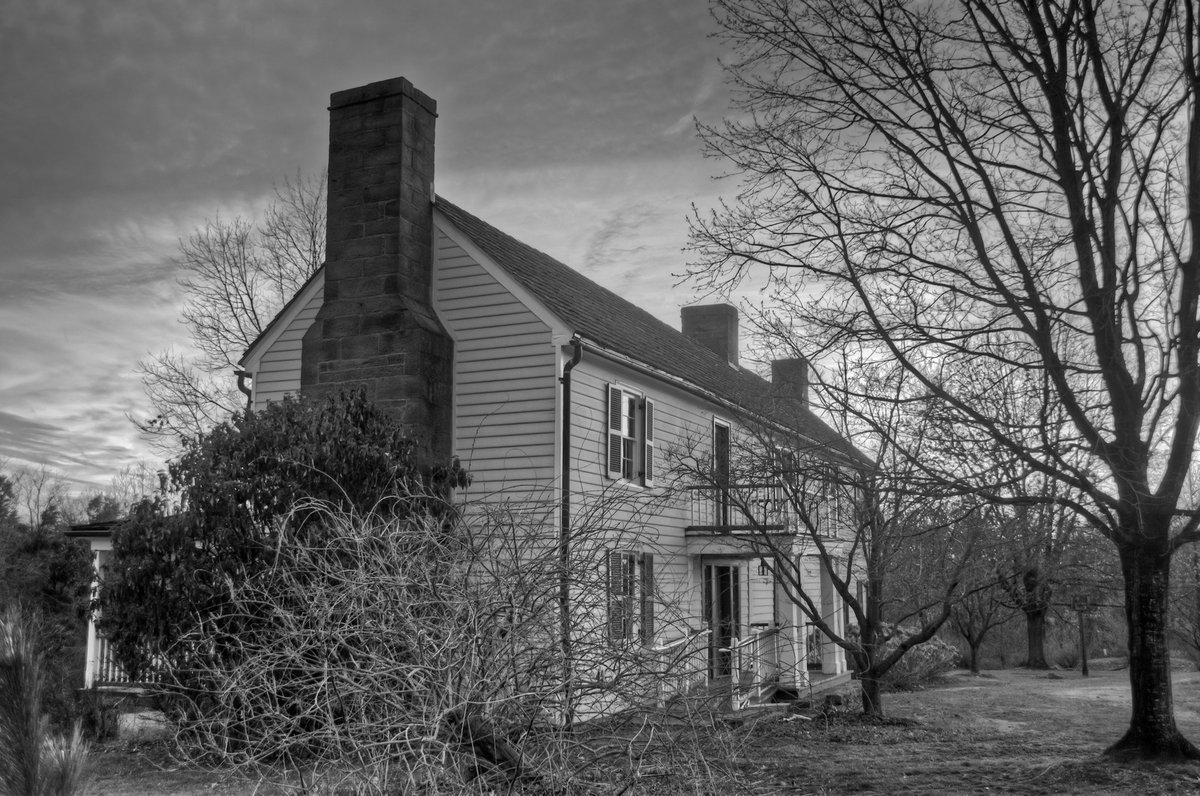
Today, the quarry is overgrown with sycamore trees, tulip poplars, and dense brush like wild rose, making it often impenetrable. The property includes ruins of the stonecutting mill and the restored quarry master's house, which is located within Seneca Creek State Park. The quarry proper, the Seneca Aqueduct, and the quarry cemetery are all part of the Chesapeake and Ohio Canal National Historical Park.
Sources: Wikipedia, OpenStreetMap, Wikidata, Wikimedia Commons

Written by Friendly Jane
Discuss this with the author and others
No comments yet. Be the first to start the conversation.