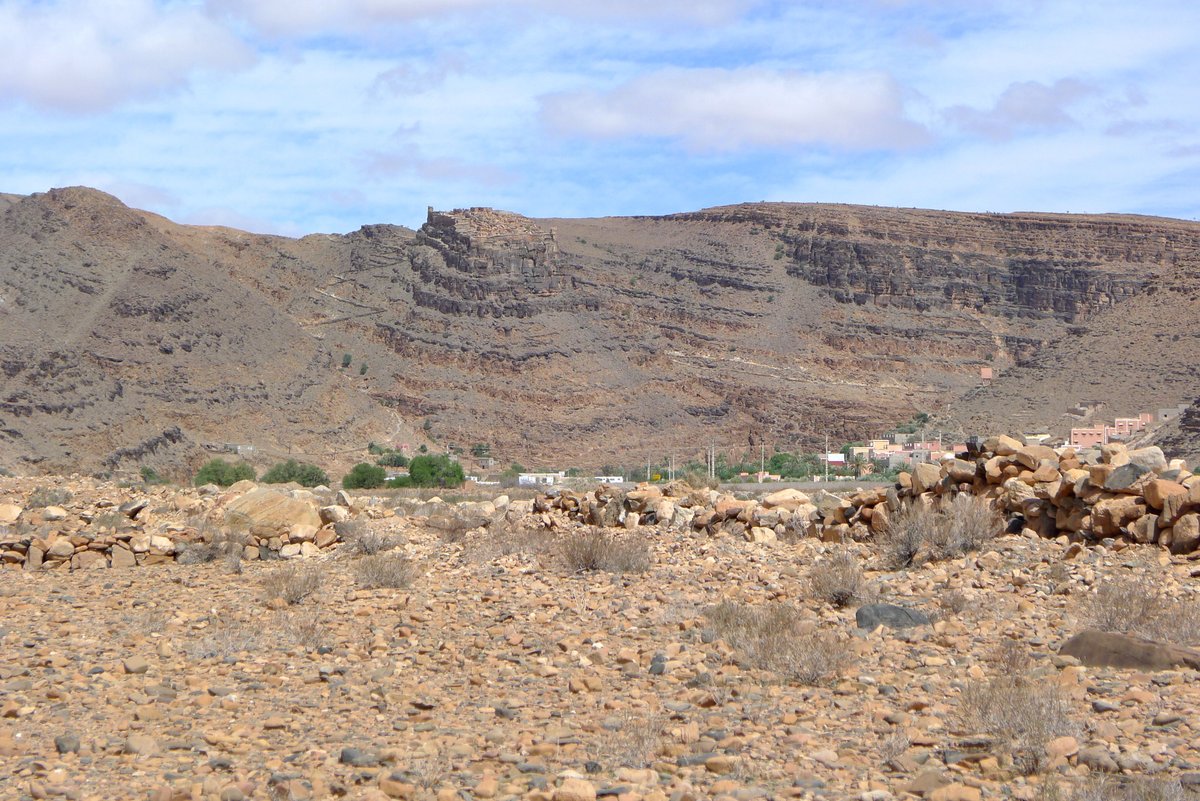

The mountains of the Anti-Atlas hide a secret of stone and survival. In the village of Amtoudi, two great granaries rise from the jagged rocks. They are Agadire, built by the Berber people to store supplies in a rugged landscape.
Agadir Id Aïssa stands as a massive courtyard of stone, a granary built some eight hundred years ago. It is designed with curved outer walls and two low corner towers that blend into the cliffside. Inside, a wall ring made of large and small stone plates, joined without mortar, encloses an area of about 2500 m2. Various storage chambers of different sizes are built into these walls. Here, the villagers stored food such as barley, almonds, oil, and dates, while rainwater was collected in cisterns.
In times of conflict, when raiding tribes or wandering nomads threatened the peace, the village population could take shelter here with their livestock for a few days. The structure also features three cell structures made of small stone slabs that served to house beehives.
Today, the granary remains a prominent feature of the landscape. It sits high above the dry riverbed, where ancient petroglyphs of long-extinct elephants still remain on the nearby rocks. While the village below continues its quiet life, the great Agadir Id Aïssa remains a significant part of the local heritage.
Sources: Wikipedia, OpenStreetMap, Wikidata, Wikimedia Commons
Written by Mutabor
Discuss this with the author and others
No comments yet. Be the first to start the conversation.