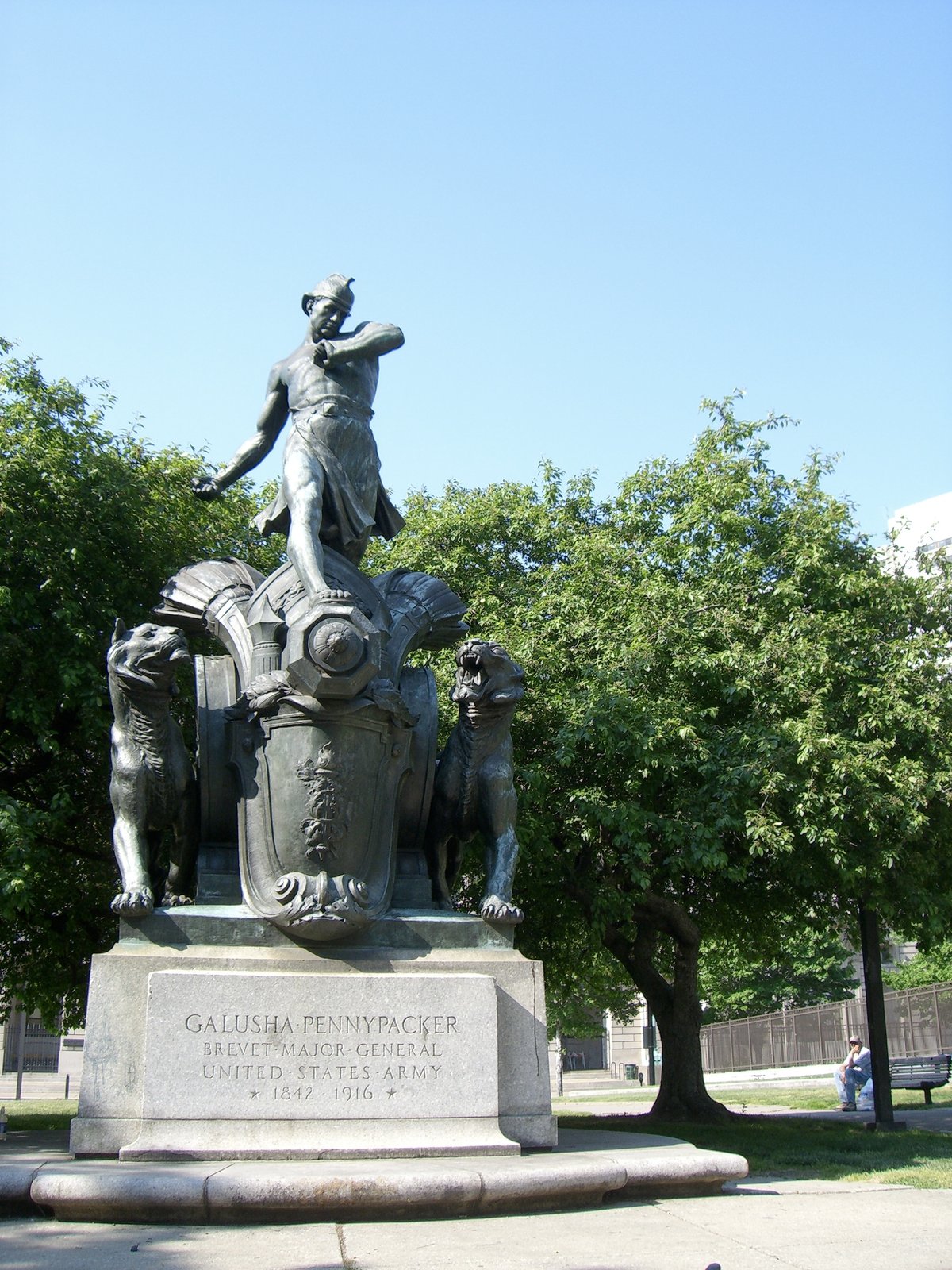

Situated in Philadelphia's Logan Circle, the General Galusha Pennypacker Memorial is a statue memorializing a Civil War general from Pennsylvania: General Galusha Pennypacker. A native of Valley Forge, Pennypacker joined the Union forces and fought in significant battles such as the Second Battle of Fort Fisher, where he was wounded. By the age of 20 or 22, he had become the youngest person to be promoted to the rank of general in the U.S. Army. After the war, he held various military commands in the South during the Reconstruction era. He retired from military service in 1883 and died in 1916.
The idea for a memorial honoring Pennypacker was a collaboration between the General Pennypacker Memorial Commission and the Pennsylvania State Art Commission. The initial design for the statue was conceived by Philadelphia-based sculptor Charles Grafly, who had studied at the École des Beaux-Arts and taught at the Pennsylvania Academy of the Fine Arts.
However, Grafly passed away in 1929, before he could complete the project. His student, Albert Laessle, took over and completed the sculpture in 1934. The bronze casting for the statue was done by the Roman Bronze Works of New York City.
The unveiling of the General Galusha Pennypacker Memorial took place on June 1, 1934, on Pennypacker's birthday. The ceremony attracted a large number of spectators and civic groups, including the Grand Army of the Republic posts, the Historical Society of Pennsylvania, the Society of the Cincinnati, and several art societies in the city.
The statue was presented to the city of Philadelphia by Richard J. Beamish, the secretary of the commonwealth of Pennsylvania.
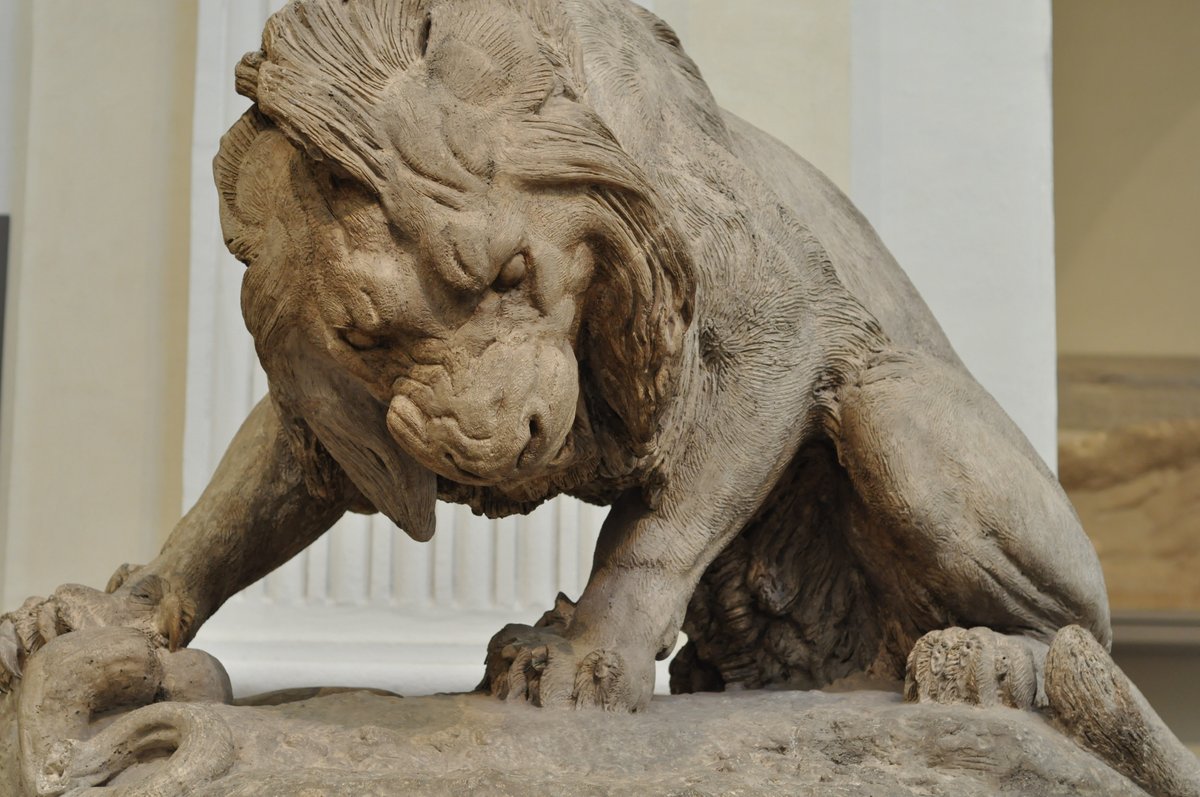
The statue measures 13 feet in height, with a height of 4 feet for the pedestal. The sculpture depicts Pennypacker in classical dress descending from a stylized cannon surrounded by two tigers. The base of the statue bears the inscription 'GALUSHA PENNYPACKER / BREVET MAJOR GENERAL / UNITED STATES ARMY / 1842 - 1916'. The statue itself bears the name of the sculptor and foundry marks ('Albert Laessle / Roman Bronze Works, N.Y.').
Sources: Wikipedia, OpenStreetMap, Wikidata, Wikimedia Commons
Written by Friendly Jane
Discuss this with the author and others
No comments yet. Be the first to start the conversation.