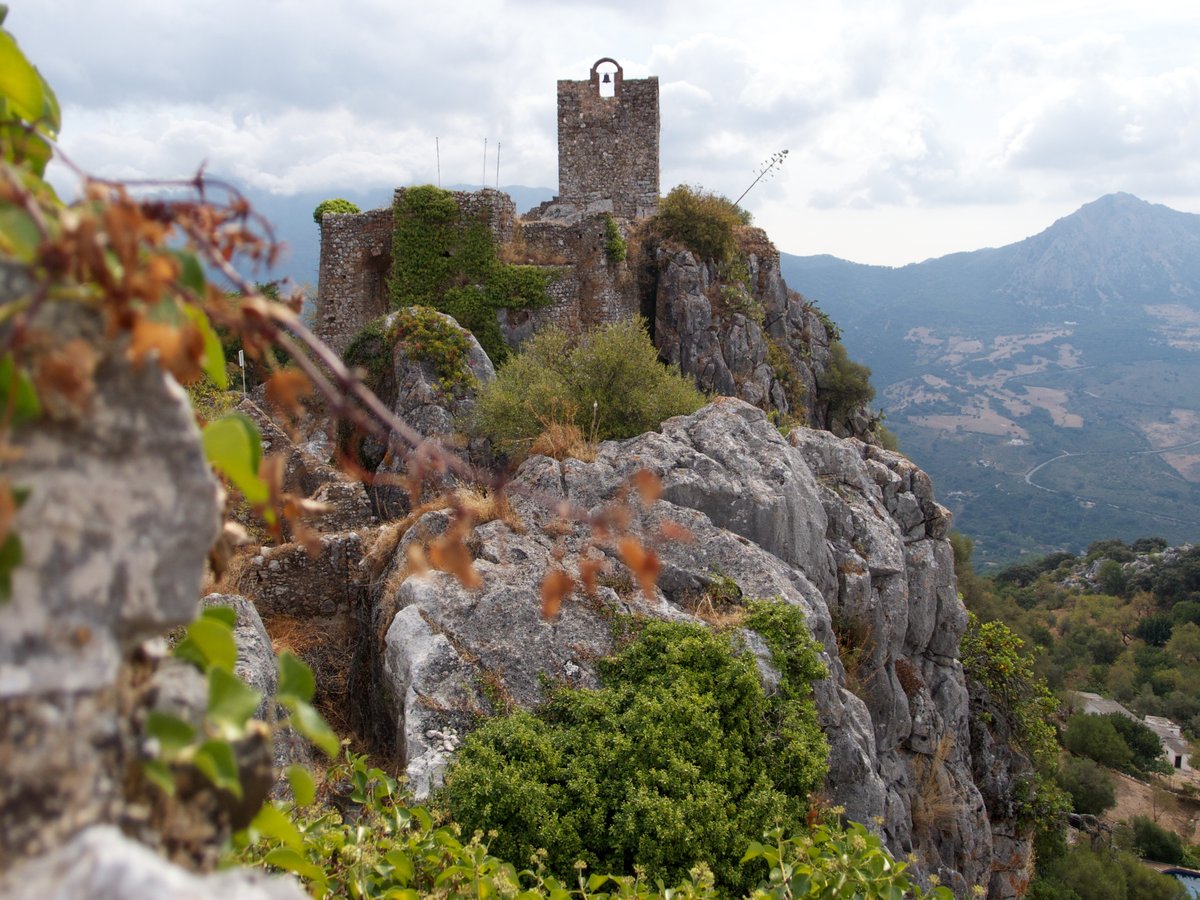

Situated atop a hill 688 meters above sea level in the municipality of Gaucín, Castillo del Águila - also known as Castillo de Gaucín - is a fortress named for the many birds of prey frequenting the area. The fortress was built by the Romans and was later constructed during the Andalusi era, with parts dating back to the 10th-century Caliphate. The site preserves its curtain wall, the Keep, water cisterns, and an escape mine.
The castle has seen many changes over the centuries. In the 11th century, Abd al Yabbar conquered it, and in 1309, Guzmán el Bueno found his death nearby while attempting to take it from the Arabs. The fortress was eventually conquered by Christian troops in 1485. By 1842, the castle housed 40 soldiers, six cannons, and two obuses, but in 1843, the powder magazine exploded, causing serious damage.
General José Serrano Valdenebro promoted repairs in 1839, repairing a large breach in the wall and cleaning the site to accommodate 80 soldiers and officials. Today, the fortress consists of three walled enclosures. The first serves as a shelter for the population and livestock and contains the ermita del Santo Niño and an old hospital. The third enclosure is the citadel, featuring a double archway of reddish brick from the Muslim era.
Sources: Wikipedia, OpenStreetMap, Wikidata, Wikimedia Commons


Written by Nik Frost
Discuss this with the author and others
No comments yet. Be the first to start the conversation.