Alexander Nevsky St., 232, Kaliningrad, Kaliningrad Region, Russia, 236029
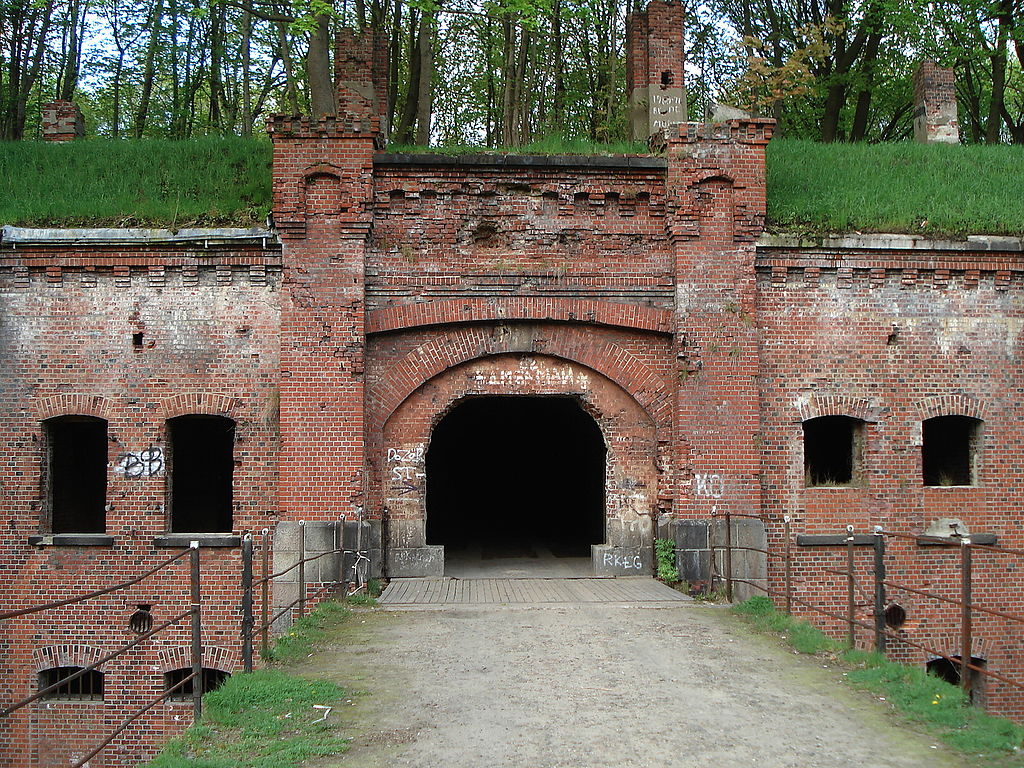

The correct and full name is Fort No. 3 "King Frederick the Third," sometimes referred to as "Kvednau" in certain documents or combat reports. It is the largest fort in Kaliningrad. Despite its ordinal number, it was built first. It faces northwest and was constructed between 1874 and 1879. Fort No. 3 impresses with its grandeur and carefully thought-out fortification elements.

Inside, one can endlessly admire the level of professionalism of 19th-century fortification engineers. Underground passages, galleries, barracks, powder magazines, floor caponiers and half-caponiers, inner courtyards, combat ramparts, reinforced concrete observation posts — all these are structural elements.

On April 9, 1945, during the storming of Königsberg, Fort No. 3 was captured by units of the 557th Rifle Regiment of the 153rd Rifle Division of the 50th Army. It did not sustain significant damage. Until the mid-1990s, it was under the jurisdiction of the Ministry of Defense. Afterwards, it was abandoned for a long time, subjected to looting and partial destruction.
Until 1998, the fort was managed by the Ministry of Defense, housing warehouses for the RAV and RKhBZ services. In 1982, the film "Order — Cross the Border," part of the feature film epic "State Border," was shot here. The fort portrayed Japanese underground fortifications, and conscript soldiers from Uzbekistan, Kazakhstan, and Kyrgyzstan played the roles of Japanese soldiers. Since then, hieroglyphs painted by the film crew have remained on one of the walls.
For a long time, it was considered a site for searching cultural valuables stolen by the Nazis during the Great Patriotic War from the USSR territory. Witness testimonies:
"...Circumstances were such that the war ended for me in Königsberg. Our rocket artillery regiment was left in the city, on its northeastern outskirts. Near our regiment were two bunkers — one small and the other large, about 100 meters in diameter, maybe more. A forest grew on top of it, and it was surrounded by a moat with a drawbridge. The bunker had three floors. One day, three comrades and I decided to explore what was inside. Forts were often called bunkers or fortresses due to incompetence, and floors were called stories. When we descended to the third floor, we found a small tunnel-like opening about 2 by 2.5 meters. Taking some paper, we proceeded along the tunnel, lighting our way with burning paper, but the paper ran out, so we decided to resume the search the next day. On the second day, we took pocket flashlights and a ball of twine. We tied the end of the twine at the entrance and unwound it as we went. To the left of the main passage, we saw branches. I can't say how far we went, but the tunnel ended with closed doors. We broke the doors, and behind them was a room about 3 by 5 meters. The room was filled with boxes and bronze statues...
We opened several and saw bone artifacts inside, resembling museum items, some with labels not in Russian. Coins, also not Russian, were scattered all over the floor.
From this room, doors led to another room with boxes. From the second room, doors led to a third room, also filled with boxes, and this room was a dead end. The boxes were of various sizes; we did not open more, so I don't know what was inside. Taking the twine, we left the bunker..."
As a result of not very prompt correspondence (a year later), some details of that "twine expedition" were clarified. Alchakov served in Königsberg from April to October 1945. It was definitively established that Alchakov's letter referred to Fort No. 3 "King Frederick the Third."
The three bronze sculptures seen by the "explorers" were life-sized and very heavy. One depicted a woman in ancient attire, the others were warriors.
Let's remember the female figure, as she is directly related to our story. The boxes in the second and third rooms were not opened by the soldiers, as Alchakov claimed they lost interest in the bone artifacts.
In 1970, the head of the Kaliningrad Geological and Archaeological Expedition, Popova, met in Olsztyn with Romuald Odoj, who was in contact with Gerhard Kniss, residing in West Germany.
During the conversation, Popova learned that parts of the "Prussia" museum collection, besides those sent to Fort Kvednau, are currently in the Institute of the German Academy of Sciences, the Warmia and Mazury Museum in Olsztyn (Poland), and several boxes remained in the basements of the Order Castle in Königsberg.
After receiving this information, the expedition conducted episodic preliminary studies of the fort. Since the fort was a strictly controlled facility and its casemates housed ammunition depots, these were ordinary tours led by their supervisors, only in areas where permission was granted. The seekers had no plans or drawings of the fort.
Unfortunately, such "scientific-research" activities were quite common in those years. Seekers did what they could with what they had. The principle of "residual" attitude towards culture also applied to the search for lost spiritual heritage.
Case No. 13 "Fort Kvednau" was closed in 1971, although the "closers" had no certainty that Kniss's version was confirmed solely by the findings of military "explorers." After all, Alchakov and his comrades saw only what did not interest them: bone artifacts and metal coins — and visual inspection cannot be a basis for removing a versioned object from records. Two years passed. Case No. 13 began to be forgotten.
But suddenly, a letter arrived at the expedition from the city of Lipetsk with the following content (abridged): "It was early 1946. I served in Königsberg. The military unit was located in the Kvednau area. Our guarded warehouse was directly in the fortress-fort Kvednau (the actual names and numbers of forts were unknown then), so access to the fortress was closed to outsiders.
Under the fortress and fortress wall, there are many underground tunnels, passages, and small rooms. Some tunnels ended in dead ends, often sealed tightly with sand or bricks. We did not excavate these dead ends or suspicious places.
At the end of one tunnel under the fortress wall, we found a small room. The floor was sandy and dry. In this room were two or three bronze sculptures about life-size (one standing), a pile of metal coins in the corner, and near the wall lay various items: stirrups, spearheads, and others.
Near the entrance to the room lay two corpses of soldiers in German military uniforms without weapons... I find it hard to recall the exact items in the room, but it seemed to be a museum or private historical collection of coins and artifacts, and the bronze statues (one clearly depicting a woman) represented some historical figures.
Due to my service, I had to leave Königsberg for extended periods and did not continue searching in the fortress..."
As we see, the information in the letter confirms Alchakov's testimony. Such coincidences in search practice are rare and therefore especially valuable.
An important conclusion was made: Fort No. 3 is a place of storage, and possibly partial burial, of museum valuables from the collections of the Order Castle Museum "Prussia." However, even after this letter, no research was conducted at Fort No. 3. Letters related to Fort No. 3 continued to arrive at the Kaliningrad Geological and Archaeological Expedition, including from Kaliningrad itself. Here is one dated 1975:
"...After reading the article 'In Search of the Amber Room' in the newspaper 'Kaliningradskaya Pravda,' I recalled that in 1947-1948 my son and other children played near the fort located on the way out of Kaliningrad towards Zelenogradsk and brought home coins collected in the fort, including from the 17th-18th centuries. Some of these coins have been preserved to this day, and I can donate them to the Kaliningrad museum if they have any historical value... Signed."
In 1976, former serviceman Titov, who surveyed Fort No. 3 in 1967-1968, came under the attention of the geological-archaeological expedition. He reported that in 1970, during the examination of an inter-fort structure near Fort No. 3, a shell casing was found, which, when opened, spilled small icons covered with colored enamel onto the ground. He also knew that in 1967-1968, various vessels, cups, vases, items depicting snakes and dragons, old coins, dishes, and other objects were found in the fort, whose names could not be determined due to deformation from fire.
The letter and conversations with Titov and other servicemen — representatives of rear units — prompted a renewed look at the forgotten Case No. 13 and Fort No. 3. However, the fort's special regime, limited access times, closed casemates and passages, and prohibitive signs prevented the implementation of the declared version.
The research group's conclusion was unequivocal. Since it was definitively established that cultural valuables were stored in Fort No. 3 — confirmed by several independent sources — it can be assumed that the main and most valuable items (gold and silver artifacts) might have been buried in its hiding places. Secondary items, for some reason (lack of time, resources, military conditions, etc.), were left exposed.
There are known cases worldwide where secondary items were deliberately displayed to conceal the main ones. The fort has plenty of places to hide valuables. For example, a fake hiding place with art valuables was found in the city of Danzig (Gdańsk) in May 1945.
This concerns the basement of the old Zeughaus building. An excerpt from the inspection report: "...On May 5, an entrance to a secret room was opened where a looting breach already existed (a fake removal of the hiding's contents). In the side walls of this room, two more bricked-up entrances were found, sealed with similar one-brick-thick masonry. Thus, the opened secret room turned out to be a specially equipped chamber consisting on three sides of three walls of a public bomb shelter. Found were 195 paintings, porcelain, wooden sculptures, unique carpets, and antique stylized furniture."
The presence of secret burials on the territory of Fort No. 3 is also facilitated by engineering and geological conditions. The fort is located on a hill. Its foundation consists of sandy soils. The groundwater level is below the foundation base, and only post-war drainage failure causes flooding of some first-floor casemates after snowy winters.
Twenty years passed, and new circumstances forced a return to Fort No. 3, reopening Case No. 13.
Further study of the archive of German seeker Georg Stein (stored in the Kaliningrad Regional Archive) led to a new trail pointing to the fort's casemates. Documents indicate that the fort was used for temporary storage of cultural valuables not only from the Prussian Museum but also from other cultural centers of Königsberg. The fate of these valuables is unknown. They are not listed in the materials of state search groups working in the early post-war months to locate valuables, nor are there traces of them in Germany.
Another circumstance sparked interest in the fort's mysteries.
In April 1997, Ovsyanov, head of the department for searching cultural valuables stolen during the war, had to visit Tsarskoye Selo again. There he met retired Admiral Novy. His stories and related historical research are directly connected to Fort No. 3. Novy led an unusual search group investigating Catherine Park of the Catherine Palace. They searched for park sculptures buried in pits before the occupation. The burial of park sculptures in 1941 was not accompanied by precise recording or mapping. During the war, local landmarks were lost, and those who buried the sculptures did not return home, likely perishing or dying of starvation in blockaded Leningrad.
Among the lost unique items of Catherine Park was the sculpture-copy "Sleeping Ariadne." The original, titled "Cleopatra," dates to antiquity (2nd century BC). It is known that in 1512, a marble copy named "Ariadne" was acquired for the papal collection and placed in the Vatican Museum, where it remains today. In Catherine Park, the bronze copy of "Sleeping Ariadne" was located in the grotto of the Cameron Gallery. According to legend, the sculpture depicted a young girl sleeping a heavy sleep on a rocky bed, awakened by the mythical Dionysus — the embodiment of death and resurrection. In former East Prussia, in the palace-park ensemble of Baynunen (Ulyanovskoye), there was a marble copy of "Sleeping Ariadne." Its fate is also unknown.
Another lost unique item was "Niobe with Daughter" — a copy of a Roman marble copy, previously also near the Cameron Gallery of the Catherine Palace along with bronze statues of her five children. The original was made in the 4th century BC. The list of lost items can continue. The number of sought sculptures numbers in the dozens.
One of the most remarkable was a model of the monument to Empress Catherine the Second. It was made on a competitive basis for the centennial of the Imperial Academy of Arts, founded with the direct charitable participation of Catherine the Second.
The model's author was artist Mikeshin, who discovered his talent earlier when creating a monument project in Novgorod to commemorate the millennium of the Russian state.
The bronze monument to Catherine the Second was cast at the Shoppen factory in Saint Petersburg in Rococo style, approved by the Emperor himself, and sent to the World Exhibition in London, where it received an honorary medal. Its permanent location was designated as the Hermitage Alley in Catherine Park. The historical description of the model found in Novy's archive states: "On the monument, Catherine the Second is depicted standing, wearing a crown on her head, holding a scepter in her right hand and a wreath in her left, the imperial mantle falling from her shoulders forming a long train. At the Empress's feet on the pedestal is a large garland of laurel and oak leaves and roses, which, descending along the six faces of the original pedestal, crowns six medallions located in niches, five of which bear bas-relief busts of representatives of state and literary activities, land and naval forces of Catherine the Second's glorious era, her famous associates Potemkin, Rumyantsev, Suvorov, Orlov, and Derzhavin.
The statue's pose is majestic, the pedestal's decorations are elegant and tasteful, the bas-reliefs and all parts are excellently highlighted. The height of the sculptural pedestal with the base is 1 meter 18 centimeters."
Thus, in Catherine Park of Tsarskoye Selo, there was only a reduced model of the monument to Catherine the Second. The completed monument itself was installed on Nevsky Prospect in Saint Petersburg in 1873. On both the model and the monument, the sovereign is depicted as she was in the best years of her long, hardworking, and instructive life. A great sovereign who guided the fate of a great people, brave and restrained, accessible and proud, creator of the "Instruction," author of comedies, founder of educational homes, was worthy of such a memory.
As of September 16, 1941 (the last day before the fascists arrived), the statue of Catherine the SECOND stood in the park on its pedestal along with the sculptures of "Flora" and "Hercules" (bronze), a bust of Alexander the First by Terebenshev, a granite vase in front of the Hermitage, and the statue of "Atreus."
From conversations with employees of the Catherine Palace Museum and the head of the search group, it was established that bronze sculptures of Catherine the Second by Mikeshin and the lesser-known sculptor Raschett, "Flora" and "Hercules," "Sleeping Ariadne," "Atreus," and the bust of Alexander the First were taken to Königsberg.
It is known that the Nazis melted down bronze monuments, but there are many examples where they preserved sculptures depicting figures of German origin. For example, the monument to Emperor Paul in Gatchina (bronze) was guarded by German soldiers, remained unharmed, as did the monument to Paul in Pavlovsk. Catherine the Second was also of German origin. Here, all versions can be connected.
One curious detail emerges. In one of the notes from almost fifty years ago, brief descriptions of the sculptures seen in Fort No. 3 were given. The authors of these notes were servicemen in charge of fort warehouses at that time.
Here is what is said about the female bronze sculpture: "In one hand, the 'woman' held some kind of stick, and in the other was something round. The dress was very long. At her feet were some leaves and flowers..." If we recall the description of Mikeshin's model of the monument to Catherine the Second, we can confidently assert that it was indeed her in Fort No. 3 (scepter — "stick," wreath — "something round").
What happened to the sculptures and other valuables in the boxes? The stories of servicemen involved with Fort No. 3 are quite contradictory. Some say the sculptures were scrapped for metal, others speak of their removal by some city officials. No traces of either have been found.
There is also a version that the sculptures, along with burnt fort property, were thrown into a nearby body of water.
Later, in 1999, some valuables were discovered during an archaeological expedition at Fort No. 3. Today, they are kept in the Historical and Art Museum of Kaliningrad. It seemed everything ended there, but new witnesses and facts appeared.
In December 2001, participant of the storming of Königsberg Sak told the following: "After the storming of Königsberg until September 1946, I served in the guard platoon of a special battalion commanded by Captain Perevozchikov. The battalion's task was to collect cultural valuables in the city and region. The battalion did not belong to the trophy department; we were interested only in paintings, sculptures, vases, carpets, pianos, harmoniums, bayans, and accordions. I was 18 then and naturally did not understand much. The count of found items was in pieces, boxes, bags, and rolls. We packed everything found and loaded it into wagons sent east.
The large warehouse of valuable property was Fort Kvednau (as Fort King Frederick the Third was called), where German boxes with museum valuables still remained. They were located in casemates near the moat. As a member of the guard platoon, I was often on duty there. Access was forbidden to outsiders, but often high-ranking officers arrived in cars and selected beautiful items."
In September 1946, our battalion was disbanded, and I do not know the further fate of the remaining valuables at Fort Kvednau."
After the military left, "black diggers" actively worked on the fort's territory. They partly contributed to the sensational discovery of items from the "Prussia" museum collection, evacuated from the Royal Castle on the eve of the storm. Later, during official archaeological excavations, thousands of museum exhibits thought lost were found here. They are currently stored in the Kaliningrad Regional Historical and Art Museum.
Sources:
https://gid39.su/fort-3-korol-fridrih-iii/
Blog of Nikita Zagorny

