Limyra was quite an important city from the 4th century BCE to the 6th century CE. It is mentioned in the works of various ancient authors, including in Strabo's "Geography":
...at 20 stadia above the sea on a high hill lie the Myra, behind them — the mouth of the Limyra river, and then, after walking 20 stadia inland, [we reach] the town of Limyra.
During the heyday of the Roman Empire in Lycia (as this region was called at the time), active construction was underway. Temples, theaters, aqueducts, as well as a bridge near Limyra, located about 3 kilometers east of the city, have survived to this day.

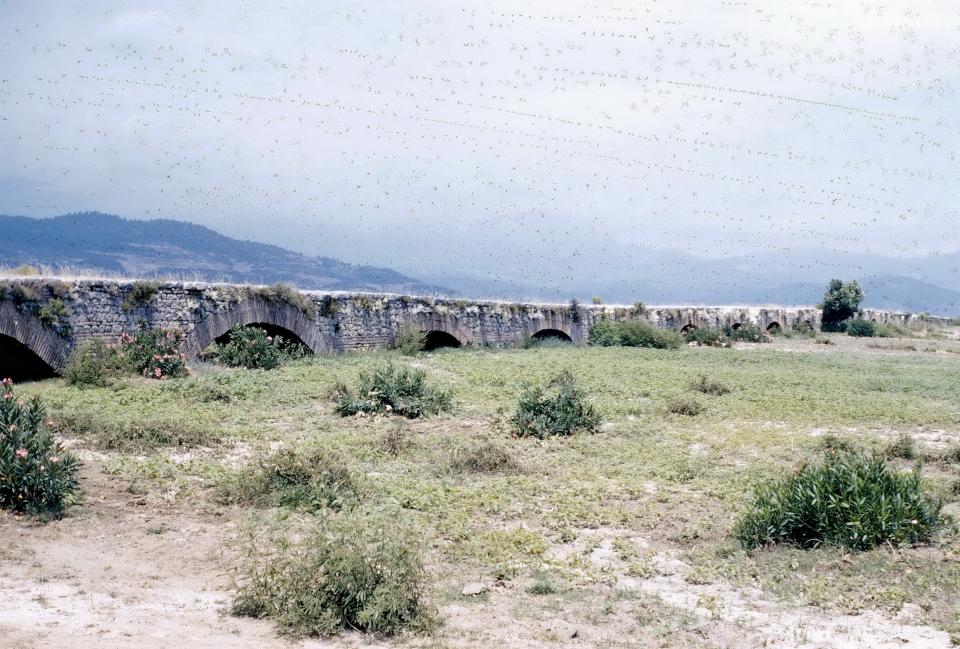
This bridge is a relatively unknown but unique stone bridge over the Alakir-Chay River, built near Limyra in Lycia (territory of modern Turkey) by the ancient Romans, presumably in the 3rd century. Its Turkish name is Kırkgöz Kemeri, which means "bridge of forty arches." It is among the oldest segmental arch bridges in the world, with a length of 360 meters and 28 spans.
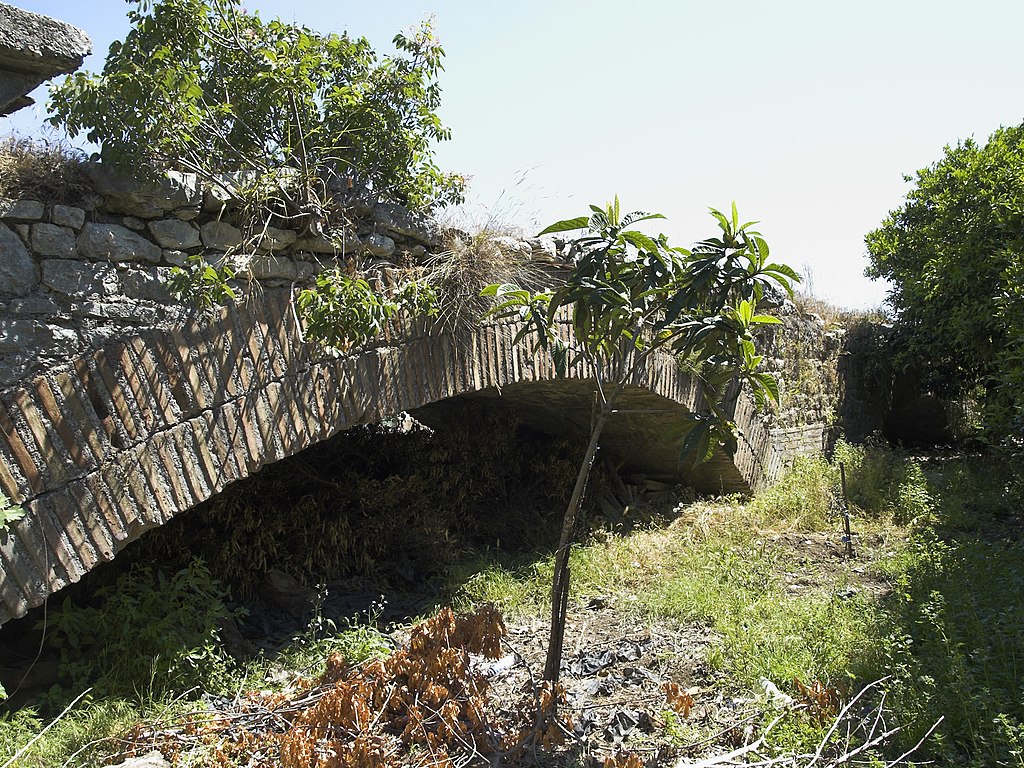
It is considered one of the oldest segmental arch bridges in the world and is the largest ancient structure in the region. The way the bridge’s arches were constructed gave it an unusually flat profile, which was unique for Roman engineering of that time. For this reason, it is difficult to date its construction period. Moreover, the bridge has been scarcely studied, and no records about it survive in ancient historical sources.
The bridge, along with its supports and a special embankment, is a significant structure over 300 meters long; for most of its length, it looks like an ordinary road because river sediments have filled the space under almost all the spans. There are 26 identical arches and one smaller arch at the western edge of the bridge. It is all the more surprising that there are no known mentions of the bridge by ancient authors: ancient geographers, historians, and architectural theorists — none of them mentioned the bridge near Limyra.
It is believed that the bridge was built in the 3rd century CE, although this dating is not universally accepted. Architecturally, the bridge shares common features with constructions of the same period located near Aspendos and Xanthos — major ancient cities. It should be noted that the bridge’s structure is heterogeneous: most of the arches are made of bricks; several arches at the western end of the bridge are mainly made of blocks, and the 27th arch, consisting of two small ones, was clearly repaired at a later time and therefore made of roughly worked stones. Interestingly, the twenty-six large arches also vary in size: their lengths range from 11.6 to 13.6 meters.

Like many other monumental Roman constructions, the bridge was built with a huge safety margin. According to modern studies, a loaded vehicle with a total mass of 30 tons can drive over it. The bridge is still used today by Turkish farmers: many greenhouses and small plots are located along the bridge.
Researchers first discovered the bridge in the mid-19th century. Since the 1970s, it has been studied by German and Turkish archaeologists. A major publication about the bridge was authored by the famous German architectural historian Wolfgang von Würster.
Nearby:
Sources:
https://justtalks.ru/articles/life/sovetyi/samye-starye-mosty-v-mire.html
https://ru.wikipedia.org/wiki/Ancient_Bridge_near_Limyra

