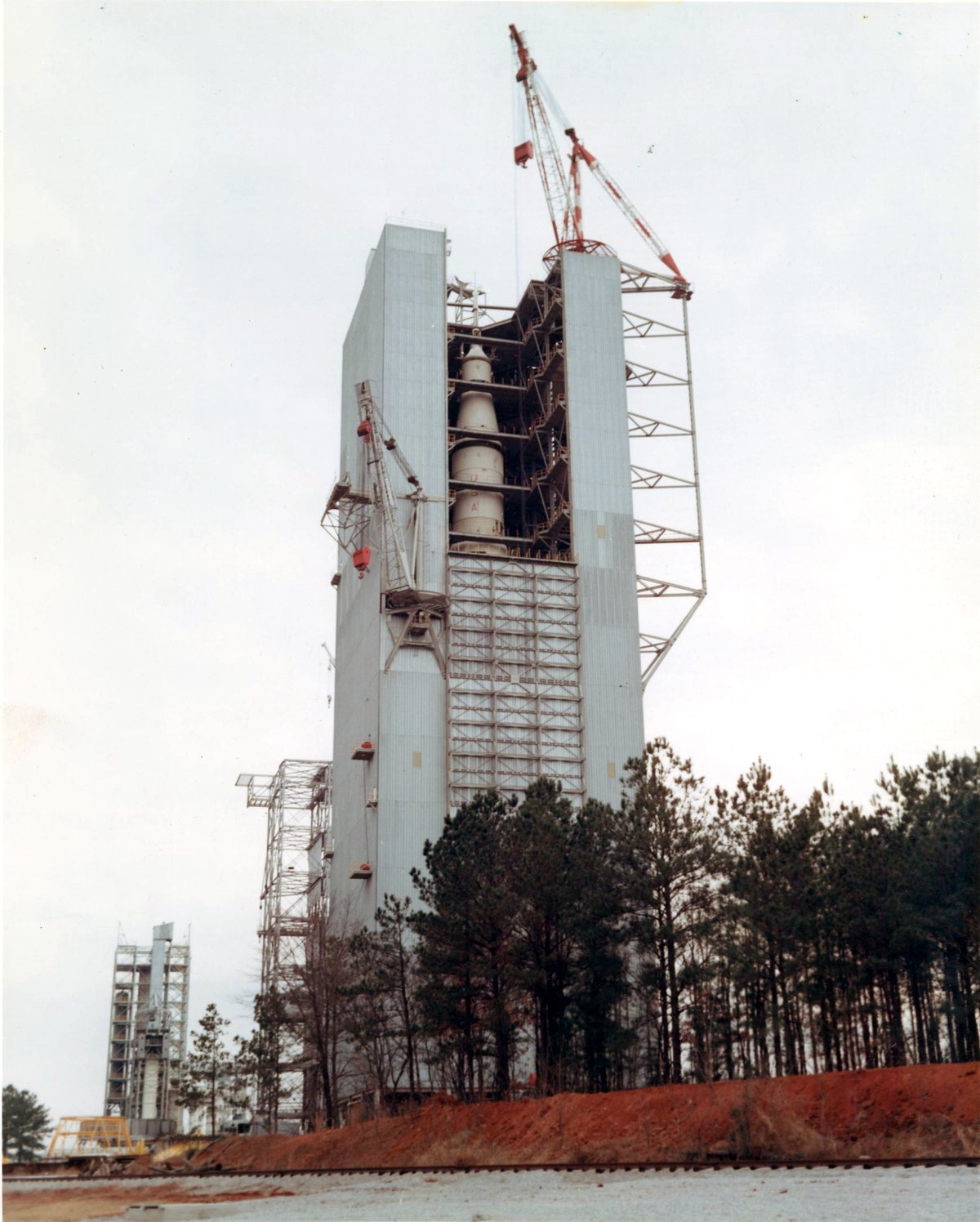
Picture a skyscraper so obnoxious it actually interferes with the local weather patterns. That was the daily grind for the Saturn V Dynamic Test Stand in Huntsville. NASA erected this 111-meter monstrosity in 1964 because they needed a designated torture chamber to see if their oversized rockets could stay in one piece once the engines decided to roar.
Designated as Building 4550, this 30-meter square hunk of steel functioned as the primary lab for heavy lifting operations. A derrick perched on top could move 200-ton payloads within a 70-foot radius, while a cable tunnel maintained a lifeline to the East Test Area control facilities. Engineers spent their lives navigating 15 different levels via elevator, all to prevent the spacecraft from transforming into a pile of very expensive scrap metal.
By 1966, observers noted that the tower was literally playing with the atmosphere by trapping clouds and fog at the summit during hoisting maneuvers. When they hoisted the 300,000-pound first stage of the Saturn V into the central bay, the structure claimed the title of the tallest building in Alabama. This was the front line where engineers hunted down and neutralized critical flaws that would have resulted in total vehicle failure under extreme vibration and bending stress.
This facility didn't retire just because the Saturn V moved on. It served as the proving ground for the Space Shuttle, subjecting vehicles like Pathfinder and Enterprise to the same rigorous scrutiny before they ever saw the sky. Hidden inside was the Drop Tube Facility, a 105-meter long vertical pipe made of 10-inch diameter stainless steel. This was the designated zone where they could melt samples up to 0.31 inches in diameter and drop them in free-fall for 4.6 seconds.
The mission profile for the building shifted like a restless soldier over the decades. It was eventually slated to host tests for the Ares I rocket, but those plans were scrapped before any real work began. The structure earned National Historic Landmark status in 1985. The final act for this veteran structure concluded in recent years when it was finally decommissioned and taken down.
Sources: Wikipedia, OpenStreetMap, Wikidata, Wikimedia Commons

Written by Kyle McLonely
Discuss this with the author and others
No comments yet. Be the first to start the conversation.