Ežero St. 20, 76285 Šiauliai, Lithuania

Šiauliai was the second largest city in pre-war Lithuania, and the Jewish community made up a quarter of the city’s population. In 1939, their number was 5,360 people. The deputy mayor of the city was Jewish. Jews worked in the shoe factory, metallurgy, and chemical industry; among them were many employees and craftsmen. The city had several Jewish schools, a kindergarten, 15 synagogues, a yeshiva, and 2 Jewish libraries.
After Lithuania was annexed by the USSR in 1940, all Jewish communal organizations were liquidated, except for schools with instruction in Yiddish. In June 1941, several hundred Jews were deported to remote areas of Siberia and Central Asia.
Soviet officials fled the city as early as June 23, 1941, the day after the German invasion began. Šiauliai was occupied by Wehrmacht units on June 26, 1941. About a thousand Jews left with the retreating Red Army units. After that, the number of Jews in the city was 6,500, increased by refugees from Poland and Jews from nearby settlements.
Immediately after the city was occupied by the Germans, members of the Lithuanian Activist Front (LAF) began persecuting Jews. They robbed their property and raped women, forced them to manually clean toilets, sweep streets with toothbrushes. They beat and killed Jews both individually and in groups.
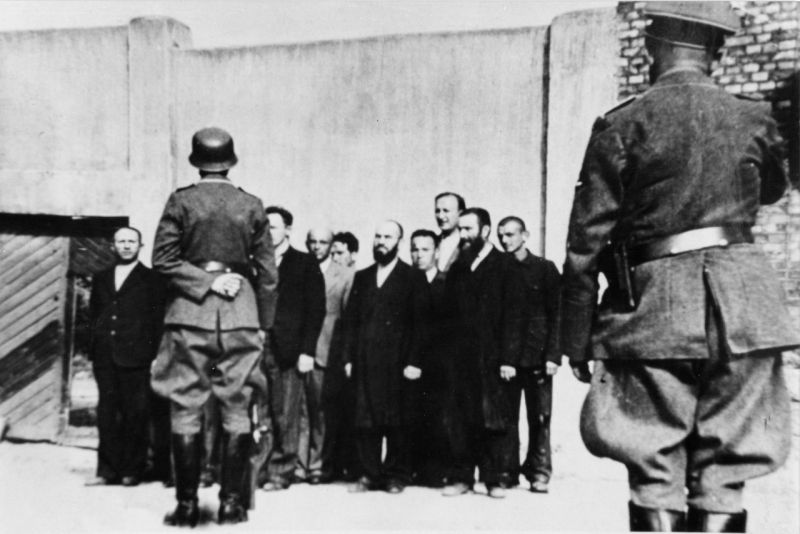
From June 28 to 30, the Nazis carried out mass arrests of Jewish men, including 20 of the most prominent Jews in the city’s community leadership. The first victims were Rabbis Bakšt and Nahumovsky. In the first two weeks of occupation, Germans and Lithuanians shot 1,000–1,200 Jews. On July 11, LAF members began mass searches in Jewish homes to confiscate gold, jewelry, and money. At the same time, Jews were arrested, forced to pack the most valuable items, including clothes, and carry them to the police station. The Germans disarmed LAF activists and, after taking the most valuable items, allowed the Jews to return home.
The ghetto was established from July 25 to August 31. The ghetto was divided into two parts — one called the “Caucasus Ghetto” (2,950 inmates), and the other “Trakų” (3,000 inmates). They were adjacent but had different entrances. From August 27 to 29, 1941, elderly and sick people were taken from the Trakų ghetto; all of them were later killed. From September to December 1941, several thousand more Jews relocated to the ghetto from the surroundings of Šiauliai, where the remaining Jewish population was destroyed. During this period, 1,750 Jews of Šiauliai were killed. After that, until September 1943, there were no mass extermination actions.
The period of relative calm was used by the Jews to organize life in the ghetto. In particular, two schools, youth organizations, as well as political cells — Beitar and communists — were functioning. In May 1943, a census was conducted. According to it, 4,665 people were in the ghetto, including 2,438 in the “Caucasus Ghetto” and 2,227 in “Trakų.”

From September 1943, the ghetto was turned into a concentration camp. On November 5, 1943, the Germans took all children from the ghetto — from infants to 12-year-olds, a total of 574 children, as well as 191 elderly people, 26 disabled persons, and 4 women. All of them were killed.
The secretary of the Judenrat of the ghetto, Eliezer Yerushalmi, wrote in his diary: “Everywhere they could hide, they searched for children, and if they found them, they pulled them out, naked and barefoot, to the square. There they lifted the children by their hair and hands and threw them into trucks. They chased after toddlers who accidentally found themselves on the streets or in yards, shot at them, and caught them. The miserable parents ran after the children, crying and begging, but they were beaten and driven away.”
On July 8, 1944, the commandant of Šiauliai announced to the Jews that the ghetto was closing. After that, all remaining Jews in the ghetto were deported by the Nazis to the Stutthof concentration camp near Danzig, where most prisoners were killed. About 500 Jews from Šiauliai were alive at the time of the camp’s liberation.
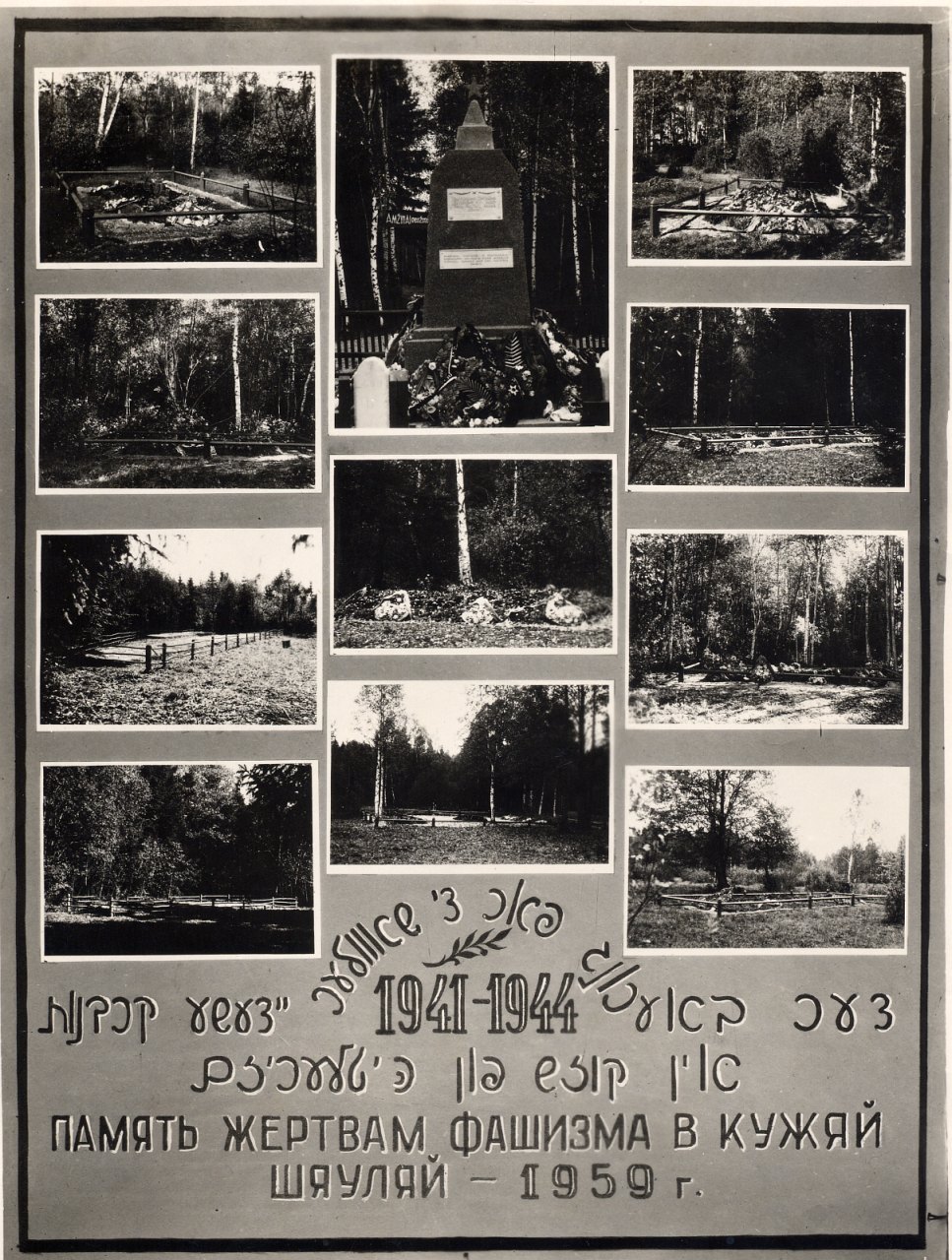
After the war, a mass shooting site of ghetto inmates was found 12 kilometers from the city, in the forest near the settlement of Kužiai, and then another one 6 kilometers from the first. With the help of local authorities, surviving inmates erected monuments to the victims in 1959. About 8,000 victims of shootings are buried in mass graves, including 125 Jews from Linkuva, killed in this forest in the summer of 1941, as well as Russian and Lithuanian communists.
In 2012, Yad Vashem awarded the title of Righteous Among the Nations to Edvardas Levinskas and his wife Tereza, who saved Jews fleeing from the Šiauliai ghetto during the war.


Sources:
https://ru.wikipedia.org/wiki/Šiauliai_Ghetto
http://ldn-knigi.narod.ru/ANGLKNIG/Kuziai-narod.htm
https://victims.rusarchives.ru/25-12-1945-protokol-doprosa-svidetelya-volpertene-o-shaulyayskom-getto-i-konclagere-v-shtutgofe

