The Tragedy of the Šiauliai Ghetto

Ežero St. 20, 76285 Šiauliai, Lithuania

The Šiauliai Ghetto (in Lithuanian Šiaulių getas, July 25, 1941 — July 24, 1944) was a Jewish ghetto, a place of forced resettlement of the Jews of the city of Šiauliai during the persecution and extermination of Jews by the Nazis and collaborators during the occupation of Lithuanian territory by Germany in the period of World War II.

Šiauliai was the second largest city in pre-war Lithuania, and the Jewish community made up a quarter of the city’s population. In 1939, their number was 5,360 people. The deputy mayor of the city was Jewish. Jews worked in the shoe factory, metallurgy, and chemical industry; among them were many employees and craftsmen. The city had several Jewish schools, a kindergarten, 15 synagogues, a yeshiva, and 2 Jewish libraries.

After Lithuania was annexed by the USSR in 1940, all Jewish communal organizations were liquidated, except for schools with instruction in Yiddish. In June 1941, several hundred Jews were deported to remote areas of Siberia and Central Asia.

Soviet officials fled the city as early as June 23, 1941, the day after the German invasion began. Šiauliai was occupied by Wehrmacht units on June 26, 1941. About a thousand Jews left with the retreating Red Army units. After that, the number of Jews in the city was 6,500, increased by refugees from Poland and Jews from nearby settlements.

Immediately after the city was occupied by the Germans, members of the Lithuanian Activist Front (LAF) began persecuting Jews. They robbed their property and raped women, forced them to manually clean toilets, sweep streets with toothbrushes. They beat and killed Jews both individually and in groups.
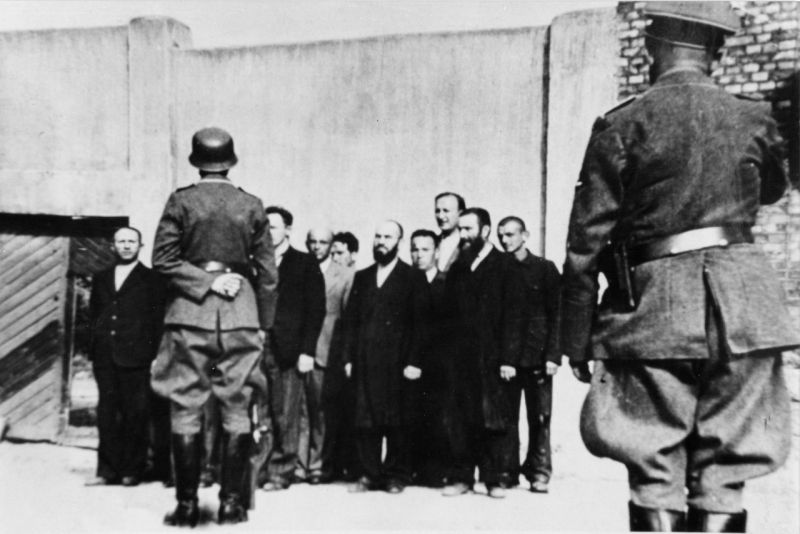

From June 28 to 30, the Nazis carried out mass arrests of Jewish men, including 20 of the most prominent Jews in the city’s community leadership. The first victims were Rabbis Bakšt and Nahumovsky. In the first two weeks of occupation, Germans and Lithuanians shot 1,000–1,200 Jews. On July 11, LAF members began mass searches in Jewish homes to confiscate gold, jewelry, and money. At the same time, Jews were arrested, forced to pack the most valuable items, including clothes, and carry them to the police station. The Germans disarmed LAF activists and, after taking the most valuable items, allowed the Jews to return home.

The ghetto was established from July 25 to August 31. The ghetto was divided into two parts — one called the “Caucasus Ghetto” (2,950 inmates), and the other “Trakų” (3,000 inmates). They were adjacent but had different entrances. From August 27 to 29, 1941, elderly and sick people were taken from the Trakų ghetto; all of them were later killed. From September to December 1941, several thousand more Jews relocated to the ghetto from the surroundings of Šiauliai, where the remaining Jewish population was destroyed. During this period, 1,750 Jews of Šiauliai were killed. After that, until September 1943, there were no mass extermination actions.

The period of relative calm was used by the Jews to organize life in the ghetto. In particular, two schools, youth organizations, as well as political cells — Beitar and communists — were functioning. In May 1943, a census was conducted. According to it, 4,665 people were in the ghetto, including 2,438 in the “Caucasus Ghetto” and 2,227 in “Trakų.”


From September 1943, the ghetto was turned into a concentration camp. On November 5, 1943, the Germans took all children from the ghetto — from infants to 12-year-olds, a total of 574 children, as well as 191 elderly people, 26 disabled persons, and 4 women. All of them were killed.

The secretary of the Judenrat of the ghetto, Eliezer Yerushalmi, wrote in his diary: “Everywhere they could hide, they searched for children, and if they found them, they pulled them out, naked and barefoot, to the square. There they lifted the children by their hair and hands and threw them into trucks. They chased after toddlers who accidentally found themselves on the streets or in yards, shot at them, and caught them. The miserable parents ran after the children, crying and begging, but they were beaten and driven away.”

On July 8, 1944, the commandant of Šiauliai announced to the Jews that the ghetto was closing. After that, all remaining Jews in the ghetto were deported by the Nazis to the Stutthof concentration camp near Danzig, where most prisoners were killed. About 500 Jews from Šiauliai were alive at the time of the camp’s liberation.
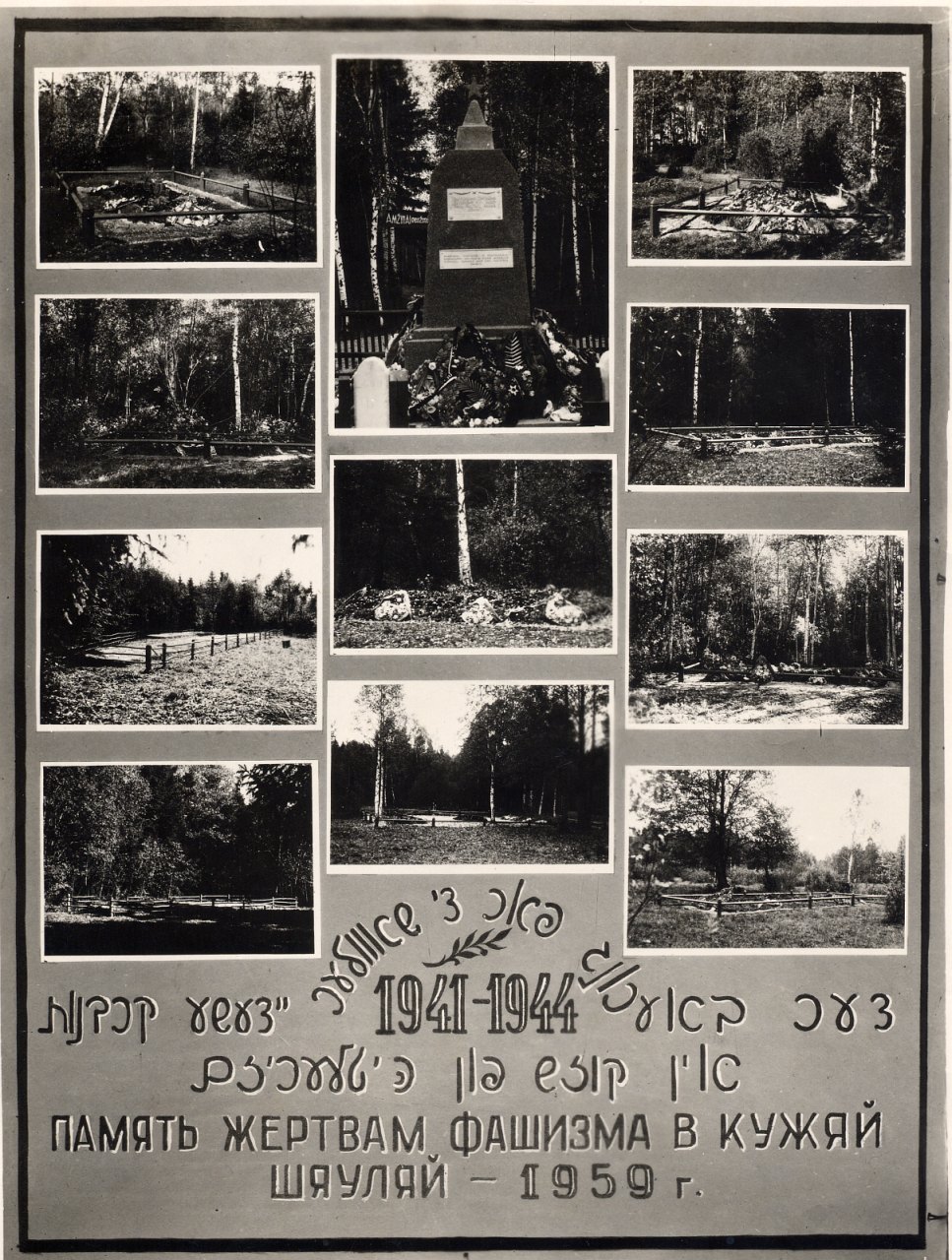

After the war, a mass shooting site of ghetto inmates was found 12 kilometers from the city, in the forest near the settlement of Kužiai, and then another one 6 kilometers from the first. With the help of local authorities, surviving inmates erected monuments to the victims in 1959. About 8,000 victims of shootings are buried in mass graves, including 125 Jews from Linkuva, killed in this forest in the summer of 1941, as well as Russian and Lithuanian communists.

In 2012, Yad Vashem awarded the title of Righteous Among the Nations to Edvardas Levinskas and his wife Tereza, who saved Jews fleeing from the Šiauliai ghetto during the war.


Sources:

https://ru.wikipedia.org/wiki/Šiauliai_Ghetto

http://ldn-knigi.narod.ru/ANGLKNIG/Kuziai-narod.htm

https://victims.rusarchives.ru/25-12-1945-protokol-doprosa-svidetelya-volpertene-o-shaulyayskom-getto-i-konclagere-v-shtutgofe

Follow us on social media

More stories from Lithuania: In the Footsteps of the Holocaust

Gargždai. The first massacre of Jews in Lithuania (201 people)

P. Cvirkos St. 33, 96131 Gargždai, Lithuania

On June 24, 1941, in Gargždai (two days after Germany's attack on the USSR), the first mass killing of Jews in Lithuania took place, with 201 people killed.

Mass murder of Jewish women and children in Gargzdai (100-300 people)

PGVJ+P6 Perkūnai, Klaipėda District Municipality, Lithuania

The exact date of the execution of Jewish women and children in Gargždai is unknown. It occurred in August or September 1941. Jewish women and children were captured on the same day as the Jewish men of Gargždai, June 23, 1941, by the same Gestapo soldiers, members of the Memel GPK under the command of Dr. Erich Frohwan. The executions took place in several locations.

The murder of Jewish women and children in Veiviržėnai

2202, 96276, Lithuania

In September 1941 (the exact day is unknown), Jewish women and children were killed in Veiviržėnai. The executioners were three Gestapo officers from the GPZ Baioren (Baiorai) and two to three Lithuanians. Among them were Gestapo officer Meissner and Lithuanian Prasiinskas.

Mass murder of Jewish women and children in the Dimitravas camp (510 people)

In December 1944, the commission conducting the investigation at the murder site discovered four mass graves. The commission found the bodies of 510 victims (31 children, 94 teenagers, and 385 women). The children's bodies showed no gunshot wounds.

Mass murder of Jews and Soviet officials in Kretinga (214 people)

V6V5+JM Kretingsodis, Kretinga District Municipality, Lithuania

The USSR Operational Situation Report No. 14 dated July 6, 1941, states that 214 people were shot in Kretinga on that day. During the trial in Ulm at EK-Tilsit, it was revealed that of these 214 people, about 180 were Jews, and the rest were Lithuanian communists.

Mass murder of Jews near Skudvilė (300 people)

CG4Q+2H Snails, Tauragė District Municipality, Lithuania

At the end of June 1941, an unknown number of Jews were killed near the town of Skaudvile. The executioners were German soldiers from the Gestapo or SD. In August 1941, 300 Jewish men were killed at the same location.

Mass murder of Jews near the village of Kulay (500 people)

The first shootings of Jews in Skuodas began at the end of June 1941. Arrested Jews were driven out of the Skuodas Riflemen's Union building in groups and shot on the outskirts of the city along with Soviet activists and Soviet prisoners of war.

Murders of Jews and Communists in Rokiskis and Its Surroundings

981 Jews, as well as Soviet officials, communists, and Komsomol members of various nationalities, were captured and shot in Rokiskis and its surroundings in the first weeks of Nazi occupation (from June 27 to August 14, 1941).

Mass killings of Jews in the 7th fort of the Kaunas Fortress (more than 5,000 people)

At the beginning of the war, men and women of Jewish nationality were systematically arrested in Kaunas and placed in two locations: in the central prison on A. Mickevičius Street and in the VII Fort. From June 29-30, 1941, Jewish men and women were transported to a place that SK 1b called a "Jewish concentration camp," and on the night of June 30, the shootings began.

Terrible Secrets of the "Letukis" Garage

The case of the "Letukis" garage is considered a symbol of the Holocaust in Lithuania and has gained wide recognition abroad.

The Tragedy of the Šiauliai Ghetto

Ežero St. 20, 76285 Šiauliai, Lithuania

The Šiauliai Ghetto (in Lithuanian Šiaulių getas, July 25, 1941 — July 24, 1944) was a Jewish ghetto, a place of forced resettlement of the Jews of the city of Šiauliai during the persecution and extermination of Jews by the Nazis and collaborators during the occupation of Lithuanian territory by Germany in the period of World War II.

The site of the mass extermination of Jews from the Šiauliai ghetto in the Kužiai forest

The forest near the village of Kužiai gained tragic notoriety during World War II. Jews from the Šiauliai ghetto were shot there. In 1959, a monument was erected with donations from the residents of the city of Šiauliai.

Mass murder of Jews at the Jewish cemetery in Kretinga (356 people)

In the middle of 1941, 356 Jews and several Komsomol activists were killed in Kretinga on the southern edge of the Jewish cemetery. In memory of the latter, a monument was erected at the execution site in 1954.

The Murder of Jews in Svedasai

In July 1941, in Svedasai, according to one source, 245 were killed, and according to another, 386, most of them Jews.

Mass killings of Jews in the Mariampol district

On September 1, 1941, about 5,090 people were shot on the territory of the military base, including men, women, children, and patients of the local hospital. The mass killing took place from 10 a.m. to 4 p.m. The murder was carried out by about 10-15 Germans and 20-30 Lithuanian policemen. Three men from Karl Eger's unit killed 38 Jews who had fled the site of the mass murder.

Mass killings of Jews in Kupiskis

Kupishkis, known in Yiddish as Kupishok or Kupishik, was home to 1,444 Jews before World War II. The Jewish population made up about 42% of the town's population. In the summer of 1941, all Jewish men, women, and children in the town were forced into an improvised ghetto and tortured for about two days, deprived of food and water, then on June 28, 1941, they were shot and buried in unmarked graves at the communal cemetery.

Mass murder of Jews at the Jewish cemetery in Jurbarkas (370 people)

141, 74192 Naujasodžiai, Lithuania

Isn't it a fact that some Lithuanians voluntarily participated in the murder of Jews? Instead of acknowledging this cruel fact and condemning the criminals, you look for excuses for them. Just because some Jews served in the NKVD, should their children have died? Weren't there Lithuanians and Russians in the NKVD as well? So, according to you, does that mean the heads of Lithuanian and Russian children should have been smashed with rifle butts for that? Wake up. Let's finally be a conscious people who condemn their scoundrels and are proud of their heroes.

Mass murder of Jewish men in Žemaičių Naumiestis (220 people)

9Q75+98 Šiaudviečiai, Šilutė District Municipality, Lithuania

On July 5th or 19th, 1941, the SS organized the second "Jewish Collection Action" (Judenbeschaffungsaktion). Its target was Žemaičių Naumiestis, located 14 km east of Heydekrug, and consequently one of the few towns in the northern border area where Jews had not yet been killed. All Jewish males aged 14 and older were ordered to enter the synagogue. There, they were met by SS men and Lithuanian police. All the men were loaded onto trucks and taken to the barracks east of the town. The shooters were Lithuanian policemen. On that day, at least 220 Jewish men were shot.

Mass murder of Jews in the town of Ilakiai (300 people)

The Jewish cemetery was located a kilometer from the town. People walked in groups, mostly women, along this road of death, as if they wanted to say goodbye to their murdered neighbors. Behind the cemetery wall was a fairly large inner courtyard. There, in a heap about one and a half meters high, lay the twisted bodies of people in various positions. All the dead, including children, were dressed only in white underwear and were barefoot.

Massacre of Jews near Vilkiya (800 people)

At this site in 1941, 3,500 civilians from the towns of Vilkiai, Veliuona, Seredžius, and Raudonė were killed.

Murders of Jews in Marijampolė in the Šunskas Grove

There is very little historical information about this massacre. One of the versions related to the murders of Jews in Marijampolė are the executions on July 7, 18, and 25, 1941, listed in Eger’s report. During these mass killings in the Šunskas Forest, 32, 53, and 103 Jews could have been killed — a total of 188 people. The prisoner-of-war camp in the Marijampolė area was located in Kalvarija. Officers (from 1,000 to 5,000 people) were the first prisoners there. There is no information about the fate of these prisoners. Some of them could have been killed in this forest. There are three monuments here, one of which has been toppled.

The murders of Jews near Girkalnis

Here in August 1941, the blood of approximately 1,650 Jews – children, women, and men – was shed when they were brutally killed by Hitler's executioners and their local collaborators.

The murders of Jews in Virbalis

Here the blood of Jewish children, women, men, and prisoners of war of Lithuanian and other nationalities was shed. They were brutally killed by Nazi executioners and their local collaborators in July-August 1941.

Mass killings of Jews in Veiviržėnai (350-400 people)

In the summer and autumn of 1941, Jewish men, women, and children were shot here.

Mass killings in Ponary (Paneriai) (more than 70,000 people)

Agrastų St. 15A, 02243 Vilnius, Lithuania

Mass shootings by the Nazis and Lithuanian collaborators of the Jews of Vilnius, Soviet prisoners of war, and resistance fighters in the forest near the village of Ponary (also known as Upper Ponary) during World War II. It should be emphasized that among the victims of Ponary were fifteen thousand Poles, including, among others, the Vilnius intelligentsia, such as professors of the Stefan Batory University in Vilnius, as well as fighters of the Home Army:

Ukmergė – the most Jewish county town of Lithuania without Jews

Pivonijos sen, 20101, Lithuania

Ukmerge – a small town halfway between Vilnius and Panevezys, can be a striking example of a well-preserved Jewish past. Almost the entire town center consists of former Jewish houses, shops, schools, and prayer houses. And yet, today there are exactly zero Jews living here. It is both surprising and paradoxical to walk through it, see its rich Jewish heritage, and realize that for 70 years there hasn’t been a single Jew here.

Mass murders in Pakruojis (400 people)

A total of 400 Jews from the Pakruojis district were killed in the Morkakalnis forest.

Mass killings in Utena and surrounding areas (3,782 people)

The Roll team, together with the white armband wearers of Utena, shot 3,782 Jews from Utena and Molėtai.

The murders of the Jews of Vishtytis

Here lie the remains of the children, women, and men of Vishtitis, who were brutally killed by Nazi murderers and their local collaborators in July-September 1941. The remains of the women and children were moved here in 1965.

Mass killings in Telšiai during the Holocaust years (400 and 800–1500 people)

From July 20 to 21, 1,200 to 1,500 Jewish men were killed in the Rainiai forest. Jews killed here were not only from Telšiai but also from other settlements. On September 1, young and able-bodied women were placed in the Telšiai ghetto, while the remaining women and children were killed. On December 24, during the liquidation of the ghetto in Rainiai, about 400 women were killed.

Mass killings in Vishveniai (200-250 people)

At the end of June - beginning of July 1941, Jewish residents from various places near Telšiai - including Nevarėnai and Ritavas, Varniai and Žarėnai - were deported to a collection camp on the outskirts of Višvenai.

Mass murder of Jews from Babtai and Vandžiogala (335 people)

On August 11, the head of the Babtai rural district informed the governor of Kaunas County that 93 Jews lived in the town. A few days later, following a secret order from Reivytis, 34 adult Jews were arrested and locked up in the city synagogue. Thirty Jews from Vandžiogala were also brought there. The Jews of Babtai and Vandžiogala were executed between August 28 and September 2, 1941. Most witnesses claimed that this was done in early September.

Mass murder of Jews in Kursenai (150-168 people)

In Kuršėnai, the persecution of Jews began in July 1941. In the same month, by order of the Nazi authorities, a ghetto was established in Kuršėnai. Many Jews were housed in two synagogues. Around July 20, white armbanders and the police captured about 150 Jewish men (according to other sources, 168) from the synagogues and killed them in the Padarbos forest, approximately three kilometers from Kuršėnai.

Mass murders of Jews from Yurbakas at the 7th kilometer of the Yurbakas-Smalinkai road (more than 500 people)

Perpetrators of the murders – the Jurbarkas police and the Smalinė German border police. According to the Act on the relocation of the remains of Soviet citizens shot by the Germans of the Jurbarkas district executive committee in 1958, the remains of 909 people were found at this site, although officially it is still considered that 500 people were killed.

The first shootings in Kėdainiai (125 people)

Eger's report states that the first victims in Kedainiai were 95 Jews, 14 communists who came from the USSR, 1 Soviet officer, and 15 Lithuanian communists.

Massacre of Jews in Linkuva

Most of the Jews of Linkuva earned their living through trade, small-scale industry, agriculture, or crafts. There were 16 Jewish farmers in this area. Fourteen of them lived in Dvariukai.

How Diplomats from Kaunas Jan Zwartendijk and Chiune Sugihara Saved Polish and Lithuanian Jews

VDU, Asian Studies Center, Vaižganto St. 30, 44229 Kaunas, Lithuania

Evacuation of Polish Jews fleeing persecution after the occupation of Poland by Nazi Germany to Japan and some other countries in the Far Eastern region through Lithuania and the USSR. One of the key roles in these events was played by the Dutch consul Jan Zwartendijk and the Japanese consul in Lithuania Chiune Sugihara. Most of the refugees who arrived in Japan were sent to Japanese-occupied Shanghai, where they stayed until the end of the war.

Vilnius Ghetto

Žydų St. 3, 01131 Vilnius, Lithuania

The Vilnius Ghetto was one of the Jewish ghettos established by the Nazis in Lithuania during World War II. During its two years of existence, its population, which numbered about 40,000 people, was almost completely annihilated. Only a few hundred inmates managed to escape by fleeing to the forests and joining Soviet partisans or hiding with sympathetic local residents.