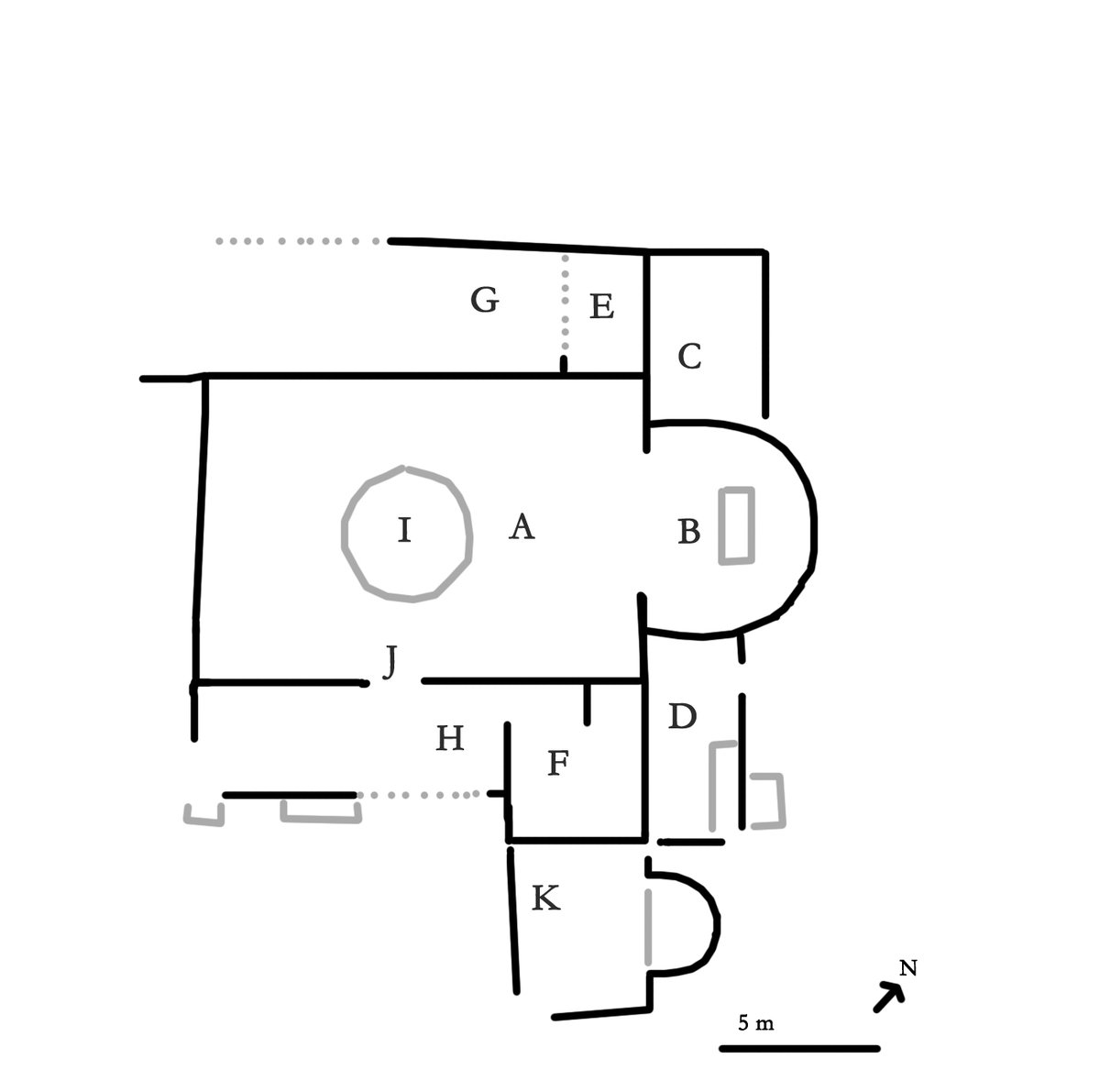

Located in the heart of Haute-Saône, France, the Église paléochrétienne de Chassey-lès-Montbozon dates back to the 6th century, serving as the religious center of a significant local community during the Merovingian period. The church was in use until the 11th century, but its discovery was nearly left to chance. Built on an island in the center of modern-day Lac de Bonnal, the church was hidden from view, its existence largely forgotten. It was not until 1967 that archaeological excavations uncovered the vast Merovingian necropolis within and around the church, revealing its rich history.
The church's walls had thin foundations, suggesting that they had wooden walls reinforced by posts. The plan of the church is similar to the first church of Romainmôtier in Switzerland. The church was discovered by Jean-Louis Odouze between 1967 and 1974, and it was listed as a historic monument on February 2, 1981.
Sources: Wikipedia, OpenStreetMap, Wikidata, Wikimedia Commons
Written by Nicolo Ciampini
Discuss this with the author and others
No comments yet. Be the first to start the conversation.