pr. Stachek, 3 92, Saint Petersburg, Russia, 198096

Kiryánovo (“Dashkova’s Dacha,” “Horseshoe”) is a country house in the Palladian style, built in 1783–1784 for Princess Vorontsova-Dashkova according to a design by Giacomo Quarenghi, located at the 4th verst of the Peterhof road.
The first mistress of the estate was the famous Princess Ekaterina Romanovna Dashkova, née Vorontsova. A friend and ally of Empress Catherine II, participant in the 1762 palace coup, director of the St. Petersburg Academy of Sciences, memoirist, and one of the most prominent figures of the Russian Enlightenment.
The estate’s original name was “Kir and Ioannovo.” It was named after the holy unmercenaries Cyrus and John, on whose feast day, June 28, 1762, Empress Catherine II ascended the throne. Dashkova deliberately chose this name because the purchase of the land and construction of the dacha coincided with the preparation of the conspiracy to remove Emperor Peter III from power.
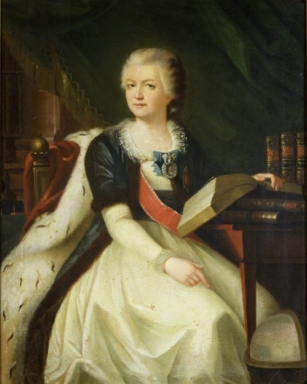
Dashkova herself recounted this in her “Notes.” Initially, the estate was wooden, rectangular in plan, with the main house in the center and four wings at the corners. Upon returning to Russia after a long trip abroad in 1782, Dashkova decided to build a new stone house. Despite her closeness to the Empress, the princess was financially constrained and could not afford to buy a mansion in the city. The decision to rebuild was also prompted by the fact that the estate suffered severe damage during the 1777 flood.

According to the “Notes,” construction lasted throughout 1783–1784. “I even worked alongside the masons who laid the walls,” the princess writes. Officially, the estate’s design is attributed to architect G. Quarenghi, although in her memoirs Dashkova omits his involvement, naming herself as the sole author. The building’s exterior is characteristic of Russian classicism of the 1780s–1790s and corresponds to the Palladian style trends. The central building is a structure with smooth walls, rectangular windows, and a portico of four Ionic columns decorating the main staircase. The main house is connected to two-story wooden wings by a semicircular covered gallery, an arc that formally enclosed the rear but in fact faced the road—the ceremonial courtyard. This contradiction arose because, by Peter I’s decree, dachas along the Peterhof road were to be built with their facades facing the sea.
The building’s plan is semicircular, which explains its informal name “Horseshoe.” There is a popular legend that during one of the Empress’s country trips, a horse pulling the carriage lost a horseshoe at the future site of the dacha. At that moment, Catherine II conceived the idea to build a country mansion for her friend and companion in the shape of a horseshoe—a symbol of happiness. Around the dacha, a large English landscape park was laid out, stretching to the seashore. A clearing was cut through it toward the Gulf of Finland, and the territory was intersected by winding canals forming islands. A description of the park by Georgi from 1794 is known: “Noble stone buildings form an open courtyard with the wings, extending to the main road and planted with various trees along it. Next to the buildings is a fruitful garden with greenhouses. Behind the buildings is a mixed forest with a noble meadow near a stream and notable canals, also surrounding a small island with a bathhouse. Straight and winding paths lead through the forest to the sea gulf, where stone houses stand, and between both is the main entrance.”
Judging by the plans, engravings, and Georgi’s description, the estate differed from similar nearby aristocratic dachas by the austerity of its overall layout: a minimum of wings, service buildings, and pavilions, and the garden was deliberately created as a place for walks in solitude or in the company of close friends.
However, Dashkova was able to enjoy the idyllic lifestyle in the estate she built and arranged for only a short time. The princess’s financial situation remained constrained, and soon she was forced to rent out the dacha. For example, in the early 1790s, the dacha was rented by the family of Prince Shakhovsky.
Falling into disgrace, Ekaterina Romanovna Dashkova spent the last years of her life away from St. Petersburg and Kiryánovo. She settled in her husband’s estate—the village of Troitskoye in Kaluga province. On January 4 (16), 1810, she died in Moscow. Kiryánovo was inherited by her cousin’s nephew Ivan Illarionovich Vorontsov-Dashkov.
The estate’s subsequent fate was full of unexpected twists. As early as 1805, the “Great Britain” tavern operated on the estate grounds. Owners and tenants changed frequently: besides the Shakhovskys, the Katenins, Khvostovs, and others lived here. At literary evenings held within the estate walls, Krylov read his fables.
There are various legends associated with “Kiryánovo.” Pylyayev, in his book “Forgotten Past of the St. Petersburg Surroundings,” mentions the tragic death of 23-year-old Princess Shakhovskaya and a treasure of family diamonds allegedly buried by Count Zavadovsky. There is also a comical story in the style of a Gogol tale about how Senator Naryshkin and Princess Dashkova quarreled over two pigs that wandered into the estate.
In 1838, Vorontsov-Dashkov sold “Kiryánovo” to the Yakimov merchants, who in the same year built a silk factory there. By 1865, besides the stone and two wooden merchant houses, the former estate grounds already housed two factories producing silk and woolen goods. In 1847, Yakimov sold the seaside part of the dacha to Starikova, which effectively led to the garden’s division. The park was finally destroyed in the 1870s during the construction of the Putilov railway. Soil was taken from its territory to build the embankment; thus, a huge quarry pond was formed, partially existing to this day.
At the end of the 19th century, the estate housed greenhouses of the well-known philanthropist and merchant Ushakov. At that time, revolutionary-minded workers began gathering in the abandoned corners of the park. At one such meeting, Kalinin spoke. In the early 20th century, Ushakov organized a family club for workers of the Putilov factory in the estate, and the estate building was altered: wooden superstructures appeared on the wings and outbuildings, distorting its appearance.
In 1934, a railway overpass for the Putilov railway branch was built near the estate according to a project. After the October Revolution, the estate building housed various institutions at different times: a pioneer camp of the “Red Putilovets” factory, a residential building, an adult school, and after the war—a kindergarten. In 1970–1975, the estate building was taken under state protection and adapted as the wedding palace of the Kirov district. In the 1970s, an attempt was made to partially restore the estate park, but it was interrupted when, in the mid-1980s, construction of a new workshop for the Kirov factory began. Now the ugly skeleton of this unfinished construction looms behind the estate. Since 2007, the right wing of the estate houses a branch of the “Narvskaya Zastava” museum and a memorial room dedicated to Princess Ekaterina Romanovna Dashkova.
Sources:
https://ru.wikipedia.org/wiki/Kiryánovo_(estate)
https://www.citywalls.ru/house5193.html

