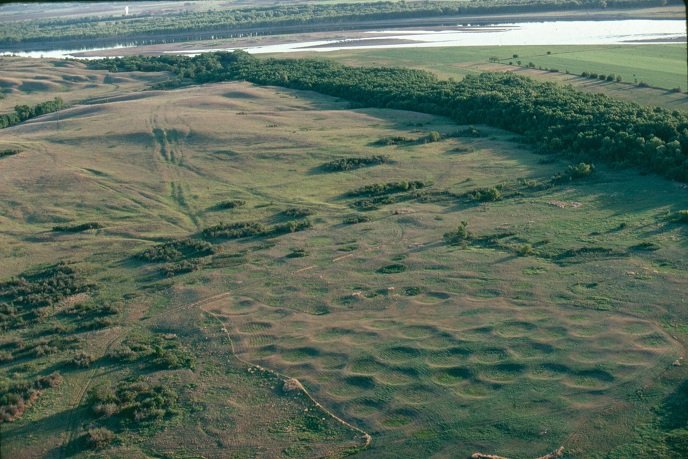
The Big Hidatsa site is an earthlodge located near the junction of the Knife and Missouri Rivers close to Stanton, North Dakota. Occupied between ca. 1740 and 1850, the site was part of the Knife River Indian Villages National Historic Site, which was established in 1974 to focus on the cultures and lifestyles of the Plains Indians.
During the winter of 1804, the Lewis and Clark expedition and the Corps of Discovery were assisted by Sacagawea at the villages in this area. At the time, between 4,000 and 5,000 Hidatsa and Mandan people lived in the area, and there were more than 200 lodges. Big Hidatsa was the largest village of the three on the site, with about 120 round earthlodges. Each of these earthlodges could hold 20 to 30 people.
After Fort Mandan was erected by the Discovery Corps, trading was conducted between the men of the expedition and the people of Big Hidatsa. Some artifacts from the inhabitants of the site and its neighbors were sent to President Thomas Jefferson. Communications with the Hidatsa and Mandan people provided information about the culture and history of the people in the west.
Today, the site is threatened by invasive species, harmful tree fungus, and the erosion of the riverbank. Depressions in the ground can be seen where the lodges once stood because the dirt surrounding the structures collapsed after they were abandoned. The park maintains a collection of artifacts from the people who lived at the site and is a destination for canoeing and hiking.
Sources: Wikipedia, OpenStreetMap, Wikidata, Wikimedia Commons
Written by No Other
Discuss this with the author and others
No comments yet. Be the first to start the conversation.