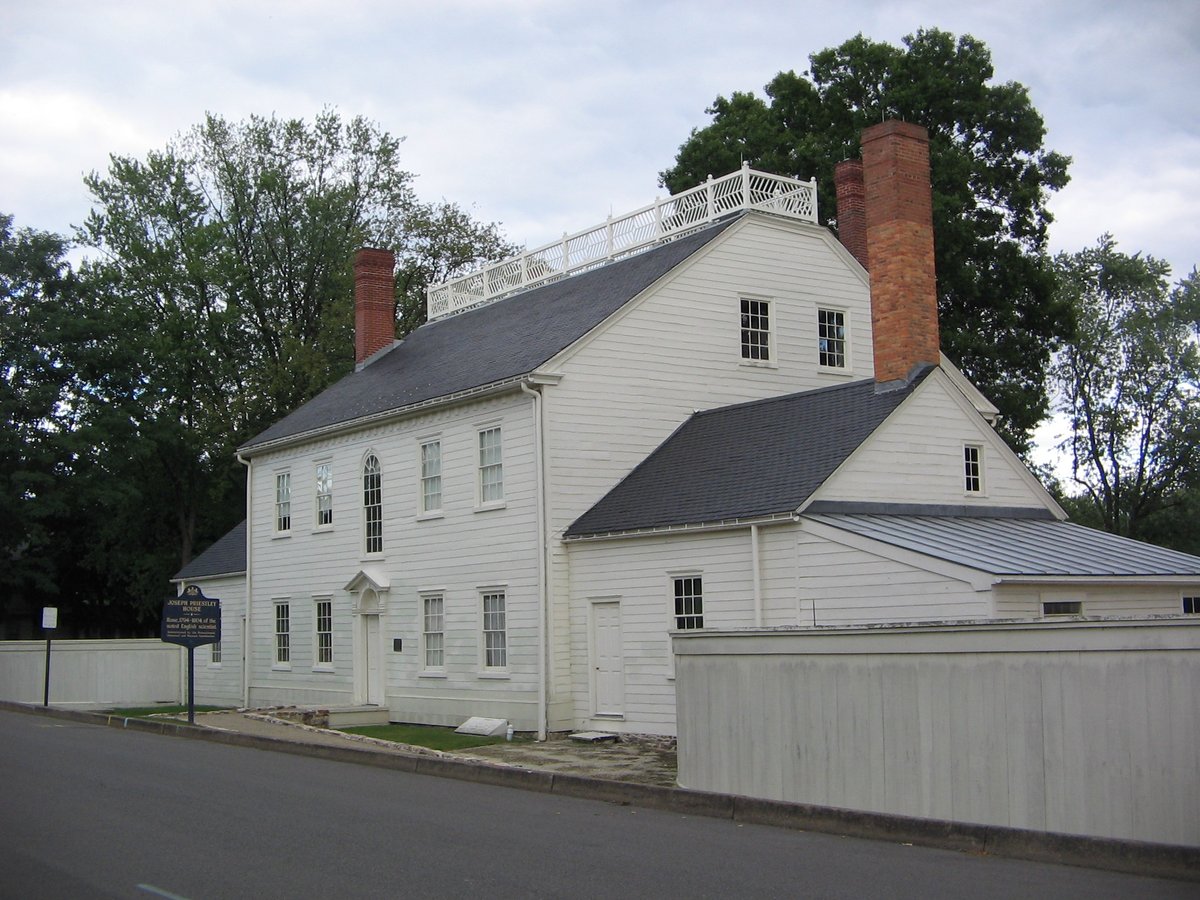
In rural Northumberland, Pennsylvania, stands the Georgian home of the eighteenth-century British theologian and natural philosopher Joseph Priestley. The house, which was designed by Priestley's wife Mary, features Federalist accents. The Priestleys emigrated to the United States in 1794 fleeing religious persecution and political turmoil in Britain. Seeking a peaceful life, they settled in Northumberland, a location Mary preferred because it was near her sons. Priestley, however, described the situation as distant from his original views and noted that his time there was not passing as agreeably as it did in England.
After the Priestleys died, the home remained in private hands until George Gilbert Pond, a professor from what is now Pennsylvania State University, bought it at the turn of the twentieth century. Pond attempted to found the first Priestley museum but died before completing the project. In the 1960s, the Pennsylvania Historical and Museum Commission (PHMC) carefully restored the house and designated it a National Historic Landmark. A second renovation was undertaken in the 1990s to return the home to the way it looked during Priestley's time.
The PHMC operated the house as a museum dedicated to Joseph Priestley from 1970 to August 2009, when it closed due to low visitation and budget cuts. In October 2009, the house reopened, still owned by the PHMC but operated by the Friends of Joseph Priestley House (FJPH). The home has been a frequent place of celebration for the American Chemical Society, which commemorated the centennial and bicentennial of the discovery of oxygen gas by Priestley, as well as the 250th anniversary of his birth.
Sources: Wikipedia, OpenStreetMap, Wikidata, Wikimedia Commons
Written by No Other
Discuss this with the author and others
No comments yet. Be the first to start the conversation.