13 Romanovskaya Sloboda St., Minsk, Belarus

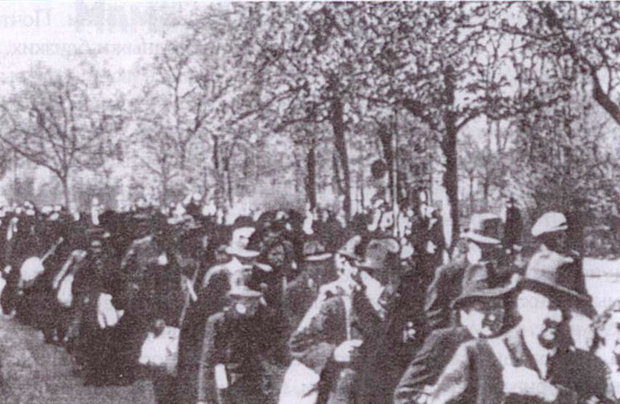
In September 1941, an unusual passenger train arrived in Minsk from Hamburg. All its passengers were of one nationality – Jews, and for this reason, all foreign Jews in the Minsk ghetto began to be called "Hamburgers." They thought they were being sent to live in new territories. They were allowed to take a small amount of luggage, documents, and money on the journey. The passengers paid for their tickets. In Minsk, they were placed in a special area of the Minsk ghetto – the "sonderghetto."
On November 10, 1941, 992 German Jews were transported by train from Düsseldorf to the Minsk ghetto. Only five of them survived the Holocaust.

By November 1941, the Germans had already fenced off part of the Minsk ghetto with barbed wire along Respublikanskaya Street (now Romanovskaya Sloboda), Opansky, and Shornaya Streets, naming this area "sonderghetto No. 1." Sonderghetto No. 2 was created between Kustarnaya Street (no longer existing), Dimitrova, Shpalernaya, Ostrovskogo, and Nemiga Streets. All Jews from Western Europe were settled only in these two places.
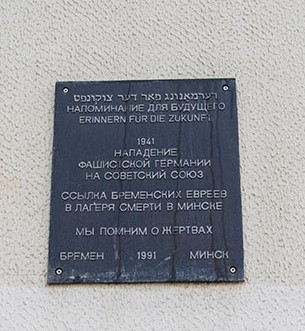
Jews deported to Belarus from Europe lived only in the territory of the "sonderghetto" – a ghetto within the Minsk ghetto, also fenced with barbed wire. All Jews transported by trains from Germany to Minsk were Germanized: they spoke German and had merits before the country. Many veterans of the First World War ended up in the "sonderghetto": they had shed blood for Germany, received awards, and military ranks.
Communication with other ghetto inmates was strictly forbidden to them; the brought belongings were quickly exchanged for food, and German Jews starved much more severely than the locals. Despite extreme exhaustion, they maintained perfect order in their territory and demonstratively celebrated the Sabbath.
Later, trains arrived from other cities in Germany, Austria, and Czechoslovakia, but all passengers of these trains were still called "Hamburg Jews" by the "old-timers" of the Minsk ghetto…
According to available data, in 1941-1942, seven transports with Jews from Germany (6,428 people), seven from Czechoslovakia (7,000 people), and ten trains from Austria – the largest number of victims (10,476 people) – were sent to the Minsk area. In total – 23,904 people. They were killed a few kilometers from Minsk in Maly Trostenets. Only a few survived.
In the first group of Jews from Germany were Berthold Rudner and Marta Kron; they were brought and unloaded with their suitcases near the house at 16A Korolya Street, which has survived to this day. Berthold Rudner, a locksmith by profession and a freelance journalist, recorded all events and his impressions in the Minsk ghetto in a diary for six months. This is the only surviving testimony of a person deported to Minsk, providing insight into the life and suffering of people imprisoned in the ghetto.
Early in the evening of November 14, Rudner, along with about a thousand other Jews, was loaded onto a train at Grunewald station, which was supposed to take them to Minsk. On the train, he found a seat next to Marta Kron, who was seven years older than him. They immediately liked each other and became friends. Four days later, after a difficult journey, they arrived in the Belarusian capital, where Ukrainian SS collaborators unloaded them from the cars and drove them into the ghetto. Rudner was soon assigned to a labor team working at the police security auto-mechanical workshop. Work meant a certain degree of safety and better food under the circumstances. He spoke with many SS members from Austria in his native Austrian dialect and sometimes received cigarettes and food from them. Since supplies in the ghetto were poor, this meant a certain luxury for him, which he certainly understood.
However, the tormenting existence in the ghetto did not pass without a trace for him either. Hunger, filth, and cultural decline in the ghetto deeply oppressed him: "Only here can one understand who is who. All culture and civilization 'fall off' like autumn leaves from trees, leaving only a bare trunk. And everything that cannot withstand the storm perishes. This is exactly what is happening here. The most primitive notions of hygiene are abolished. Hunger pushes all cultivated culture into the background, leaving only its outer shell. Except for a few exceptions, socially dangerous selfishness prevails. People have forgotten how to think: day and night, conversations are only about food. Among both the lower and upper classes. Spiritual poverty rules the situation. Hunger causes pain. I have enough experience in this. But when the animal 'human' spiritually resembles dogs, then he reaches such a state that even the strongest nerves cannot endure. And we have now reached such a state. If I compare my eleven-month stay in pre-trial detention with the circumstances here, then back then I lived, so to speak, like in paradise."
Although extreme cold prevailed in Minsk at that time, the chief of police and security services carried out a "fur" campaign without ceremony among Jews deported from the "old Reich": all fur products were subject to surrender. Rudner, who, of course, no longer had a fur collar (he probably exchanged it for food), made a short note in his diary: "I ate my collar long ago!!" The building where they were housed had no electricity or heat, and later hunger set in. The very first to die was a newborn baby, and all the deportees sympathized with his mother. But this was only the beginning – then many began to fall ill and die.
On January 26, 1942, at 8:15 a.m., Marta Kron died. The girl was buried only on March 8: the ground was frozen, and for several months she lay in the corridor. In his diary, Berthold Rudner writes that by the time of the burial, 200 bodies had already accumulated in the building.
Rudner worked shifts seven days a week. This allowed him, along with receiving better food within certain limits, to maintain hygienic care of his body, as there was a shower at his workplace that he could use from time to time. Taking a shower, let alone a bath, was impossible in the ghetto, so all inmates had to fight lice. People in the ghetto also had no clean clothes. For the most part, people wore the clothes they had arrived in Minsk with.
In May 1942, the weather in Minsk warmed again, and deportations from the Reich, which had been suspended in December 1941 due to difficulties supplying the front, resumed. However, deported Jews were no longer brought to the Minsk ghetto but were killed immediately upon arrival and buried in dug pits in the forest near the village of Maly Trostenets. Most of these transports came from Vienna.
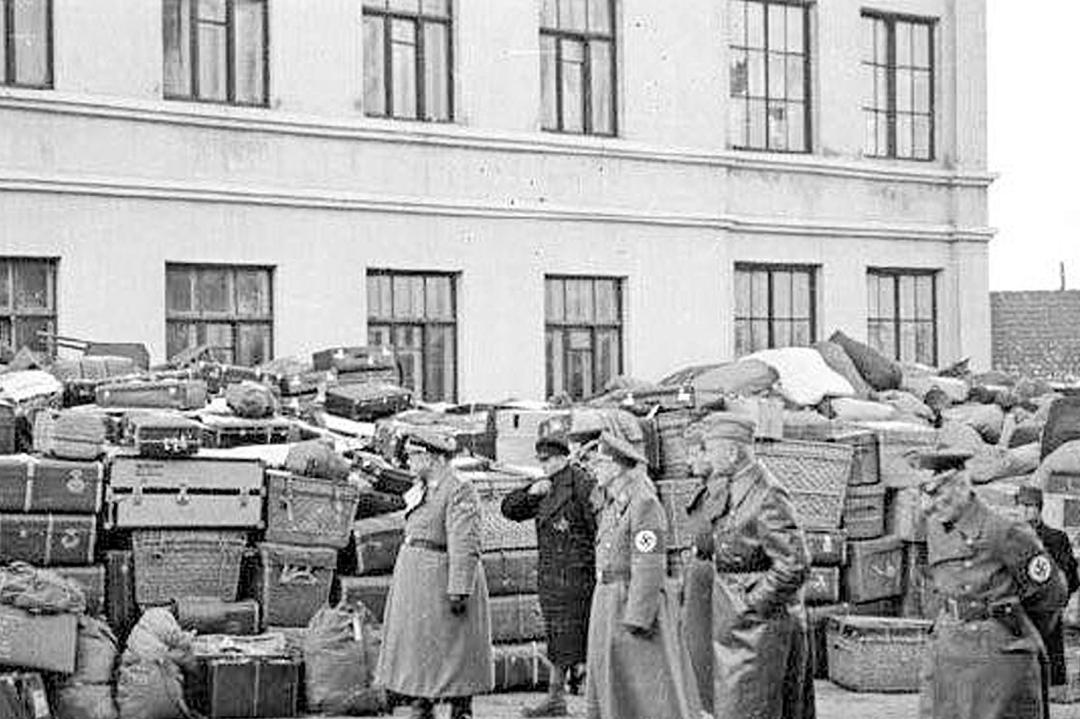
Their suitcases and food were sent to storage by the SS. The last entry in Rudner’s diary reads: "The second transport from Vienna also had their suitcases and food taken away. Each of us received a crust of bread from Vienna and some food. At the expense of the Viennese." Rudner’s sister, Teresa Bergtrom, was also on this transport. She was killed the same day. Berthold Rudner’s brother, Paul, was deported by the National Socialists on October 23, 1941, to Litzmannstadt. He died there on February 8, 1942. Rudner’s wife, Margarete Ziten, was sent to the Ravensbrück concentration camp, where she died on December 3, 1944. The further fate of Berthold Rudner is unknown. His diary came into the hands of Herman Brill after the war under unclear circumstances. Today it is kept at the Institute of Contemporary History in Munich.
The history of the Minsk ghetto reveals very different sides of people. During the Holocaust, the fascists destroyed six million Jews. This was done with almost complete support from the German people and, of course, the German army. But there were exceptions: German officer Willy Schulz fell in love with the Jewess Ilsa Stein and, risking his life, saved twenty-five Jews from the Minsk ghetto along with his beloved.

In 1943, Ilsa Stein, a very beautiful Jewish girl from Frankfurt am Main, turned eighteen. That same year, German officer Willy Schulz turned forty-six. He had risen to the rank of Luftwaffe captain. But he had to leave aviation: he was wounded on the Western Front. After treatment, Schulz was declared unfit to fly and was appointed head of the quartermaster service in occupied Minsk. In the Belarusian capital, the German officer first encountered ghetto inmates: they transported peat from local swamps to the boiler house, which was located in the former House of the Government of the Belarusian SSR.
In 1943, Ilsa Stein was brought to the Minsk ghetto along with a column of Jews from Germany. At what moment Schulz singled out the beauty from the crowd of "third-class people" destined for destruction is unknown. But he fell in love at first sight. Willy understood perfectly well that he could pay dearly for openly courting Ilsa. And at first, he began to ease her fate somewhat. He appointed her forewoman of a work squad. And her friend, Lea Gutnikovich, as Stein’s assistant. He began bringing soup and bread from the officers’ canteen to the starving girls.
Willy Schulz was a good man. And not just a good man: he was one of the few Germans on whom Nazi propaganda had no effect. Earlier, serving in elite troops – in aviation – he had not witnessed punitive operations against Jews and the peaceful population of occupied territories. After being wounded and transferred to another unit, seeing what his fellow countrymen were doing to innocent people and falling in love with a Jewess, Schulz quickly assessed the price of fascism.
Once, having learned in advance about a planned roundup of Jews, Schulz did not let them leave the ghetto after work but kept several hundred people in the basement of the House of Government. Thus, if he could not save many lives, he at least gave some a reprieve from execution.
Lea Gutnikovich, Ilsa’s friend, was the leader in their pair. Schulz turned to her with the question: "Tell me, how can I save Ilsa? I love her, and she will die in the ghetto." Lea replied that there was one way: to flee to the partisans. Gutnikovich, as it turned out, was connected with the Belarusian underground. Schulz did not expect such an answer and took a night to think it over. In the morning, he came to Gutnikovich and said he agreed to flee with her and Ilsa. Lea informed the underground of his decision. But then the partisans decided, so to speak, to bargain a little. They understood that there was an opportunity to save more than two people. Willy was offered, supposedly to unload cement wagons, to take Ilsa, her friend Lea Gutnikovich, and twenty-three other ghetto inmates into the forest.
Schulz obediently prepared documents for thirteen women and twelve men. Among them were Ilsa, Liza, and two of her sisters. All participants in the escape were picked up by members of the ghetto underground committee. On March 30, 1943, the vehicle set off. On the way, it was stopped for inspection by a German patrol. But everything went smoothly: Schulz had properly prepared the documents.
Then Willy ordered the driver – a German sergeant – to drive not to the wagon unloading area but toward the forest, where the border of the partisan zone lay. The sergeant immediately understood where the officer and ghetto inmates were headed and tried to turn the vehicle back to the station where the German unit was located. After Schulz’s command to drive to the forest, the driver jumped out of the car and tried to run away. Willy had to shoot him. For almost half a year, Willy and Ilsa lived together in a partisan detachment. Schulz told the anti-fascist fighters about several important Nazi objects on Belarusian territory. Soon, these ammunition depots, airfields, and headquarters were successfully bombed by Soviet aviation…
Then events occurred that neither Willy nor Ilsa could have predicted. A special plane was sent for them, which took them to a special NKVD base in Malakhovka, near Moscow. Then the lovers were separated: Willy was sent to the Central School of Anti-Fascists, where national German cadres were trained to manage the future GDR. Ilsa, by then already pregnant, was transferred to Birobidzhan. There she gave birth to a boy who died shortly after birth.
The lovers never saw each other again. Ilsa was informed that Willy died of meningitis on December 31, 1944. Other documents state that he died of heart failure. Willy definitely saved Ilsa’s life: in October 1943, the Nazis destroyed the Minsk ghetto.
Sources:
https://evreimir.com/198733/tragediya-minskogo-getto-bol-i-skorb/
https://ru.wikipedia.org/wiki/Минское_гетто
https://www.bbc.com/russian/features-45965965
http://zeitzeugenarchiv.gwminsk.com/ru/archiv/berlin/rudner-bernold
https://www.bagira.guru/biography/vili-shults-i-ilza-shtajn-evrejka-i-kapitan.html

