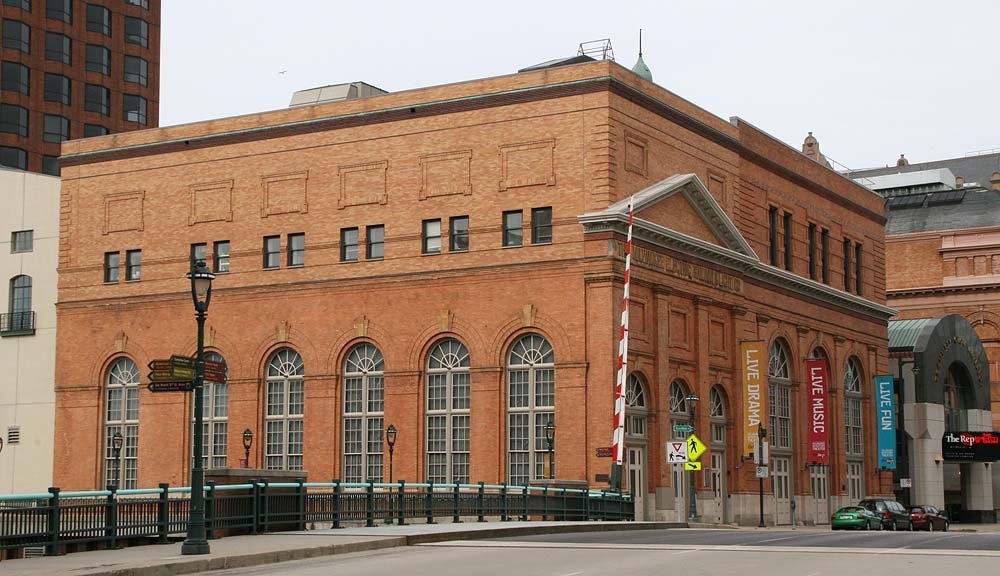
Nestled in the thrumming heart of downtown Milwaukee, Wisconsin, the Oneida Street Station, affectionately known as the East Wells Power Plant, has borne witness to countless tales, woven into the fabric of the Milwaukee River and Wells Street. Initially powered by the visionary Milwaukee Electric Railway & Light Company, this enchanting structure was brought to life between 1898 and 1900, a testament to the artistic flair of Herman Esser – an architectural love letter to the neoclassical revival era.
Each brick and stone tells a story, of a time when power was the lifeblood of the neighborhood. The plant paid homage to mankind's innovative leap, pioneering the use of pulverized coal, as recognized by the ASME, marking it as the 'first central power station in the United States to be equipped and successful with pulverized coal. The heart of the complex, the machine shop and boiler room number 2, are aged relics of 1890, echoing the whispers of the Edison Illuminating Company.
The fusion of the companies and buildings created a symphony of historical power notes, graced by the addition of boiler rooms number 3 in 1923 and number 4 in 1938. The most captivating act unfolded between 1918 and 1920, when the plant hummed with revolutionary groundbreaking experiments, pushing the world another step towards embracing the efficiency of pulverized coal power. The engineering breakthroughs of this time bucked societal norms, only to be greeted with resistance, but as the tide turned, the benefits unmistakably emerged.
A 'water screen,' a solution to reducing waste ash temperatures and preventing their fusion on the boiler floor, paved the way for pulverized coal power to become the new standard across America's boiler rooms. The innovation contained within these walls did not go unnoticed, the American Society of Mechanical Engineers declaring it a National Historic Mechanical Engineering Landmark in 1980, and its inclusion in the National Register of Historic Places in 1984.
Unbeknownst to many, the plant inhaled its final breaths as a power generator in 1987, but fortune smiled upon the station as it found a new life – today, the Associated Bank Theater Center and the Milwaukee Repertory Theater call it home. With every beat of its heart, the Oneida Street Station whispers a tale of radical change, weaving the intricate dance of yesteryears and today's elegance into a beautiful symphony.
Sources: Wikipedia, OpenStreetMap, Wikidata, Wikimedia Commons
Written by No other
Discuss this with the author and others
No comments yet. Be the first to start the conversation.