

The Struve Geodetic Arc point Karischki is located near the Rokiskis-Panevezys road at the 14th kilometer on a hill in the picturesque Gireishiai valley, not far from the bend of the Setekšnari River to the west. The point is situated in an open area and was one of the base points of the Struve Geodetic Arc in Lithuania. The point is fenced with a half-meter concrete fence, on the outer side of which an information plaque is installed. The Struve Geodetic Arc point (Karischki) was established and used from 1816 to 1821, and the measurement was carried out by Karl Tenner. The point was marked with a wooden log structure. The station was a first-order triangulation network point of the Vilnius Governorate, developed by Tenner, consisting of 119 triangles connecting 98 points. The average length of the triangle sides was 25 km. Angles and baseline measurements were conducted between 1816 and 1821. Later, from 1822 to 1829, the network was extended to the Courland Governorate – the present-day territory of Latvia. The surrounding area used for observations and measurements remains an open space, as it was during the arc measurements. Polish surveyors re-marked the point with concrete blocks between 1925 and 1930. No significant changes have been made to the surroundings of the station.
Since the arc was measured, the KARISKI station has become a primary geodetic point for Lithuania’s national cartographic activities. Between the First and Second World Wars, this point was part of the triangulation network of independent Lithuania. This network consisted of 86 points and was created between 1927 and 1939 by the Military Topographic Department of the Lithuanian Ministry of Defense. Subsequently, the connection of the triangulation networks of Lithuania, Poland, and Latvia was initiated by the Military Topographic Service of the Soviet Army in 1940 in the Kapciamiestis area. Observations continued after World War II between Zarasai and Rokiskis, as well as between Sirvintos and Paberze. After a break, in 1967, Soviet military personnel connected the pre-war triangulation networks of Lithuania, Poland, and the Kaliningrad region in the Lazdijai – Kybartai – Smalininkai area. The combined triangulation networks were adjusted, and the resulting coordinates were calculated in the 1942 coordinate system, which remained the geodetic reference until the end of the Soviet period. The KARISKI station was a point in the state first-order triangulation network.
The Lithuanian national GPS network was established between 1992 and 1998 and replaced the national triangulation system used for 170 years. The network was based on GPS points observed during the international EUREF BAL92 program. The KARISKI station is a point in the state second-order GPS network.
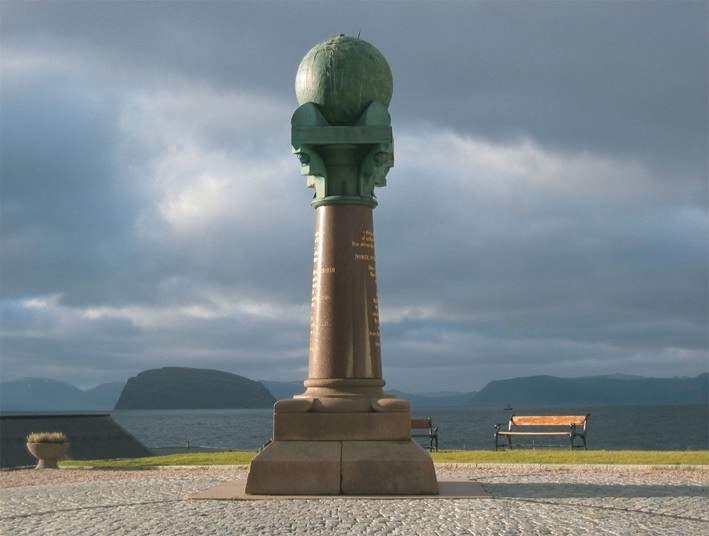
The Struve Arc, once known as the “Russian” and later the “Russian-Scandinavian Meridian Arc,” is one of UNESCO’s World Heritage monuments. The arc consists of 265 triangulation points, where measurements were conducted from 1816 to 1852, enabling the precise determination of the Earth’s size and shape.
Reference points of this triangulation network were marked in various ways on the ground: hollows carved into rocks, iron crosses, stone pyramids, or specially installed obelisks. Often, they were marked with sandstone bricks laid at the bottom of a pit; sometimes it was a granite cube with a cavity filled with lead, placed in a pit with cobblestones.
During the project to include the Struve Arc in the UNESCO list, which lasted eight years, special search and geodetic work was undertaken in each country to locate the original points. All information from all Struve Arc countries was collected, structured, and standardized.
Not all original points were found during the special search and geodetic work carried out in recent years with active cooperation from scientists of the interested countries, and many of them were severely damaged. Therefore, only the best-preserved points – a total of 34 – were included in the World Heritage site.
Sources:
http://www.gototrip.com/publications/geodezicheskaya-duga-struve
https://eurogeographics.org/wp-content/uploads/2018/04/1187.pdf



Written by Jermaine
Discuss this with the author and others
No comments yet. Be the first to start the conversation.