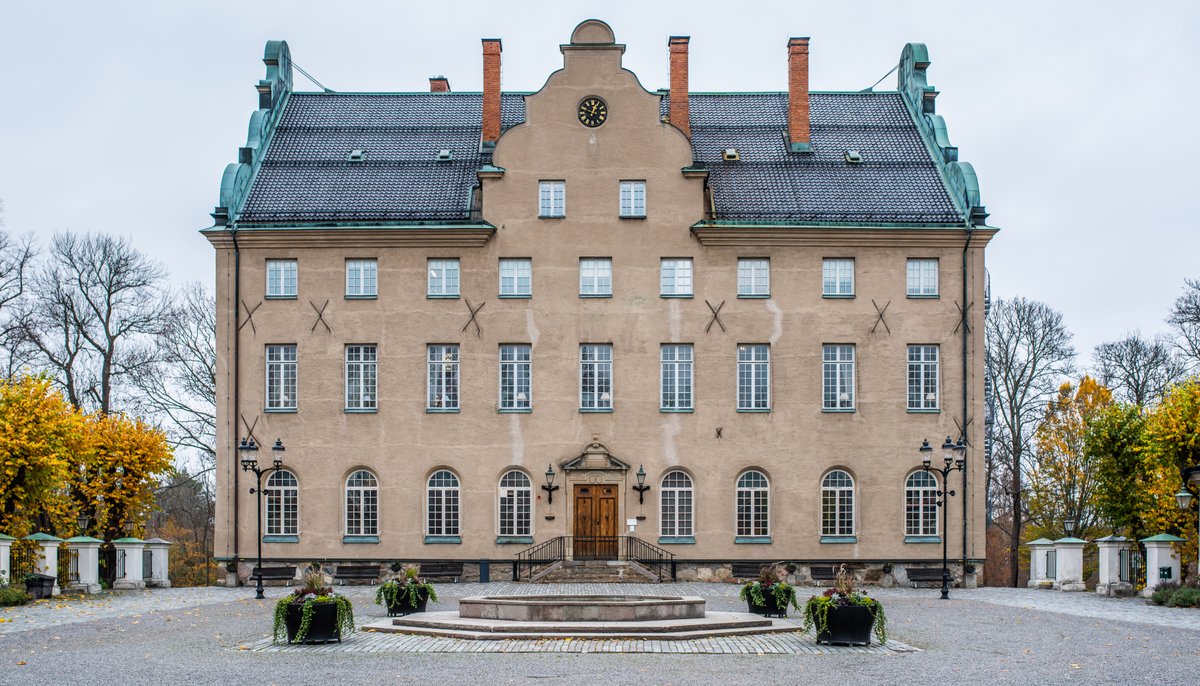

Djursholm Castle, a building in Danderyd Municipality, Sweden, is a monument to history. Constructed in the early 15th century by Nils Jönsson Oxenstierna, it was later donated to St. Clara monastery by King Magnus Ladulås. This structure, though eminent in its 17th-century restoration, veils a thrilling medieval past. The surrounding land, Ekeby farm, was donated to St. Clara monastery in 1288, which included Ösby farm and Gamla Djursholm, an island that later became a peninsula due to land rising.
It was on this island that Nils Jönsson Oxenstierna operated. Reports suggest that pirates sought refuge in his residence on the islet and collected custom duties from ships passing through, according to rhyming chronicles.
For nearly 300 years, from the end of the 15th century to the mid-1770s, Lidingön, which belonged to Djursholm's estate, was strategic due to the castle's advantageous location. Architecturally, the castle was modernized at the end of the 19th century in Neo-Baroque style.
From 1891 to 1910, Djursholm's secondary school (Djursholms samskola) operated on the premises. Viktor Rydberg was the first inspector, while Erik Axel Karlfeldt and Alice Tegner were among the first teachers. Elsa Beskow worked as an art teacher, and her husband, theologian Natanael Beskow, served as the headmaster of the school from 1897 to 1909.
Sources: Wikipedia, OpenStreetMap, Wikidata, Wikimedia Commons
Written by Nik Frost
Discuss this with the author and others
No comments yet. Be the first to start the conversation.