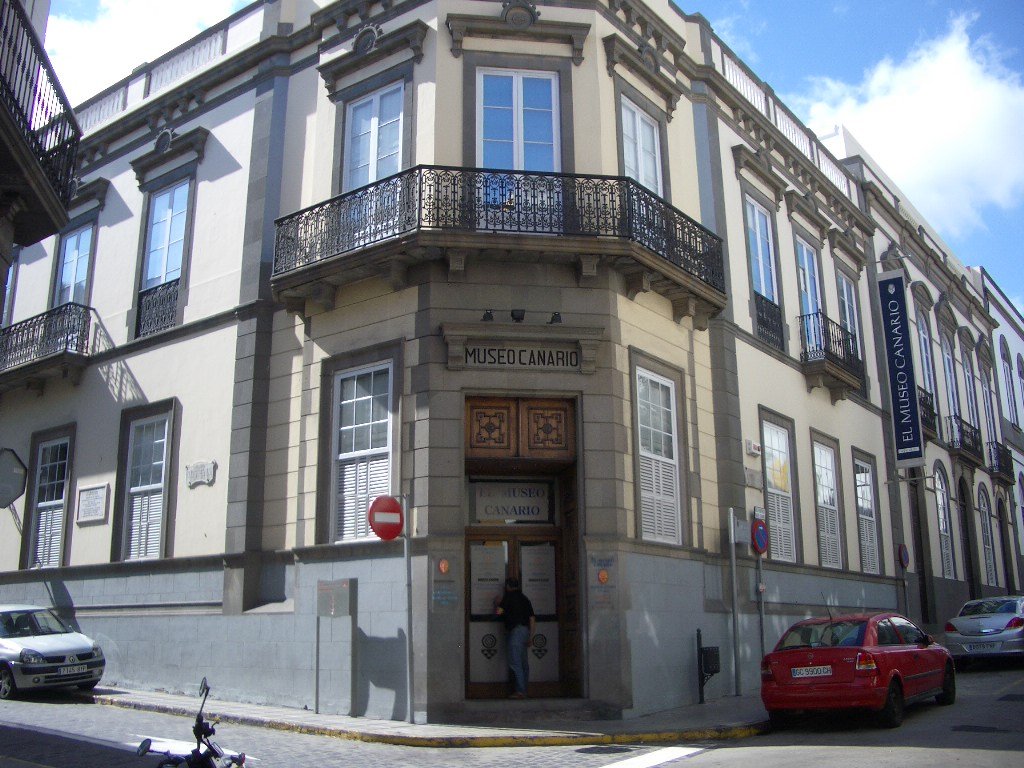

El Museo Canario is an archeological museum in Las Palmas, the capital city of Gran Canaria in the Canary Islands. It is dedicated to the pre-colonial history of the Canary Islands. The museum was founded after a group of intellectuals led by Dr. Gregorio Chil y Naranjo and Agustín Millares Torres met in 1879 to set up a historical society. In 1880 they opened a small museum and library on the second floor of Las Palmas City Hall with the aim of promoting the study of Canarian history.
Archaeologists from the museum organised field trips into the island interior to gather artefacts from ancient settlements of the Guanches, the original indigenous inhabitants of the Canary Islands prior to European settlement. The museum's collection relocated to the former home of Dr. Chil y Naranjo in the Vegueta district of Las Palmas in 1923. It opened there in 1930 and continues to operate today in the residence, which was bequeathed to the museum society.
As the largest archaeological collection in the Canary Islands, El Museo Canario is an important resource in the study of prehispanic society in the archipelago. The collection mainly consists of prehistoric remains and historic artefacts, including ceramic vessels, religious idols, and tools made of bone or wood. A popular artefact in the collection is the so-called Idol of Tara, a pre-Hispanic terracotta human figure, for which there is no data on its origin or original use.
Sources: Wikipedia, OpenStreetMap, Wikidata, Wikimedia Commons
Written by Mutabor
Discuss this with the author and others
No comments yet. Be the first to start the conversation.