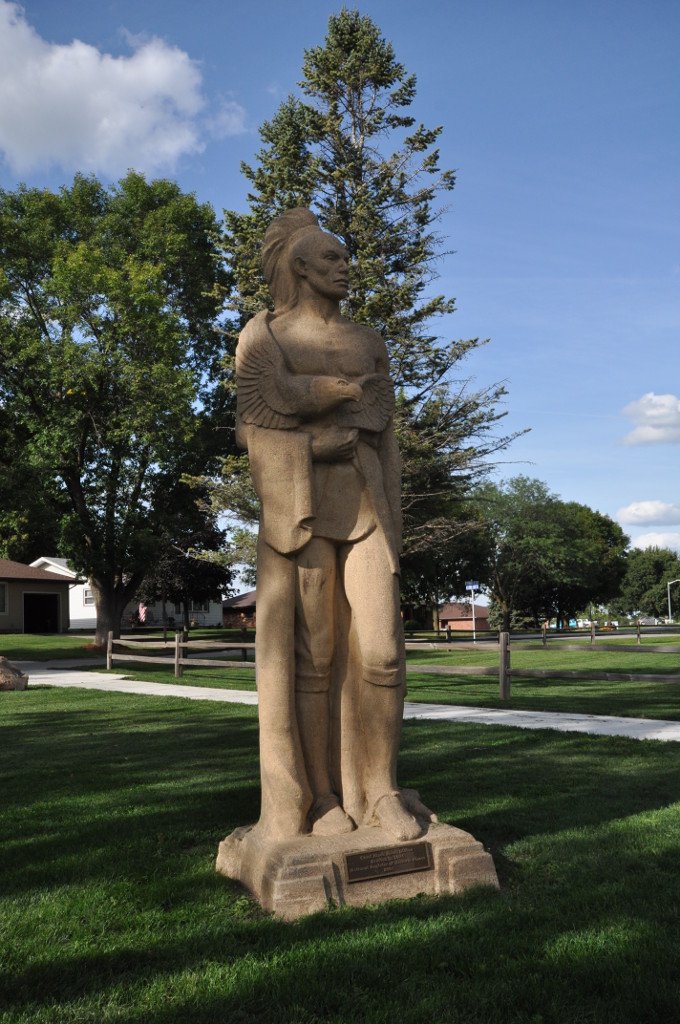

Sitting serene on the serene waters of Black Hawk Lake, Iowa, is a Native American warrior - he's no Zorro, but more like a cowboy star hidden in the prairie lights. This fellow didn't battle here, neither did his tribe. But one can't help but wonder, why a battle hero ended up on these golden Midwestern rolling meadows? Back in 1932, a quartet of innovators, which included Dr. E.E. Speaker and the Lake View Commercial Club, hatched a plan: let's elevate a statue of Black Hawk and welcome Harry E.
Stinson, a sculptor, to bring our ideas to life. Stinson, a university professor, sifted through a stack of models until he found the one. This sculpture was a melting pot of a college student's physique and Moses Slick, a Native American from Tama, Iowa's artistic expression. The birth of this statue sparked the Public Works of Art Project in Iowa, a program funded by the Civil Works Administration, a New Deal initiative during the Great Depression.
Harry E. Stinson was selected to sculpt the statue, not the University of Iowa itself. The City of Lake View also contributed, and the Civilian Conservation Corps prepared and landscaped the site. The statue was unveiled on September 3, 1934, during a Labor Day ceremony that marked the lake's name change from Wall Lake to Black Hawk Lake. It's essential to remember that this statue doesn't resemble the historical Black Hawk, who was a complicated, formidable leader.
This statue is more of a dreamy, romanticized portrayal of the man. It was crafted with a specific vision and in a specific era; the choices back then weren't always centered on accurate historical facts. So, if you ever happen upon this statue, resting in peace by a lake in Lake View, Iowa, take a moment to ponder the power of romanticizing our past and the way our history can be molded by the storytellers.
Sources: Wikipedia, OpenStreetMap, Wikidata, Wikimedia Commons
Written by Friendly Jane
Discuss this with the author and others
No comments yet. Be the first to start the conversation.