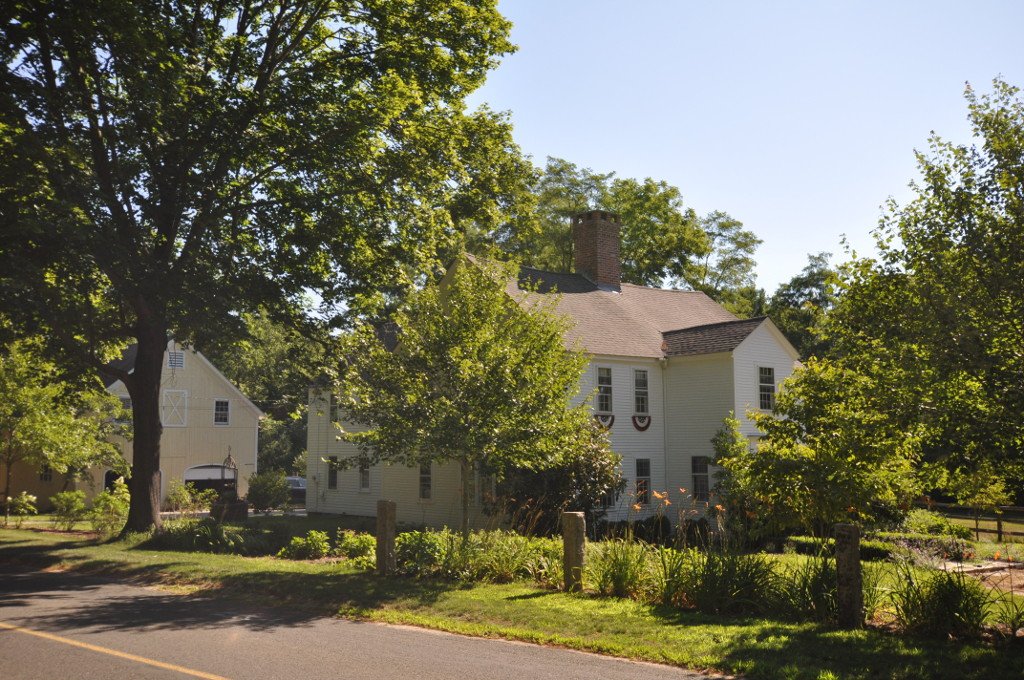

The Old Lyme Historic District encompasses the historic village center of Old Lyme, Connecticut. Settled in the mid-17th century, the village has an architectural history dating to the early 18th century. It flourished as a shipbuilding center and was home to many ship captains.
Old Lyme was one of the early settlement areas of the Puritan Saybrook Colony. It separated from that community as South Lyme in 1855, and eventually renamed itself Old Lyme. The village center has been arrayed along Lyme Street since its early days, running parallel to the Lieutenant River shortly before its mouth at the Connecticut River.
The village flourished in the 18th and 19th centuries as a shipbuilding center and was home to the Old Lyme Art Colony in the late 19th century. This artistic legacy continues today through the presence of the Lyme Art Association and the Lyme Academy College of Fine Arts in the village.
The historic district extends along Lyme Street from the junction with I-95 southward to McCurdy Street. It includes several buildings north of I-95, such as the Old Lyme Inn and the Florence Griswold House and Museum, which served as the historic center of the art colony. The town's civic buildings, including the town hall and library, are also located in the village. Houses in the district range from the early 18th century to the late 19th century, including the 18th-century Peck Tavern on Sill Lane.
Sources: Wikipedia, OpenStreetMap, Wikidata, Wikimedia Commons
Written by Friendly Jane
Discuss this with the author and others
No comments yet. Be the first to start the conversation.