3 Severnny Val St., Vyborg, Leningrad Region, Russia, 188800
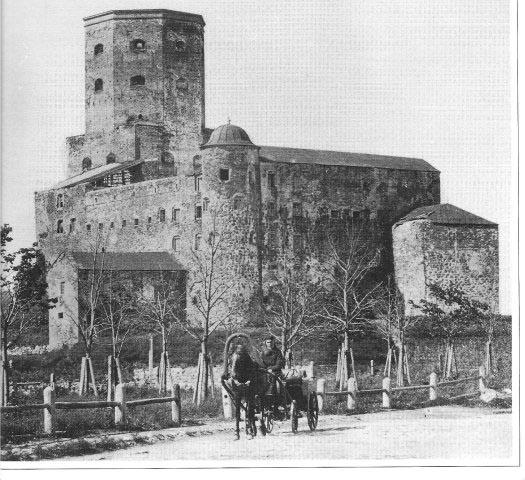

14th century. A Karelian messenger bows deeply before the Novgorod prince: “Save us, sovereign, help! The Swedes have attacked our settlement – brave but cruel people. They burn houses, kill people.” The prince pondered: these are hard times, invaders come to Rus’ from all sides, he cannot send his army to certain death. Meanwhile, the Swedes rebuilt the castle and continued raids on Novgorod lands. Many people perished at that time, many died in damp underground dungeons. Once again, the Swedes took prisoners to their castle.
The Novgorod prince had heard from merchants that the castle walls were high and thick and that it stood on an island. They also said there was an underground passage leading into the castle. It stretched through the rocks, passed under the bay, and ended somewhere unknown. The prince ordered to find the passage, infiltrate the castle, and free the prisoners...
...The Novgorod men walked through the underground passage, lighting their way with torches. Everyone in the castle was asleep, only the guards were alert, peering into the darkness. Avoiding the posts, the Novgorod men ran into a Swedish patrol – and a fight broke out. The Russian warriors managed to defeat the Swedes, but one survived by pretending to be dead. The scouts freed the prisoners locked in the wine cellar and escaped the same way through the underground passage. In the morning, the Swedes panicked: an entire patrol had disappeared along with the prisoners. They searched the entire castle and found the dead and that poor survivor. They began questioning him, but he was too scared to utter a word. Since then, a shadow walks the castle, hiding from people…
In 1561–62, construction began on another passage from the castle to the city, to the Town Hall building – a dam was even built across the Vuoksa River, with a tunnel inside. The underground passage was called Matti’s Hole or, in Russian style, Matveyev’s Hole. At the end of the 16th – beginning of the 17th century, the river dried up there and the dam was dismantled as unnecessary. In 1910, an attempt was made to explore the underground passage. The surviving expedition notes mention mysterious signs drawn on the brick walls and vault, as well as the silhouette of some creature resembling a human, at the sight of which all expedition members felt an inexplicable fear. A year later, the body of a guard was found at the entrance to Matveyev’s Hole. Cause of death – heart rupture. What scared him literally to death? In the 1930s, a garrison was stationed in Vyborg Castle, and the entrance to Matveyev’s Hole was bricked up. In the mid-20th century, the remains of the underground passage were filled in, and part of an 8-meter adit located by the castle walls leading underground was used as a pipeline.
“According to available information, in private houses formerly belonging to Mr. Wolf and Mr. Hakman, located near the city guardhouse, there are underground passages leading from these houses to the guardhouse and further to the embankment by the Abosky Bridge…” Such a letter was sent to the Vyborg governor on October 18, 1909, by the commandant of the Vyborg fortress, Major General Bystrov. The letter specifically mentioned the planned reconstruction of the guardhouse building, and a decision was made to investigate secret passages leading down found in the lower rooms. A hastily formed commission consisting of military engineer Lieutenant Colonel Stavitsky, Captain Filippov, and Captain Kunakov, with the participation of special officers from the Vyborg police department, descended into the underground tunnels on October 19–20, hoping to discover an extensive network of city catacombs. However, the expedition members were greatly disappointed. All passages were blocked by stones or collapsed soil. Eventually, the decision was made to seal everything under the guardhouse and hide the traces of the remaining passage fragments.
Mentions like this about the Vyborg underground are rare in the documents of the Leningrad Regional State Archive in Vyborg. For example, there is a brief mention in correspondence between the city magistrate and the Vyborg commandant Karl Delvig, who in the 1780s–90s was seriously engaged in the city’s defensive fortifications and, upon learning about the underground passages, tried together with the Vyborg engineering team to determine their direction, length, and purpose. He was mainly interested in the secret passage leading from the castle to the fortress of St. Anne’s Crown. Some fragments of this passage had been discovered long before him in the mid-century during the construction of the Annin fortifications. It was already clear then that these efforts were futile: the passages were blocked or flooded. No maps or diagrams indicating possible directions of the underground passage have survived.
Meanwhile, today it is no secret that catacombs have been preserved in the so-called “historic” part of the city. Not only in Vyborg, but they exist in all medieval European cities, as they originally had a purely practical use — serving as a convenient source for extracting building materials — sand, clay, stone. Later, they acquired strategic importance, for example, during sieges by enemies. Every medieval castle or fortress necessarily had “escape routes.” By the way, in the early Christian era, it became a tradition to bury deceased townspeople in underground vaults.
Archaeological research on this subject in Vyborg Castle is well described by the well-known historian and scholar Vyacheslav Tyulenev. In the 1980s, the archaeologist conducted a detailed study of the early cultural layer in Vyborg, starting from the pre-Swedish period, and made many amazing discoveries and valuable finds. Some of these finds are kept in the Vyborg Local History Museum.
Returning to the underground tunnel leading from the castle to the Annin fortifications. On one of five unique Swedish maps of Vyborg, drawn with ink on batiste, stored in the regional archive and apparently taken as a trophy when Peter I’s troops captured the city in 1710, there is a perspective plan of fortifications on Tverdysh Island, whose contours exactly repeat the outline of the future St. Anne’s Crown fortress. This map is dated 1706, during the unsuccessful first siege of Vyborg by Peter’s troops. The Swedes, fearing another attack, planned to build fortifications here themselves. And they surely began construction, because the similarity between the planned Swedish fortifications and those that have survived to this day is too great. Thus, the claim about a dug underground passage from Castle Island to Tverdysh Island becomes logical.
The provincial archive of the city of Mikkeli contains confirmation that in the late 1920s – early 1930s, large-scale repairs of the sewage and water supply systems were carried out in Vyborg. A series of photos stored in this archive and taken during that period clearly show what workers discovered while laying new underground channels. Judging by the dark color of the bones and skulls found, these remains are very ancient. A well-known case from the 19th century is when workers near the modern Progonaya Street accidentally fell into an unknown tunnel and, walking through it, reached a blockage (or, according to another version, some doors they were afraid to open), encountering continuous human remains along the way. These gruesome finds forced them to turn back… One of the 1930s photographs shows a pile of skulls in an underground corridor, discovered by Finnish workers already in the 20th century.
The famous Finnish historian I. Ruut in his books at the beginning of the 20th century described in detail the ancient history of Vyborg, partly based on finds discovered underground in the city during its expansion. As he writes, everywhere during the construction of the railway station, reconstruction of bridges, repairs of the embankment and Red Well Square, underground collapses and archaeological finds were encountered, testifying to the ancient and remarkable history of Vyborg. Even then, old Karelian knives, fragments of weapons and women’s jewelry, household items, and coins dating back to the time of the Karelian settlement and Novgorod outpost at the site of Vyborg were found. Among the coins were Byzantine and Asian ones. Ruut dated the initial construction of the tunnel connecting the castle with the city to 1560.
The owner of the house mentioned at the beginning of the article on Severnaya Val Street, A. Hakman, knowing about the city’s underground communications firsthand, conducted thorough underground research in Vyborg, starting from his own cellars, and left behind curious memoirs.
One of the old Finnish books on the history of Vyborg, kept in the scientific-reference library of LOGAV, contains a description with diagrams of how a tunnel could be dug underwater, connecting the castle and the city. First, a double row of palisades was installed in the water along the future tunnel path, matching the width of the underground passage. Then water was manually bailed out with containers, followed by silt and sludge, and then the passage itself was dug in the soil. The floor, walls, and arched vaults were lined with stone and brick, bonded with waterproof cement mixed with resin for reliability. At the final stage, the tunnel was covered with earth and the palisade removed, flooding it with water. Obviously, the tunnel’s condition had to be carefully monitored to keep it in “working” order.
After the massive bombardment of Vyborg with cannonballs and grenades in 1710, many tunnels were damaged or buried under piles of rubble from destroyed buildings. It is possible that many townspeople, trying to escape the shelling, hid in these tunnels, and some were trapped under the debris forever, whose bones were later found in such quantities by Finnish workers. A good anthropologist could tell a lot about those to whom these remains might have belonged, even from the reproduced photos. Fragments of underground passages later served as deep cellars for newly built buildings, and all unnecessary passages were sealed with stone. The underwater tunnels leading to the castle are definitely flooded today, as hardly anyone has set foot there since the Northern War. In any case, today the place in Vyborg Castle where the entrance to the underground is presumed to be located is known, but it is blocked with stones.
In general, information about Vyborg’s underground passages has long been the subject of various mystifications. We can add one more myth. For example, it is known that the city of merchants and craftsmen was very wealthy at the time of its capture in 1710. But you will find no mention anywhere that any great valuables, such as the city treasury, fell into the hands of Tsar Peter as trophies… Officially, the Swedish archive documents collected over the previous four centuries, which were supposed to be in the destroyed city hall building, are considered lost. Our archive has only a few separate documents miraculously preserved, dated to the 17th century. In any case, the Swedish commandant had enough time during the siege to hide something in the underground passages.
The Vyborg underground securely keeps its secrets, which are unlikely to be solved in the foreseeable future…
https://www.spb.kp.ru/daily/26894.7/3938232/

