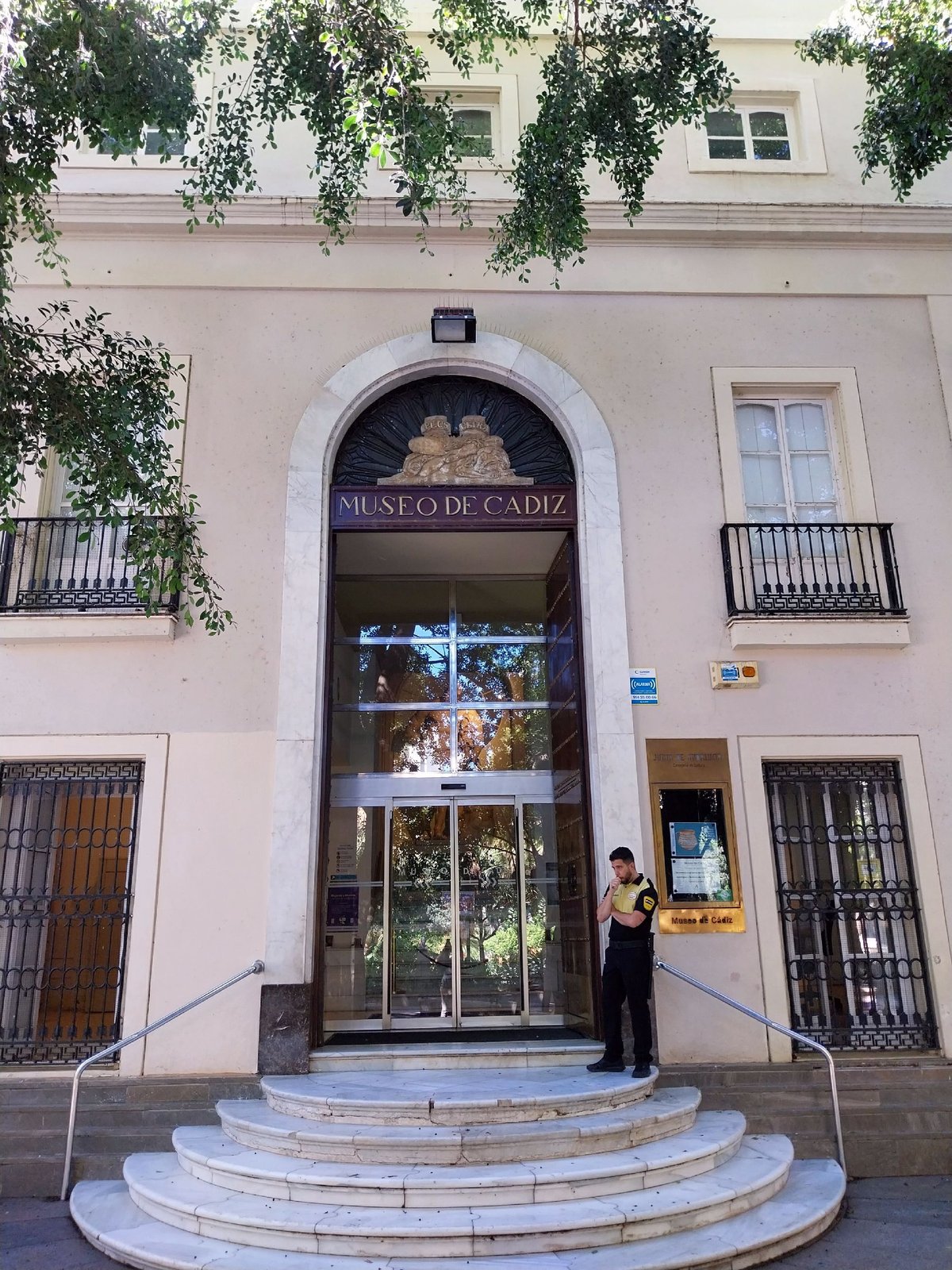

The Museu de Cádiz traces its origins to a 1835 seizure. Paintings by Zurbarán were taken from the Charterhouse in Jerez de la Frontera. These works became the core of a collection that eventually expanded to include pieces by Murillo and Rubens.
During the 19th century, the Academy of Fine Arts contributed more works as the city moved toward neoclassicism and romanticism. The focus of the institution changed again in 1877. When a Phoenician sarcophagus emerged from the shipyard, a specific archaeological wing was established.
For nearly a century, the Provincial Museum of Fine Arts and the Archaeological Museum occupied the same building separately. They were finally joined into one entity in 1970.
Today, the building offers three distinct areas for exploration. The ground floor houses archaeology, the first floor is for art, and the second floor features Tía Norica puppets used in the Carnival. While the archaeological section has received various donations like coins, it currently lacks items from the Middle Ages.
Sources: Wikipedia, OpenStreetMap, Wikidata, Wikimedia Commons
Written by Nik Frost
Discuss this with the author and others
No comments yet. Be the first to start the conversation.