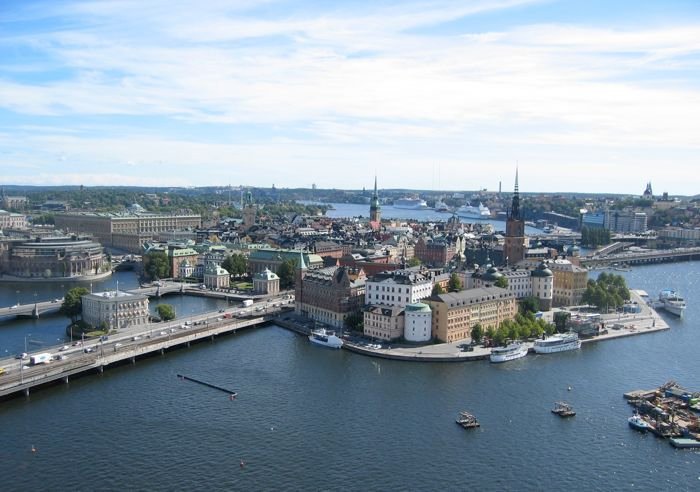

The city's core, Gamla Stan, was established on the central island adjacent to Helgeandsholmen in the mid-13th century. Founded by Birger Jarl in 1252 to guard against Karelian raids, it evolved into a key node of the Hanseatic League's Baltic trade network. By 1634, Stockholm had become Sweden's official capital, its strategic position enabling it to dominate regional commerce. The 1520 Stockholm Bloodbath, where anti-unionists were massacred by Christian II, marked a turning point in Sweden's path to independence. During the Swedish Empire's golden age, the population swelled sixfold between 1610-1680, fueled by imperial ambitions and trade monopolies. Tre Kronor Castle, destroyed in 1697, was replaced by the grand Stockholm Palace, symbolizing the city's political ascendancy. Today, the Stockholm metro—opened in 1950—stands as a celebrated art gallery, with stations adorned by modernist designs. The city hosts the Nobel Prize ceremonies, and its universities, including Karolinska Institute and KTH, shape global research. The archipelago's 25,000 islands and the city's 14 landmasses remain a testament to its unique geography.
Written by Nik Frost
Discuss this with the author and others
No comments yet. Be the first to start the conversation.