
Defensive rampart

Kirova St., 3k5, Penza, Penza Oblast, Russia

On the remains of the 17th-century earthen rampart surrounding the fortress of Penza, a memorial complex was constructed in 1980, a historical composition titled "The Defensive Rampart of Penza in the 17th Century" (author of the composition — artist-architect Azariy Mamatkadze). The composition included a fragment of the fortress wall with a watchtower, near which a cast-iron mortar cannon is installed, and opposite the rampart stands a monument to the First Settler.
On the remains of the 17th-century earthen rampart that surrounded the fortress of Penza, a memorial complex was built in 1980, a historical composition titled "The Defensive Rampart of Penza in the 17th Century" (the author of the composition is artist-architect Azariy Mamatkadze). The composition included a fragment of the fortress wall with a watchtower, near which a cast-iron mortar cannon was installed, and opposite the rampart stood a monument to the First Settler. During the 2020 reconstruction, the fragment of the fortress wall was demolished — in its place appeared a walking staircase leading from Kirov Street to the Spassky Cathedral.


The earthen defensive rampart, on top of which ran a wall made of sharply pointed logs, with watch and lookout towers standing at the corners, served to protect the fortress until the first third of the 18th century. In front of the rampart was a moat filled with water, studded with sharp stakes, and scattered along its bottom were "chesnochek" — iron caltrops that wounded the legs of enemy horses.


The city-fortress was raided from the Wild Field — from the southeast — by Crimean Tatars, Kuban Tatars, and Nogai Tatars up until the end of Peter the Great’s reign. In 1717, one of the most terrible raids occurred, which entered history as the Kuban Massacre. All fortresses on Penza land were wiped off the face of the earth, and the defenders were slaughtered to the last man. Only the fortress of Penza stood firm thanks to its location, the courage of the garrison, and its armament of cannons and muskets.


Follow us on social media

More stories from Penza Reveal

Monument to the First Settler

Kirova St., Penza, Penza Oblast, Russia

The monument "The First Settler" or "the man with the horse," as the locals call it. The monument is dedicated to the founders and first inhabitants of the city and symbolizes two beginnings in the fate of the first settlers of Penza...

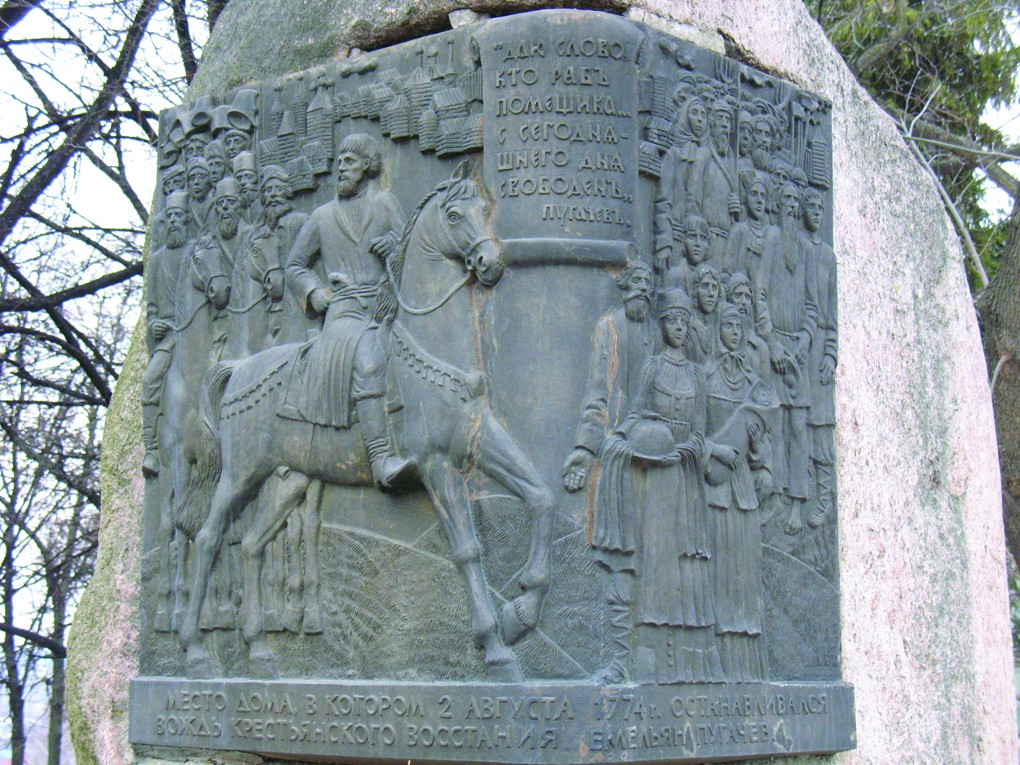
Pugachev's Stone

Karl Marx St., 30, Penza, Penza Region, Russia, 440000

The events from September 1773 to January 1775 constitute one of the largest peasant uprisings led by Yemelyan Pugachev. The memorial stone of Yemelyan Pugachev was installed in Penza on January 10, 1982, at the site where merchant A. Koznov's house once stood. According to legend, Yemelyan Pugachev stayed in this house in 1774.

Cinema "October"

39 Kirova St., Penza, Penza Oblast, Russia, 440000

The building was constructed in 1911–1912 to house the Society of Mutual Assistance for Trade and Industrial Service Labor in Penza, or the Penza Auxiliary Society of Trade and Industrial Employees, colloquially known as the Society of Clerks. The society had a club where cultural and educational events were held.

Airplane

pr. Pobedy, Penza, Penza Oblast, Russia

The Airplane Monument was erected in 1981. This monument is interesting because a real aircraft is mounted on the stele. It is a Soviet single-engine all-weather fighter-interceptor Su-9, developed in 1956.

Monument "Farewell"

Tambovskaya St., Penza, Penza Oblast, Russia

The monument is installed at the site where, during the Great Patriotic War, there was a recruitment center from which more than six thousand soldiers from the Penza region were drafted to the front.

Giant thermometer

37 Maksima Gorkogo St., Penza, Penza Oblast, Russia

Today, we most often check the air temperature by going online. However, there is one attraction in Penza that was created specifically to find out the weather.

Museum of One Painting

Kirova St., 11, Penza, Penza Oblast, Russia

The Museum of One Painting, founded in 1983, is the only museum of its kind in the world.

Steam locomotive

Lunacharsky Street, Penza, Penza Region, Russia

During the years of the Great Patriotic War, the Kuibyshev Railway played an important role in supplying the front. In a short time, the Kuibyshev Railway transported equipment for 1,360 large industrial enterprises to the Urals, Western Siberia, the Volga region, and other parts of the country, and evacuated over 10 million people.

Locomotive

Lunacharsky St., Penza, Penza Oblast, Russia

During the years of the Great Patriotic War, the Kuibyshev Railway played an important role in supplying the front. In a short time, the Kuibyshev Railway transported equipment for 1,360 large industrial enterprises to the Urals, Western Siberia, the Volga region, and other parts of the country, and evacuated over 10 million people.

Where did the Penza River disappear to?

Penza, Penza Oblast, Russia

The embankment of the Penza River is one of the oldest streets in the city, known since 1819. It is located between the Bakuninsky and Lebedevsky (Kazan) bridges on the left bank of the Sura. It got its name because the Penza River used to flow within the city limits, flowing into the Sura River beyond the Bakuninsky Bridge.