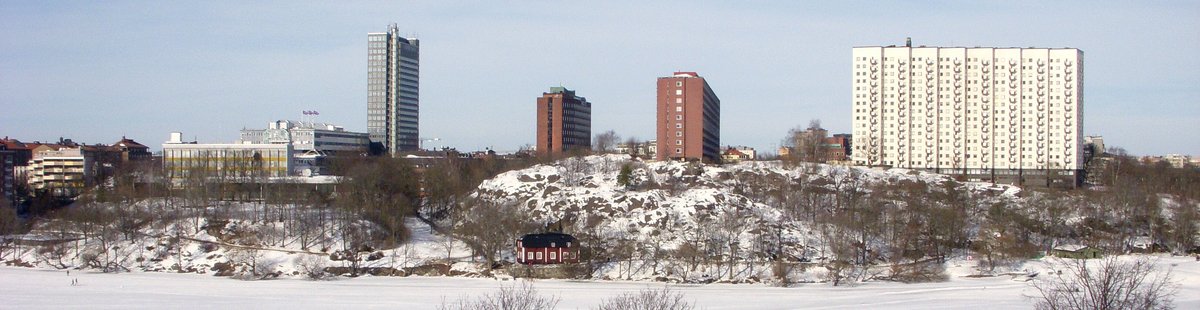

Marieberg’s history is etched in its layered landscapes. The area once hosted Sweden’s first porcelain factory (1758–1788) and a military complex housing the Higher Artillery School (1818–1869) and Field Telegraph Corps (1908–1937). Ammunition production continued until 1950, leaving the Marieberg Stone as a relic of this industrial past. The 1960s saw radical transformation: the 16-storey Dragspelshuset (1961–1962), with its wrinkled plaster facade, rose above the district, alongside the bacon-slice-patterned Silvieberg 3 residential complex. These buildings emerged from a 1958 city plan by Göran Sidenbladh, designed to integrate printing presses, embassies, and residential towers. Today, the Dagens Nyheter Tower—23 storeys of newsprint and shifting headlines—dominates the skyline, while the National Archives and Swedish Army Signal School occupy former military sites. The Russian Embassy’s fenced grounds and Sea Scouts’ presence in Triewald’s malmgård (now a protected historic farm) preserve fragments of the past. Meanwhile, Campus Konradsberg, once a mental hospital, now hosts international schools and Stockholm University’s educational programs, blending history with modern learning.
Written by Nik Frost
Discuss this with the author and others
No comments yet. Be the first to start the conversation.