

Already at the beginning of the 12th century, on the site of the current stone castle, there was a wooden castle of the Letts. In 1179, Prince Mstislav Rostislavich the Brave took control of this region; for some time they paid tribute to Novgorod, but since Mstislav himself soon died, this matter was somehow forgotten over time.
The land of Atzele is the oldest part of Latgale, mentioned as terra Adzele in 1224, when Bishop Albert of Riga and the Master of the Sword Brothers’ Order, Folquin, divided the subordinate Latgalian regions. Arved Schwabe translated a passage from the 1224 treaty as follows: “Moreover, the region called Gauyiena (Atzele), besides the above-mentioned, belongs to them (i.e., the Order), however, to us (the Bishop of Riga) from this region pass Berezne, Pornuve, Abelen, and Abrene.” The phrase “besides the above-mentioned” in the document means that the Order received one-third of the land, and the Bishop of Riga two-thirds. Since four regions are mentioned in the bishop’s part, it follows that there must be another unnamed region in the Order’s part. This region can be identified as Aluksne, which already during the Livonian Order’s time was part of their lands. Except for the 1224 treaty, there is no other document confirming that the Aluksne region at that time passed into the Order’s possession. The borders of this Aluksne region are defined quite precisely. On three sides it was surrounded by Estonian lands, the Pededze swamps, and the Gulbene region, and to the west by Gauyiena. Aluksne was separated from Gauyiena by a large swampy area between the Gauja and Melnupe rivers.
Again in 1225, when the district was divided between the Bishop of Riga and the Sword Brothers’ Order (later the Livonian Order), Aluksne went to the Order. From the mouth of the Daugava through the Gauja ran an old trade route to Pskov, along which Russian princes occasionally collected their tribute, because Aluksne was an ancient district of Talava, which in the 1225 division between the Bishop of Riga and the Sword Brothers’ Order was assigned to the Order. In these wars, the old Latvian castle on the Big Island of Lake Aluksne was destroyed; the Sword Brothers or their successors, the Teutonic Order, built their wooden castle on the island. Exactly when is unknown; it is first mentioned in chronicles in 1284.
There are several legends about the conquest and construction of the castle, which undoubtedly contain some truth.
Iron men came from the west and besieged the Lett (Latgalian) castle of Aluksne. The Latgalians fought heroically, but there was one traitor who showed the newcomers a secret gate. The iron men broke into the castle and began killing its defenders. But the elder set fire to the castle, and all burned—both the iron men and the brave Letts. The souls of the warriors turned into white doves that hovered over the burned castle. The iron men began building their stone castle, but everything they built by day was destroyed by the doves at night. Then the leader of the iron men went to the village and asked if any girl wanted to become the keyholder of the new castle. A beauty named Maria volunteered. She was brought to the castle, seized, and walled into the wall. For nine days and nights, the unfortunate girl moaned. Her cries and groans frightened the doves away. The castle was named after this very Maria, not after the one who lived in Palestine a thousand years ago.
The Germans began building a stone castle, but for its walls to stand firmly, they needed to wall a living virgin girl into them. They ordered all the girls of the district to dress in white and come to the castle. The girls came to the lake but were afraid to cross the bridge. The Germans threatened the locals with punishment for disobedience. But the girls were still afraid, and the Teutons’ order had to be fulfilled. Then friends and relatives persuaded Maria to sacrifice herself. Although she was afraid, she decided to cross the bridge. The Germans walled her into the wall; her screams and cries were heard for three days, then all fell silent.
There really was such a medieval belief that for a building to stand long and firmly, a living person had to be walled into the wall. Not necessarily a virgin girl. And there were documented cases when this was done. For example, the Church of St. John in Riga—two monks voluntarily agreed to this.

The stone castle was founded in 1341, on the feast of Saint Mary, so naturally it was named Marienburg; construction was completed in 1342. The castle was connected to the mainland by a wooden drawbridge 120 meters long. At the island end of the bridge was a fortification above the gate (Zwinger). The castle consisted of the main castle and the southern outer castle, separated by a wall 1.3 meters thick. The entire palace was surrounded by a wall of boulders 1.4–1.6 meters thick and up to 10 meters high. It had eight watchtowers with diameters of 10–14 meters. The main palace housed the ruler’s living quarters, and the forecourt contained rooms for economic and military needs.
There is a legend that this is connected with the arrival in Latvia of knights Templar expelled from France, who sought refuge far from their persecutors and brought gold with them. Many searched for traces of treasures and archives, but found nothing. This coincided with the deterioration of relations between the Order and Pskov and Novgorod. It was the most powerful castle in these lands. A similar castle was later built in Vastseliina (Neuenhausen). Even before construction began, Marienburg had to withstand its first siege. The Pskovians were very displeased that such a powerful fortification was being built right on their border. They came with a large detachment, lit fires, and tried to smoke the Teutons off the construction site. But the Teutons counterattacked and repelled the enemy; 82 Russians died, not counting the wounded.
The castle was built as the residence of the Komtur, meaning it had conditions to house a large strong detachment that was to defend and simultaneously keep the entire district in fear. The first Komtur of Marienburg was Arnold von Fitinhof, later also Landmeister of Livonia.
Subsequently, the confrontation between the Order and Pskov with Novgorod over these lands continued constantly. On January 1, 1480, Master Berndt, with Komturs of the Livonian Order castles from Vidzeme, invaded Pskov lands and destroyed the fortified settlement Augšpils (Vyshnegorodok), built by the Russians in 1476 on the archbishopric’s territory; after burning it down, the Master retreated back to his land. In response, on February 21, 1481, the Russians invaded Livonia with combined forces of Pskov and Novgorod. The Russians entered Latvian territory on a broad front, devastating the surroundings of Gauyiena, Valka, Ergeme, Trikata, Rujiena, Aluksne, Ludza, and Rezekne, attacking even the archbishop’s castles of Smiltene, Piebalga, Cesvaine, and Koknese; after 4 weeks, the Russians returned to their lands.
A very interesting and detailed description of Russian atrocities in Livonia, compiled by Master Berndt for a letter to the Grand Master on March 24, 1481: “…merciless and impious Russians… dishonored girls and women… cut off their breasts and stuffed them into men’s mouths, men’s genitals… cut off the noses and ears of Christians, gouged out eyes, broke legs, broke arms on the wheel, cut off legs, mocked honor, marriage, and engagement, ripped open the bellies of pregnant women, tore the fetus from the body and impaled it, hanged girls on trees, cut out intestines from people and did many other inhuman and malicious things, which we found both on the lands of the Riga archbishopric and Tartu bishopric, as well as on our Order lands.”
The Chronicle of Heleweg reports that the Russians attacked with 150,000 men, so the Master, to meet the enemy in Estonia, hurriedly returned to Cesis without a fight. Only later was it found that the Russians had no more than 6,000 horsemen and 20,000 foot soldiers, and the Livonians could successfully resist them. The Lübeck Chronicle preserved information that women captured in Livonia—both German and non-German—were sold into slavery by the Russians, as were 15,000 men, many thousands of whom were sold in Novgorod, Pskov, and Poland. After the Russian devastations, famine and plague followed, and the price of wheat in Vidzeme quadrupled.
In 1489, Archbishop Hildebrandt, so that the people of Riga would not send him requests for help, left for Gulbene, and the Master went to Reval, leaving the conduct of the war to Landmarshal Walter von Plettenberg and the Komtur of Aluksne. They stationed their troops near Adazi, Ropazi, and Salaspils and from there devastated the rural district of Riga. The Komtur of Viljandi secretly sent two of his men to Daugavgriva with the task of organizing the burning of Riga so that during the fire the Order’s army could occupy Riga. However, the townspeople uncovered the secret plans of the Order; the city judge sentenced the culprits to death, cutting them into four parts, which were impaled on stakes at the edge of the main road. These details end the chronicle of Herman Heleweg. Walter von Plettenberg joined the Livonian Order in his youth, becoming a knight brother, spent many years in the Narva Vogtship, later in the Aluksne Komturship, then in Riga Castle, where he was in charge of the Order’s economic affairs; in 1482 he was appointed Vogt of Rezekne, in 1489 Landmarshal; on July 7, 1494, he was unanimously elected Master of the Order and on October 9 confirmed as such by the Supreme Master of the Teutonic Order.
However, obviously, the Komturs and Vogts cared more about their own benefit than about castle repairs, so already in 1495 the Grand Master Plettenberg wrote that the Livonian castles, especially those on the border, were neglected, and although the Order’s administrators had large incomes, they did not repair the castles; the Grand Master ordered the castles to be repaired every year. Neglect and carelessness are also evidenced by the Aluksne Komtur, who could not say how many crossbows were in his castle.
In 1501, a large Russo-Tatar army invaded Vidzeme, burned the Aluksne district, and reached Cesis; in total, 40,000 inhabitants of Vidzeme were taken into slavery. Walter von Plettenberg, in a letter to Lübeck, indicated that the Russians attacked and devastated the property of the Archbishop in Purnava (Purnow), as well as the Ludza parish belonging to the Order and Aluksne. The Master of the Order Plettenberg, having gathered all the forces of the Livonian Order, hired mercenaries for large sums and acquired cannons, invaded Russia. On September 14, 1501, due to an epidemic (he himself fell ill), Plettenberg interrupted his campaign in Russia, and in November the Russians, in turn, invaded Livonia, which Plettenberg’s sick men could not resist; the districts of Aluksne, Trikata, Ergeme, and many areas in Estonia were devastated, and about 4,000 people were taken captive. Plettenberg defeated the Russian army and concluded a 50-year truce. Only thanks to Plettenberg’s decisive actions was the defeat of Livonia postponed—it was still fragmented into small states, while neighboring states were uniting and strengthening.
Interestingly, the owners of Aluksne from 1753 to 1920 were also the von Fitinhofs. Whether they were descendants of the medieval Komtur is unlikely, since he was a monk after all, but some distant relatives are quite possible. The Marienburg castle did not perform any special feats in the Middle Ages. It faithfully, so to speak, maintained presence on the border and served as a base for the knightly detachment.
In 1560, the Komtur of Marienburg, Sieberg, surrendered the castle to Russian troops without a fight. However, by that time the entire Livonian Landmeistership and the Teutonic Order as such were already collapsing. There was nothing left to fight for. The castle was occupied by the army of Prince Andrey Kurbsky, the very one who later defected to the Poles and corresponded with Ivan the Terrible. As a result of the Livonian War, lost by Muscovy (the Treaty of Yam-Zapolsky in 1582), this part of Livonia was included in the Duchy of Livonia of the Polish-Lithuanian Commonwealth.

However, the wars did not end there. The Polish-Swedish wars of 1600–1629, the Second Northern War of 1656–1661. At times the castle was Polish, at other times Russian, but by the end of the 17th century Marienburg remained in Swedish hands. Even then the castle was in demand; the Swedes fortified and modernized it, hoping for it.
But then came another Northern War, the Great Northern War of 1700–1721. The army of Count Sheremetev approached Marienburg in August 1702 and besieged it. The Swedes resisted for two weeks but then on August 25 agreed to surrender. All the besieged went out through the gates, crossed the bridge, and left the island. But two Swedish officers remained in the castle. They had already mined key points of the castle and now blew it up. The castle was never restored again.
At that time, Pastor Johann Ernst Glück lived in Marienburg, a famous theologian and educator. He was the first to translate the Bible into Latvian and later into the contemporary Russian of his time. You can learn about his story here: https://reveal.world/story/gimnaziya-pastora-glyuka-prosvetitelya-i-vospitatelya-pervoj-imperatritsy
In 1696, Glück took into his family a poor 12-year-old orphan, Marta Skavronska, formally as a servant, but in reality she became his ward and pupil.
At the beginning of 1702, Marta married a Swedish dragoon, Johann Kruse. But soon he went off to war with his regiment, and it is unclear whether he died, went missing, or simply lost contact with Marienburg. Marta returned to Glück’s family for the time being.
After Marienburg was occupied by the Russian army, Pastor Glück went with some petition to Field Marshal Sheremetev, for some reason together with his entire family and servants. It was then that Boris Petrovich noticed the beautiful Marta.
Marta became the field marshal’s mistress. But soon Menshikov also noticed her and took her from Sheremetev. Then Peter the First took her from Menshikov. And the poor orphan became the Empress of Russia.

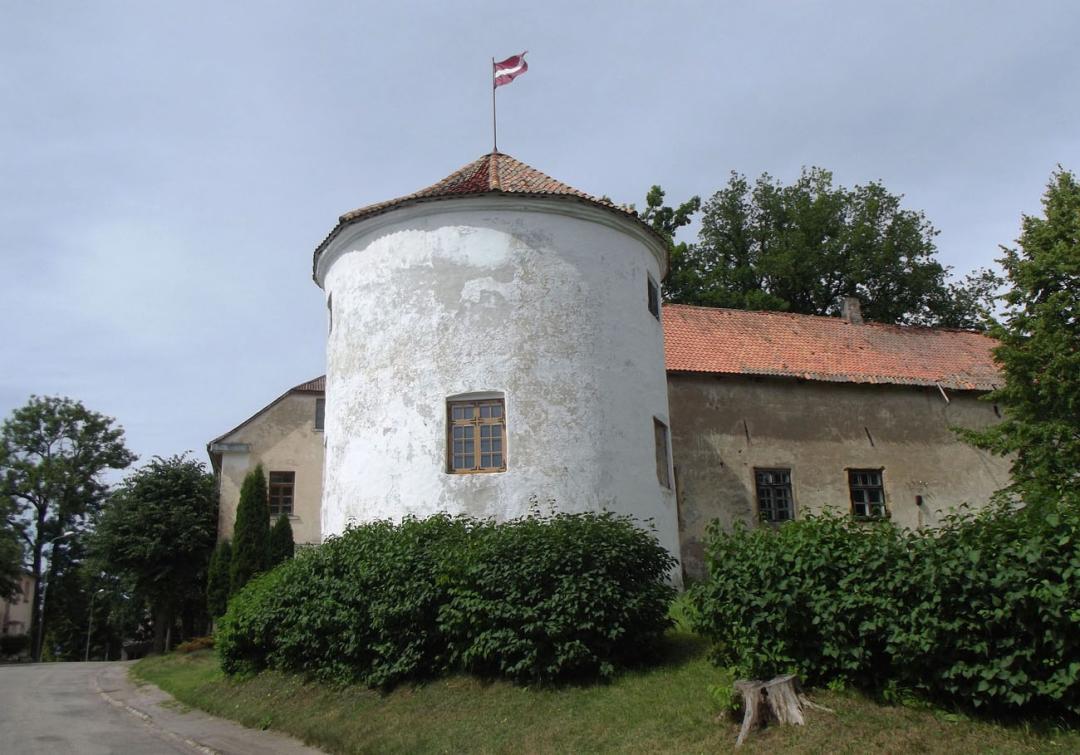
The Aluksne Castle (Marienburg) is currently mostly in ruins. But some parts have been preserved. Gradually restoration is underway; at present, the South Tower has been restored.
Sources:
https://petersmonuments.ru/europe/memorials/krepost_marienburg_v_aluksne/
https://dzen.ru/a/X-NmHJ-lrwDR6aBT
https://www.castle.lv/latvija/aluksne.html Project by Renāta Rimša
https://commons.wikimedia.org/wiki/Category:Al%C5%ABksne_Castle




Written by Jermaine
Discuss this with the author and others
No comments yet. Be the first to start the conversation.