

On June 14, 1739, Lieutenant General Baron Ludwig von Luberass, a talented military engineer who lived and died in Kronstadt, was appointed to repair the Kronstadt fortress. Work began and continued for a whole year, with 2,000 people participating daily. From the list of works of that period, it is clear that the primary focus was on maintaining what had already been built and completing what was unfinished. Among the new constructions, the Naval Department erected a wooden battery on piles, extending beyond the Southern fairway, in close proximity to the Great Kronstadt Roadstead. Paired with the two-story Southern battery, it was capable of defending the Great Kronstadt Roadstead!
The new battery was named RIFSBANK. The name is purely geographical, reflecting some features of the location of the newly built battery: a “bank” is a small elevation of the seabed, a reef—an underwater or slightly above sea level rock in shallow water formed by erosion of the bottom. Apparently, this area was once a hazard to navigation and was marked on maps as “Reef on the bank.” In colloquial use, as often happens, this phrase transformed into “RIFSBANK.” Later, the letter “F” was dropped as unnecessary, making the word easier for Russians to pronounce. Subsequently, official documents began to write it as “RISBANK.”
Construction was completed in 1801. The battery, with a defensive front of 408 meters, housed 66 guns and mortars. Later, in 1808, another battery was built behind Risbank, armed with 19 guns. By September 1808, the RISBANK battery had 69 guns on rotating platforms, allowing the guns to smoothly track enemy ships. At that time, the battery was commanded by Captain 3rd rank Kireev.

After the terrible flood in autumn 1824, all damages to the RISBANK battery were repaired, and wooden sheds for artillery equipment, a guardhouse, and a powder magazine were built. Colonel of Artillery Andreev was appointed commander of the RISBANK fortification. He held full authority over the fortification entrusted to him and was accountable solely to the sovereign. The Tsar regarded the commanders of forts and batteries as independent and reliable leaders.
In 1838, a royal inspection of the RISBANK fortification took place. The purpose was firing tests to try out new carriages for 36-pounder guns. The following year, on May 25, Emperor Nicholas Pavlovich inspected the RISBANK battery and the under-construction Fort Alexander I. It was then decided to replace the wooden fortifications with stone ones.
The first design for the new Risbank was made in 1838 by Engineer Colonel Maslov. His project envisaged preserving the outline of the existing fortification. On the site of the wooden bastions, cannon platforms, and curtains, he planned to build multi-tiered stone casemates. The old timber foundations of Risbank were to be used as bases. Inside the harbor, the author proposed building a four-tier casemated tower on piles on the fairway side and a two-tier one in the gorge. In the zone of fluctuating water levels, all steps were to be made of granite stones, and above that, brick faced with granite. The Engineering Department, after reviewing the project, considered the timber foundation unreliable and recommended designing a pile foundation.

The next redesign proposal for Risbank was made by the Vice-Director of the Engineering Department, Engineer Major General A.I. Feldman. According to his project, the fort also retained the outline of the wooden Risbank and was armed with 383 guns. The foundations used old timber piles, into which cobblestones were poured with liquid concrete. On such foundations, three-tier towers were to be built on the bastion sites and two-tier ones replacing the wooden cannon platforms. Single-tier curtains connecting the towers were built on pile foundations. Inside the harbor, Feldman, as in the previous project, planned a three-tier tower on a pile foundation. The space between piles was filled with cobblestones and concrete. The cost of the new fortification was estimated at about 3 million rubles, with construction planned over 11 years. Feldman was among the Tsar’s generals and enjoyed Nicholas I’s favor. For this reason, the technical examination of his project was entrusted to Engineer Lieutenant General Destrem, who supervised the construction of the new fort located on the other side of the fairway. Destrem’s main critical remarks concerned the foundation design. But what could a general of the Corps of Engineers say about the defensive merits of a fort designed by a military engineer who had taught fortification for many years at the Engineering School and College and from 1823 to 1831 headed the construction of the Revel fortifications and district for the Naval Construction Department?
At the end of 1844, Nicholas I reviewed the projects of Feldman and Destrem. At that time, the construction of Fort “Emperor Alexander I” was successfully nearing completion, which largely influenced the adoption of Destrem’s project. However, it was decided to build the fortification not on a “clean site” but inside the harbor of the old Risbank. It should be noted that in this case, the Tsar, as an engineer, was on top form. Building the new fort inside the harbor allowed the use of Risbank’s timber piles as enclosures during construction and to prevent undermining of the foundation in the future. Moreover, this allowed the main work to start almost a year earlier and saved significant funds. To avoid even partial dismantling of the piles, the faces of the new fort were rotated several times relative to the curtains of Risbank.
Let us consider the project of the new fortification. Its size was quite impressive. It is enough to say that the perimeter of the outer steps was about 500 meters. The casemates of the first defensive tier alone accommodated 78 guns. The fort was an irregular trapezoid in plan with rounded and slightly protruding corners. The frontal section facing the fairway, with rounded corners, had a semi-basement floor and three defensive tiers, above which was a tier of open defense. Open defense was also planned above the other three- and two-tier parts of the fort. In all cases, behind the first tier, there was a semi-basement floor with loopholes for rocket defense. The four-tier part transitioned to two-tier sections toward the former curtains, and then at the rounded corners in the gorge part was closed by two three-tier half-towers. Above the gates in the gorge, between the half-towers, a two-tier section was built. In total, the casemates and the open defense tier housed over 200 guns.
The fort’s wall construction was adopted similar to the stone fortifications being built in the fortress. The fort was clad with granite on all exterior surfaces. Each casemate, housing two guns, had arched openings (arches) on the rear side for ventilation. On other facades, where smaller caliber guns were planned to repel attacks on the fort, windows were installed in the rear walls of the casemates. Oval extensions of seven stairwells and two rectangular powder magazine volumes protruded into the fort’s courtyard. All ceilings were vaulted. Overall, this was the largest fortification—a reliable link in the defense of the Kronstadt fortress, meeting all the fortification requirements of that time.
Before the ink dried on the highest approval resolution, soil investigation began at the future fort site. Water depth in the Risbank harbor ranged from 3.9 to 4.3 meters. At six points, casing pipes were driven into piles and soil samples extracted. The seabed structure was as follows: a layer of silt with sand 0.6–0.7 meters thick on top, then a sand interlayer only in the eastern part of the harbor; below the entire construction area was a layer of clay with sand 1.2–3.2 meters thick, transitioning into liquid silty clay 0.6–2.1 meters thick, into which the drill sank without effort, only under its own weight. Below were layers of harder clay, and at depths of 11.4–15 meters from the ordinar lay the mainland Cambrian clay.
As with the Citadel reconstruction, Nicholas I demanded maximum maintenance of combat readiness of the reconstructed fortification. Initially, guns were removed only from the second tier; the lower wall-walk was dismantled to a width of 8 meters, making the working platform wider. Twenty-four mechanical and five manual pile drivers were used for this. The mechanical ones were operated by 14 workers, and the manual ones by 37 each. Mechanical pile drivers had a productivity of two and a half piles per day, manual ones seven piles per day. The cost of 1 m² of platform reached 4 rubles.
The most difficult and labor-intensive task was unloading large quantities of building materials. To berth vessels along the outer eastern curtain of Risbank, a pier 20 meters wide and 90 meters long was built. As shown by work in summer 1846, this pier clearly did not meet its purpose, so in autumn and winter it was extended by another 82 meters. Additionally, after clearing the bottom of sunken ships, a Southern pier 85 meters long and 21 meters wide was built in the gorge between two caponiers. But even with a total pier length of 257 meters, timely unloading of all materials was not ensured, forcing ships to wait long at the roadstead. This was not only costly for the treasury but also dangerous for ships, especially in autumn.
Engineer Major General Maslov, the fort’s builder, drafted a project for a permanent harbor for the new fort in 1847 and proposed immediate construction. However, although Nicholas I approved the project as preliminary, he did not dare to demolish the Southern pier, the caponier-forge, and material warehouses during ongoing works, so it was never realized. For the Tsar and his retinue, who often visited the fort’s construction, a Royal pier 32 meters long was built, featuring two so-called “pockets” for sheltering vessels in bad weather.
The piers were constructed similarly to the working platforms. To reinforce them, double edge piles were driven and inclined ice-breaking piles installed. It should be noted that serious errors were made in designing auxiliary structures. For example, the location of platforms, piers, and the working platform relative to the wall-walks of the old fort was 85–165 cm lower, preventing the shortest transport of loads, especially heavy granite stones, to their places of use. All materials were delivered from the Eastern pier through the northern passage in the curtain, adding about 80 meters of extra transport distance.
Later, as work on the granite grillage progressed, the platform’s strength, especially when turning heavy stones, proved insufficient, requiring additional decking under processed stones. Due to the relatively low position of the platforms, they were flooded during waves and severely damaged during floods. Therefore, temporary removable barriers made of wooden planks were installed in the curtain passages during stormy weather.
In the early construction period, attention was also paid to housing over 1,500 workers. Two caponiers, two powder magazines, an arsenal, and half the guardhouse were adapted for housing. Later, when powder magazines were dismantled to free space for installing external scaffolding during wall erection, guns were removed from the first-tier casemates of the old fortification, and 15 casemates were converted into living quarters. Housing so many workers cost the treasury about 6,000 rubles.
The other half of the guardhouse was adapted as a hospital. A bathhouse was built on the Southern pier, and on the curtains, a house for officers, and sheds for lime, coal, and building materials. The officers’ house contained a drawing office. At that time, all necessary drawings for construction details and auxiliary structures were developed directly on the construction site.
Initially, one of the powder magazines was converted into a forge, and a new one was built in the gorge of the old fortification. Later, as areas were freed for permanent scaffolding, two forges were built in the fort courtyard, and the first-tier casemates of the old Risbank were turned into warehouses and barracks. Temporary structures and their maintenance cost over 106,000 rubles, about 6% of the total estimated construction cost.
Auxiliary structures were built during the frosty winter of 1844, causing additional difficulties with piles driven under platforms and piers, around which ice had to be constantly chipped to prevent their pulling out. The layout of the structure was done on the harbor ice and fixed with stakes using sand wetted with water.
Main work on the new fort began in early spring 1845. Pile drivers freed from the battery being built at the Merchant Gate, including steam-powered ones, were brought here, and skilled pile drivers were transferred. To handle the large volume of pile driving, the Kronstadt engineering team brought mechanical pile drivers previously used in building the Nikolaevsky bridge. Manual pile drivers were not used for driving main piles. They began by driving a sheet pile line of 12-meter sheet pile timber around the entire foundation. Mechanical pile drivers worked with the old technology, but Engineer Lieutenant General Destrem proposed a special hook for lifting the “baba” (pile driver weight), freeing a worker previously occupied with attaching and detaching it. This hook later became widely used.
It should be noted that Destrem, who supervised the design and construction of the new fortification, was very thorough, paying attention even to seemingly minor issues.
In the sheet pile line, 2,353 piles were driven, and simultaneously, main piles were driven. Twelve-meter piles were driven under all walls and piers, and 10-meter piles under casemate rooms, powder magazines, and staircases. Based on experience with Fort “Emperor Alexander I,” Destrem proposed an empirical formula to determine the number of piles depending on the building height. According to this, under the four-story part, 11.9 piles per square sazhen were required; under the three-story, 9.37; and under the two-story, 7.03 piles.
As sections of the pile field were completed, piles were straightened and the space between them filled with sand up to 3 meters below the ordinar. Deviated piles were corrected by driving wooden wedges beside them. Coarse clean sand with fine stone inclusions was used for backfilling. Underwater, it was leveled with rakes and compacted with four-meter wooden tampers.
By summer 1847, concreting was completed. A total of 9,264 cubic meters of concrete was laid, costing about 6 rubles per cubic meter. The rapid progress in fort construction was aided by Nicholas I’s close attention. He not only oversaw project development and approved it but also set strict construction deadlines, usually ahead of the current year’s appropriations. Therefore, in 1840, Nicholas I had to release over 39,000 rubles from his “personal” funds to cover debts from fort construction. Such financial injections became annual from 1848, totaling about 1,303,000 rubles or a quarter of the fort’s estimated cost.
The Tsar’s frequent visits to the construction site also accelerated work. In summer 1847 alone, Nicholas I visited the fort four times. Expressing satisfaction with progress, he thanked officers and rewarded all workers with money. The construction budget included a line “Highest rewards to workers,” amounting to 1,554 rubles 25 kopecks.
According to archival documents, Nicholas I personally managed all engineering affairs. After the death of his brother Michael Pavlovich in 1849, he abolished the position of General Inspector of Engineering and appointed Engineer General Den as the chief of the Main Engineering Directorate.
Returning to the fort works, the final operation in foundation construction was the installation of the granite grillage. It is appropriate to describe this process in more detail. In 1846, laying of the first row of granite slabs (“leshchadki”) began, and it can be said that the work was already carried out in a flow method, dividing the structure into sections. Granite was quarried at the Pyuterlak quarry near Vyborg, where part of the Kronstadt military labor detachment was permanently stationed. Each granite slab was carefully inspected to ensure no cracks or foreign layers. Therefore, slabs were extracted from denser layers deep underground.
Among engineers, there was a dispute about where to dress the slabs. The fact was that more dressed stones could fit on ships by a quarter, reducing transport costs by one ruble per square meter compared to undressed stones. Additional dressing was done on-site, and the resulting rubble was used for concrete or stone fill. The final decision was: at Pyuterlak, dress the beds (lower and upper surfaces) of the granite slabs roughly, marking only the edges; the rest of the processing was to be done on-site.
Granite was transported on contractors’ hired vessels; additionally, four barges were purchased and the steamship “Imatru” rented. These transports cost 67,000 rubles. These costs relate only to stone transport for the grillage.
Ships carrying granite could not wait at the roadstead for the wind to change direction to unload at the nearest work point. Therefore, they had to moor on arrival on the leeward side of the pier and unload immediately. This greatly increased the distance the slabs had to be moved on platforms and the cost of work. The average distance from unloading to laying site was 250 meters.
Unloading, transferring, and laying stones in the grillage were done with wooden cranes with cast-iron mechanisms. A crane installed over the ship’s hatch lifted the stone, which was then rolled onto the pier on logs and rollers. A second crane lifted it onto birch rollers 11 cm in diameter. Then 25–35 people moved the slabs further using ropes and block systems. Rigging, a very dangerous job, was always supervised by the most experienced worker. However, damage to ships from falling stones and injuries to workers could not be completely avoided. On average, the team delivered eight granite slabs per day to the laying site.
The last row of the grillage began construction in summer 1848. On August 30, Nicholas I arrived at the fort with his retinue. After a prayer service, silver coins minted that year were thrown into the mortar under the stones of the third row, and a copper plate engraved with the inscription was laid:
“In the reign of His Majesty Emperor Nicholas I and during the tenure of General Admiral of the Russian Fleet His Imperial Highness Grand Duke Constantine Nikolaevich, in place of the former wooden structure, a stone Risbank fortification was laid. Work began January 2, 1845.”
Everyone, even those who should not have been, found a place on the commemorative plaque except the officer who bore the main burden of the work—Engineer Captain Chaikovsky. In fact, he supervised all construction work on the fortification, while Maslov, listed as chief builder, was promoted and appointed head of the Corps of Engineers of the Naval Construction Department. He spent most of his time in St. Petersburg or inspecting other naval fortifications.
By 1849, all foundation work was completed except for backfilling, which was finished in spring the following year due to rains and early winter. The cost of the entire fort foundation exceeded 1,000,000 rubles—about 40% of the total fort cost of 2,708,988 silver rubles.
It is interesting to note some technically original solutions implemented during fort construction. For example, two built-in water closets (flush toilets) located in opposite rounded corners of the fort’s front face had cesspools in the granite grillage masonry connected by channels to the bay. Wave action and water level changes created currents flushing the cesspools; rainwater was also directed from the courtyard surface through 45×30 cm channels to the upper parts of the cesspools. In case of flooding, the channels were closed with shields fitting into grooves cut in the granite. To implement this, the first row of the granite grillage near the toilets was lowered 70 cm below adjacent areas.
The builders also showed foresight in arranging drinking water wells. Before backfilling the inner courtyard with sand and soil, they made two wooden well frames shaped as octagons in plan. All crowns were connected with shields and ship nails, and the upper ones with staples in case of water rise.
The frames were immersed in water through a hole cut in the ice. As crowns were added, the frame sank deeper, and sand was poured into boxes for water filtration. These wells supplied water not only to workers but also to the fort garrison later.
Construction of the above-ground part of the fort posed no special difficulties, as considerable experience had already been gained building similar casemates at Fort “Emperor Alexander I.” Stonecutters and masons continued their familiar work, allowing rapid progress. Scaffolding for masonry around the fort’s outer walls was 6 meters wide. Besides the main 12-meter posts at the platform edges, each tier was supported by four more rows of 2.4-meter-high posts. All posts and beams had square cross-sections 25 cm per side. This decking supported the weight of heavy granite facing slabs. Scaffolding along internal brick steps was equally sturdy, 4 meters wide.
Granite facing made up more than two-thirds of the total volume of the outer walls. Shaped stones for it were processed at the quarry and on-site. These stones were fastened with metal dowels poured with lead, and joints were carefully filled with Portland cement mortar.

The successful progress of construction is illustrated by the following document: “To the builder of the Risbank Fortification, Engineer Lieutenant General and Cavalier Maslov, Engineer Captain Chaikovsky.
Report: ... The Emperor deigned to disembark from the steamer ‘Nevka’ and said: ‘The work grows like a mushroom...’ Leave the dressing rough on the outside... reduce expenses... The workers were honored with the personal gratitude of the Sovereign... ‘You throw stones like beads...’ They requested food from the workers... which was graciously approved. Then they asked me: ‘Are there many sick?’ To which I replied... almost none, except minor and very rare bruises...
In the retinue... Alexander Nikolaevich... the heir, Prince Menshikov, the chief commander... of the port Bellingshausen. General adjutants... The workers, numbering 1,505, were awarded 50 kopecks each in silver...” August 12, 1850.”
In 1851, the entire semi-basement floor was completed, and in summer 1852, vaults of most of the first defensive tier were covered. About 400,000 rubles of appropriations were spent that year. Engineers were already planning to vault the four-tier frontal part of the fort in 1854, and Nicholas I ordered the start of arming the finished casemates, beginning with gun platform installation. However, subsequent events did not go as planned, as cracks were found in the walls and ceilings of the fort under construction.
Upon careful inspection, cracks were found in all parts of the structure. Through cracks were present in the arches and spans covering transverse walls in casemates. The right half-tower and the gorge section of the fort separated from adjoining parts due to cracks. Further observations showed the largest cracks were in the first two tiers, decreasing higher up. This indicated uneven foundation settlement during the first tiers’ construction, which then stabilized. The matter was not widely publicized and was “put on the back burner.” However, to avoid further problems, the project was modified, reducing the fort’s high part by one tier and canceling the open defense tier above the half-towers.
Why did uneven foundation settlement occur, given the design was almost identical to the successfully built Fort “Emperor Alexander I”? The main reason was that under Fort “Emperor Alexander I,” the mainland dense and dry clay lay at 9–10 m depth from the ordinar, and 12-meter piles driven under walls reached this “bedrock” and acted as supports. At Risbank, a similar layer lay at 11.4–15 m below the ordinar, with hard clay above it, through which piles passed easily. Thus, piles at Risbank were driven with a “baba” only to 12.9 m below the ordinar and mostly did not reach the bedrock layer.
The nature of cracks indicated different settlement of outer and inner walls, which was natural since the load from the latter was one-third less than from the outer, thicker, mostly granite walls. Of course, if the 180-cm concrete layer had ensured even load distribution on all piles, no cracks would have occurred. But the assumption that concrete laid between piles, not above them, would perform this function was wrong. Indeed, each square meter of concrete was weakened by two or three holes up to 30 cm in diameter.
Even in the best case, minimum distances between piles were 30 cm, too small for monolith formation. No matter how much effort was made to tamp concrete underwater for optimal adhesion to piles, it was impossible.
Unfortunately, the stone grillage also could not evenly distribute loads on piles. Its first granite row consisted of separate stones with joints lacking monolithicity. The second granite row under walls also lacked sufficient adhesion between stones and with concrete laid only under casemates. The rubble masonry in the third row, though partially under walls, was too thin to distribute loads evenly. Cracks were likely also caused by piles protruding backward after driving and needing to be redriven after “resting.” But since pile heads were underwater and nearly 19,000 piles were driven, careful control was practically impossible. Moreover, builders had no doubts about foundation reliability.
Later, cracks did not affect fort operation, and artillery shell impacts never occurred. By the start of the Crimean War, only eight casemates remained unvaulted. By then, 1,229,000 rubles had been spent on the fort’s above-ground part.
In the fort courtyard, core-heating furnaces were installed, officers’ quarters built, and an artesian well drilled. The fort had a bathhouse, bakery, and laundry. By 1854, the fort appeared complete, but due to the Crimean War, final construction was completed only in 1859.
The fort was named “Emperor Pavel I.”
In 1896, a naval investigative prison was established in the fort. Later, it housed a mine equipment warehouse. After the revolution, order in the fortress declined, and explosions became more frequent. The first occurred in June 1919 at Fort “Emperor Pavel I,” which served as a mine storage. Approaching the fort to extinguish the fire was impossible because mines were “exploding one by one and in groups.” Due to strong west winds, the fire spread rapidly, and at night the fire reached the TNT warehouse, followed by a final very powerful explosion that destroyed part of the fort. According to chief miner Ozerov, “the guard’s attitude to their duties was always below any criticism, about which many reports were made to superiors but brought no visible results.” The commission found no cause for the explosion but did not exclude “malicious intent.” This is quite possible, as some historians consider the explosions at “Pavel” (June 1919) a signal for the start of the “Krasnaya Gorka” fort uprising. The uprising began June 12–13, 1919, but was quickly suppressed...
The fort sustained serious damage but was finally destroyed in 1923. By then, about 30,000 barrier mines in full combat readiness and a large amount of explosives for shell and torpedo loading were stored there. On the evening of July 19, 1923, a tragic yet almost comical incident occurred at the much-suffering “Emperor Pavel I.” For some reason, there was no guard at the fort; apparently, it was believed the mines stored there were defective and harmless.

Nine sailors from the battleship “Paris Commune,” led by the boiler mechanic and with permission from the senior petty officer, went by boat to the fort to swim. There they found many barrier mines and so-called “warmers” sent from Japan during World War I—devices to heat soldiers in trenches by chemical reaction. Like children, the sailors began lighting these warmers and waving them around—all surrounded by 30,000 mines and heaps of other explosives. Then the young sailors started inspecting the mines through their necks. Someone saw “something yellow” inside one mine. A dispute arose: “dynamite” or rust? Pronin claimed the content of the horned sphere was ordinary rust. To prove his point, he threw a burning warmer inside the mine. Soon smoke appeared, then fire. The sailors fled the fort, convinced it could explode at any moment. However, the burning tol (the substance inside) continued without explosion, and the boat with the arsonist and his friends calmly returned to their ship.
Mikhail Pronin and his comrades were tried by a military tribunal. Had this happened 15 years later, the fort explosion perpetrators and victims would have been declared “enemies of the people” and shot. But in 1923, justice was milder. Pronin was sentenced to only 3 years imprisonment, and even that “considering his proletarian origin” was effectively suspended. The unfortunate sailor was immediately discharged from the battleship. Pronin’s further fate, who caused more damage to the Baltic Fleet than the entire German fleet in World War I, is unknown. It is possible his “exploits” were recalled during Stalin’s purges. The July 1923 tragedy was almost silenced for nearly 70 years, and in some books, the explosion at Fort “Emperor Pavel I” was wrongly blamed on cadets from “Aurora”! Only recently have preserved archival documents clarified the facts.
Smoke from “Pavel” was seen from the cruiser “Aurora,” then a training ship, which sent a boat to catch the fleeing sailors from “Pavel.” Eight volunteers went to the fort to extinguish a mine. Sadly, the mine exploded; three died on the spot, one died in hospital the next morning. Meanwhile, this explosion triggered detonation of mines. According to the “Aurora” watch log, there were three especially strong explosions. The fourth, “of terrible force,” shattered the windows in the cruiser’s wheelhouse. The fort burned and exploded for a day. Huge chunks of cemented brick from fortress walls flew not only to Kotlin but also to Oranienbaum. There were no windows left in houses in Kronstadt and Oranienbaum.
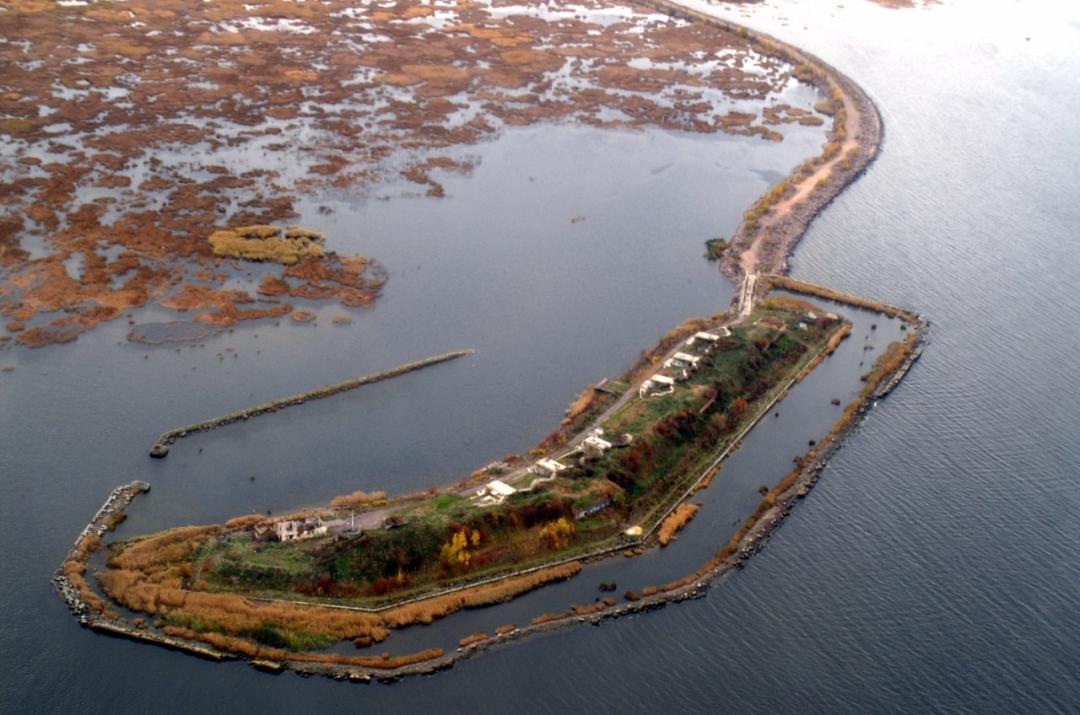
As a result, the unlucky sailors of the “Paris Commune” were sentenced to various prison terms, and Fort “Pavel” ceased to exist. Now, only a fragment of one half-tower stands on a small island...
The miraculously preserved structures on the fort were “finished off” during exercises. Now it is just a small island with piles of broken bricks. Only the base of the fort’s frontal part and a half-ruined stair tower remain.
Sources:
https://www.citywalls.ru/house27643.html
A. A. Razdolgin, Yu. A. Skorikov. “Kronstadt Fortress,” Leningrad, Stroyizdat, 1988
http://pofortam.ru/fort-pavel/
https://spbvedomosti.ru/news/nasledie/vzryvnaya_istoriya/




Written by Jermaine
Discuss this with the author and others
No comments yet. Be the first to start the conversation.